Japan Hosts India in Historic Cricket Match
On the edge of a typhoon, with clouds rolling in over Sano, Alan Curr was doing a job that had nothing to do with boardrooms or balance sheets.
The Japan Cricket Association COO was out on the ground on Sunday morning, hauling covers off a wicket, then wrestling with hospitality tents, running through security plans and trying to turn a modest venue with 500 permanent seats into a stage fit for the reigning T20I world champions.
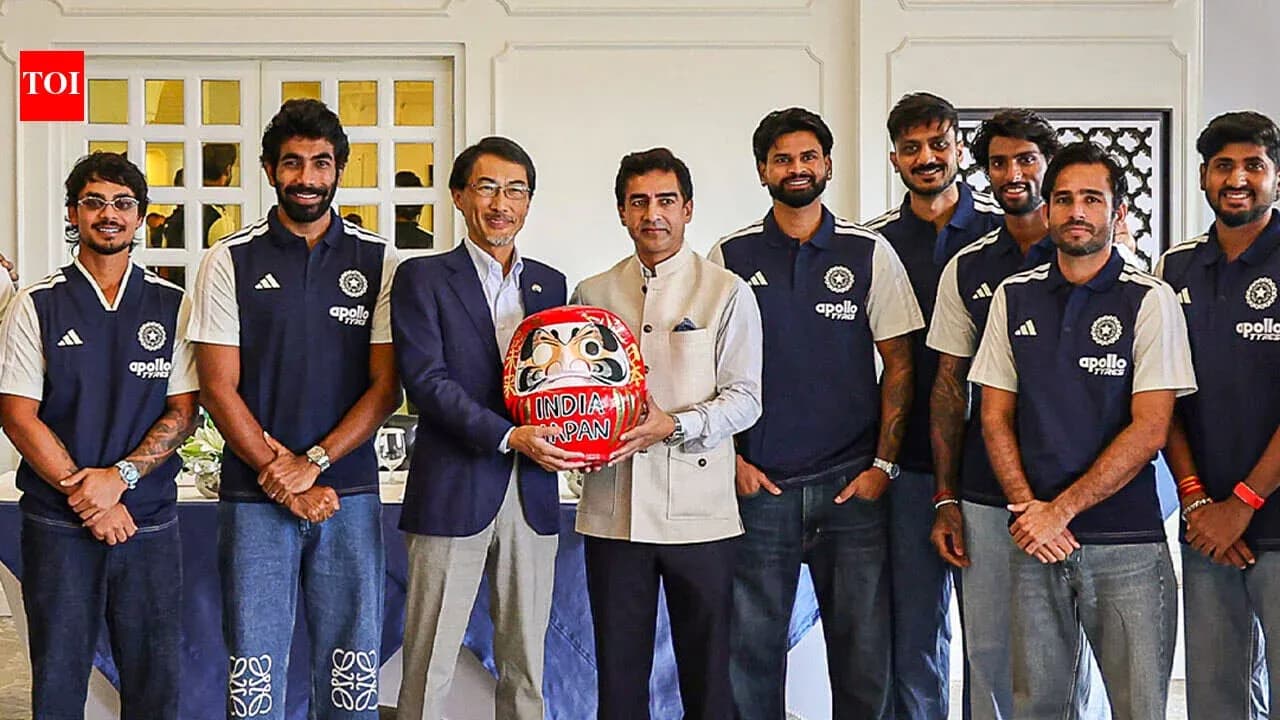
If the weather behaves, India will walk out there on Tuesday to face Japan in the country’s first-ever men’s senior international against a Full Member. For Japanese cricket, simply getting India to Sano is the victory. The scoreboard can wait.
“A lot of success has almost already happened,” Curr says. India have agreed to come. Japanese media are suddenly interested. People in a baseball nation are asking what cricket even is. For a sport that has lived in the shadows here, that alone is a jolt of electricity.
Cricket’s biggest introduction yet
Cricket is not a stranger to Japan. It arrived in the 1870s, then slipped behind a wall of national sporting obsessions: Baseball. Football. Sumo. Basketball. Golf. Tennis. Boxing. They filled the stadiums and the screens. Cricket settled for the margins.
Japan have had their moments. Under-19 World Cups. Youth matches against India and Pakistan. A women’s team at the Asian Games. Important, yes. But this is different.
“It certainly helps to say that the reigning world champions, the No. 1 ranked team in the world, are coming to Japan,” Curr says. That line alone has prised open doors. It has piqued curiosity in a way development brochures never could.
The JCA knows exactly who it wants to reach: the mainstream fan who instinctively turns to baseball or football. The timing could hardly be better. Days after India’s visit, cricket returns to the Asian Games in Aichi-Nagoya, a shop window Japanese audiences recognise instantly.
“The Asian Games gives cricket legitimacy that it didn’t have before,” Curr says. “You can’t be what you can’t see.” For once, Japan will be able to point at a major multi-sport event and say: that’s us too.
Quiet growth, Japanese pace
While the sport has rarely made national headlines, its base has been slowly hardening. When Curr arrived in 2014, Japan had roughly 3,000 registered players. Today, that number stands at 8,800.
The Japan Cup, the country’s T20 competition, used to scrape together barely a dozen teams. Now there are more than 80. The domestic 40-over league has stretched itself across four divisions. The footprint is still small, but it is no longer faint.
“Kaizen is the word,” Curr says. Continual improvement. The concept that runs through Japanese industry is now stitched into Japanese cricket. Incremental steps, year after year. And then, every so often, a moment like this one that lets you hit fast-forward.
Winning the crowd, not the contest
Nobody at the JCA is under any illusion about what awaits Japan’s players when India line up opposite them.
“This India team is pretty good,” Curr says dryly. For a group that has never played at this level, “it’s going to be an extremely difficult challenge.”
So the target shifts. Less about runs and wickets, more about memories and impressions. Curr looks to the women’s team for the template. At the Asian Games, after their fixture against India, they stayed back. They thanked supporters. They mingled with fans. They left a mark that had nothing to do with the score.
That, he insists, is the identity he wants the men’s side to project as well. Play hard. Stay approachable. Make cricket feel open, not closed. “We want cricket to be fun,” he says.
If thousands of first-time spectators leave Sano talking not only about India’s star power but also about how Japan played, behaved, and connected, then the hosts will have claimed their own kind of win.
How clay turned into a date with India
This landmark fixture was never part of some glossy masterplan.
It began with dirt.
Eighteen months ago, the JCA decided to relay the turf square at Sano. They turned to Sri Lanka Cricket for help. An SLC groundsman flew in, searched for suitable clay, and helped build a surface that could stand up to international cricket.
That same clay then underpinned the Asian Games venue in Nagoya. Suddenly, a simple idea emerged: if Japan now had international-quality wickets, why shouldn’t the world’s best teams use them?
Once the pitches were finished in March, the JCA moved quickly. A proposal went out to every Full Member ahead of the ICC conference in Edinburgh. Among those who listened was the BCCI.
Conversations started there. To Curr’s surprise, they gathered pace. “The BCCI were really keen to have an opportunity to train,” he says. For India, the trip made sense. Their men’s squad, bound for the Asian Games, faced nearly a week of waiting before their knockout fixture, with no proper cricket facilities on hand.
Sano solved that problem. A training base. Quality wickets. And, eventually, a match.
Now, everything hangs on the weather. A typhoon threatens, but the preparations continue, covers on and off, tents going up, plans being checked and rechecked.
On September 22 at 9:30 am IST, India vs Japan will be broadcast live. For India, it is a tune-up. For Japan, it is a statement.
Not that they have arrived. That they refuse to stay invisible.