Japan's Asian Games Squad: Youth and Pathway Focus
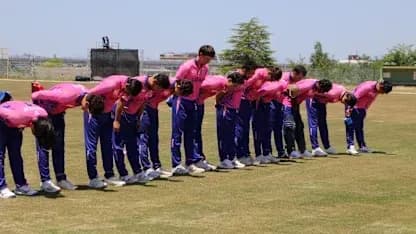
Japan have drawn a clear line in the sand for their Asian Games campaign, sacrificing some of their most recognisable T20 names to build a squad that fits the letter of the eligibility law – and, they hope, the spirit of their long-term project.
In a deliberate move, selectors have left out players who qualify for T20Is under ICC regulations but fall foul of Asian Games rules. It trims the talent pool, but it also sharpens the focus. This is a group built from domestic grind, school pathways and hard-earned international experience, not overseas loopholes.
Kusuda-Nairn headlines new wave
At the front of that push stands Jake Kusuda-Nairn, the emerging spin-bowling all-rounder whose domestic form has forced the door open. He has been one of the standout performers at home, and now steps into a squad that badly needs his control with the ball and composure with the bat.
His selection underlines the message: if you perform in Japan’s domestic structure, there is a pathway to major multi-sport events, not just ICC tournaments.
Takada’s return adds history and steel
Alongside the new blood comes a familiar name. Tsuyoshi Takada, who first pulled on the national colours at the ICC East Asia-Pacific Twenty20 Championship back in 2013, returns to the fold.
For a side still shaping its identity, Takada brings something rare – a decade-long thread of continuity. He has seen Japan’s T20 cricket grow from a regional curiosity into a program that now talks openly about World Cup qualification. That experience matters when the margins tighten in tournament play.
Bukatsu graduates at the heart of the project
The squad list also reads like a quiet victory for Japan’s school-based cricket programs. Both Wataru Miyauchi and Makoto Taniyama are alumni of Japanese schools with cricket Bukatsu setups, proof that the sport’s roots are starting to dig deeper into the local education system.
Taniyama’s story, in particular, carries the texture of modern cricket’s global reach. A leg-spinner who refined his action by watching Shane Warne on YouTube, he wears shirt number 23 in tribute to the Australian icon and has turned that inspiration into ruthless output. He is already Japan’s leading wicket-taker across all pathway and international competitions, the statistical backbone of their bowling plans and a symbol of how far the program has come.
World Cup pedigree in the ranks
There is more youth with big-tournament experience. Charlie Hara-Hinze, part of the Japan U19 Cricket World Cup side that famously beat Tanzania, also makes the cut. That win was a landmark for Japanese cricket, a rare moment on the global stage when the team did not just compete, but prevailed.
Hara-Hinze carries that memory into a senior environment that is still learning how to close out tight contests. Players who have already handled the pressure of a World Cup, at any level, tend to walk a little taller when the stakes rise.
Ito-Davis returns after injury frustration
The spin department gains another key piece with the return of Benjamin Ito-Davis. His East-Asia Pacific T20 World Cup 2028 Sub-Regional Qualifier campaign ended abruptly with a hand injury, a brutal halt at a time when Japan were building serious momentum.
He comes back into a side that knows just how fine the margins can be. Japan finished second in that tournament and remain firmly in the hunt for a place at the 2028 T20 World Cup, level on points with Papua New Guinea and separated only by net run rate – this despite beating the Barramundis on the final day.
That sting still lingers. It should. Teams that remember how close they came often return sharper, hungrier, more ruthless.
Now, with an Asian Games squad built on eligibility discipline, domestic form and pathway success, Japan step into another high-pressure arena. The question is no longer whether they belong there. It is how far this carefully assembled group can push the ceiling.