Irfan Pathan Revives Sunday Jibe as India Dominates Pakistan in Asia Cup
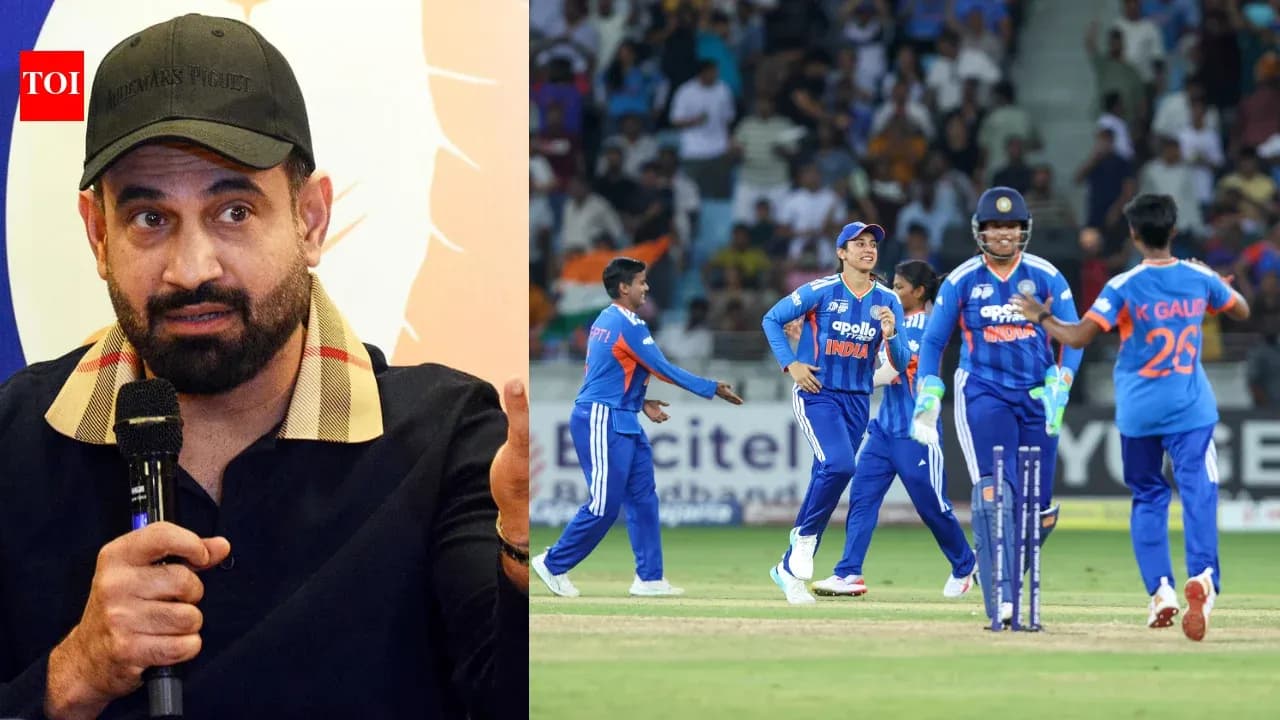
The game in the middle had barely cooled when Irfan Pathan struck on social media.
“Aaj Sunday hai kya?” he posted on X. Four words. No emojis. No explanation needed.
It was a sharp throwback to a year-old taunt that has now become part of the modern India–Pakistan cricket folklore. Back then, India’s men had beaten Pakistan in three T20Is on three consecutive Sundays, and Pathan had needled across the border with: “Sunday kaisa raha padosiyo.” The line stuck, turned into a meme, and has now been dusted off for another one-sided contest — this time in the Women’s Asia Cup 2026.
On the field in Group A, India’s women did the talking. Pathan simply added the punchline.
Spin twins rip through Pakistan
For 4.1 overs, Pakistan looked settled. They moved to 27 without loss, Muneeba Ali and Shawaal Zulfiqar playing within themselves but without alarm. The surface in front of them looked slow, but not menacing.
Then Harmanpreet Kaur turned to spin. The match flipped.
Shree Charani, just 22 and bowling left-arm orthodox, gripped the game by the scruff. She found purchase, found rhythm, and suddenly found Pakistan’s batters groping. Her figures – 4 overs, 3 for 7 – told only part of the story. She choked the scoring, forced indecision, and dragged Pakistan into a panic they never escaped.
From the other end, 24-year-old leg-spinner Prema Rawat matched her for control and bite. She finished with 3 for 9 from her four overs, her variations too subtle and the pressure too intense for Pakistan to manage. Every dot ball tightened the noose.
And there were plenty of them. India’s bowlers sent down 78 dot balls in 18.1 overs, a suffocating number in any format, brutal in T20. The scoreboard stalled, then collapsed.
Once Muneeba’s 13 and Zulfiqar’s 14 disappeared back to the pavilion, the innings imploded. Pakistan crashed from 27 without loss to 36 for 6 by the 10-over mark, losing six wickets for just nine runs. Any notion of a platform vanished in a heap of mistimed shots and misjudged defence.
Shafali Verma chipped in with 1 for 10 from three overs, while Deepti Sharma, typically clinical, cleaned up the tail with 2 for 5 in 3.1 overs. Pakistan’s innings ended at 55 all out, their lowest total in T20 history. A rivalry fixture had turned into a procession.
Harmanpreet’s landmark day
If there was a stage made for Harmanpreet Kaur, this was it.
Before a ball was bowled, she had already stepped into history as the first international captain — male or female — to lead India in 150 T20Is. It is a staggering marker of longevity and trust, carved out in a format that rarely allows leaders to breathe, let alone endure.
She responded in the way she knows best: by squeezing the opposition with her bowlers, then walking out to finish the job herself.
Chasing 56 was never going to be about the result; it was about how quickly India would get there. Shafali Verma made 12, Smriti Mandhana 9, and Pratika Rawal 4. All three fell, but none of it disturbed the inevitability of the outcome. The target was too small, the gulf too wide.
Harmanpreet settled any lingering questions. She stayed unbeaten on 18, Deepti Sharma on 12, as India romped home in just 8.4 overs. The captain ended it in style, launching the winning blow straight back down the ground for six. No nerves. No delay. Just a clean strike to close a ruthless performance.
A rivalry tilting one way
The numbers behind the emotion tell their own story. India have now won seven of eight meetings against Pakistan in the Women’s T20 Asia Cup. Pakistan’s solitary win stands as an exception, not a trend.
This latest result only deepened that pattern. A total of 55, a collapse of six for nine, 78 dot balls faced, defeat with 67 balls to spare — it was domination in every phase.
So when Pathan typed out, “Aaj Sunday hai kya?”, it fit the mood perfectly. Another India–Pakistan clash, another one-sided script, another reminder of where the balance of power currently lies in the women’s game.
The question now is not what Pathan will post next. It’s who, and when, will finally push this Indian side to the edge in Asia — because Pakistan, on this evidence, are nowhere close.