IPL Media Rights Tender: JioStar's Dominance and Industry Concerns
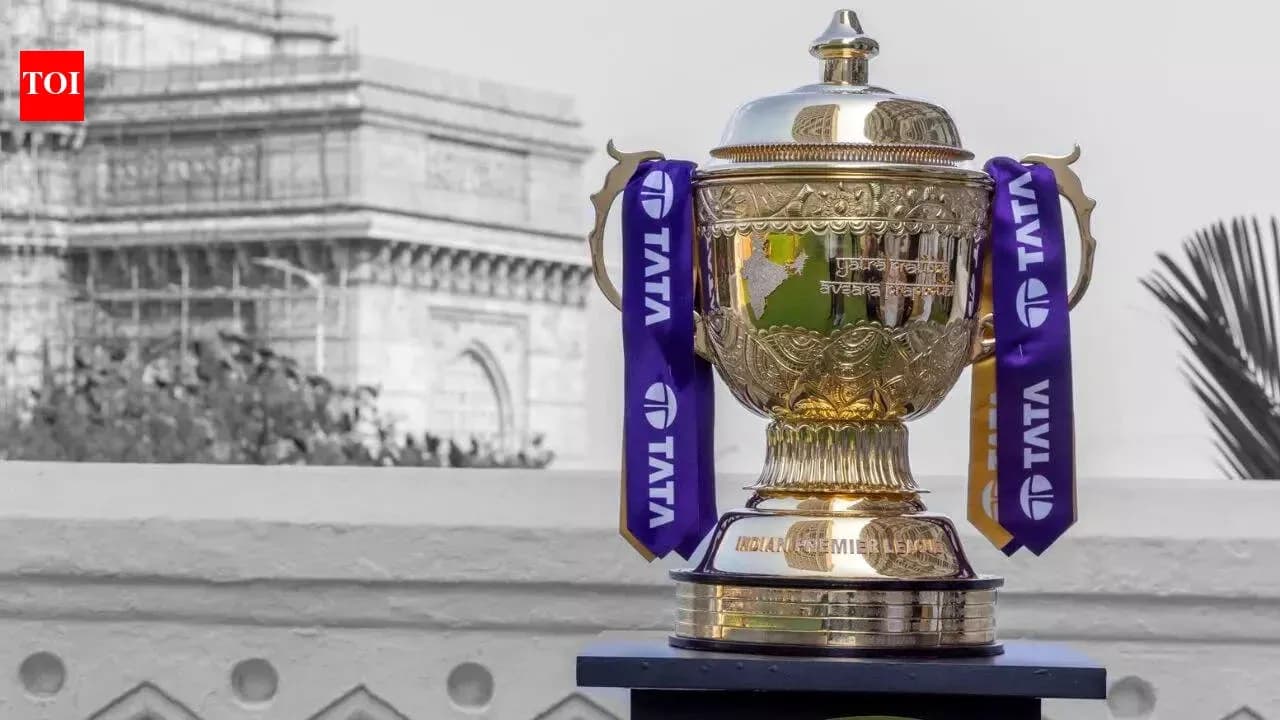
The IPL trophy has never looked heavier.
With roughly six months left before the final IPL season of the 2023-27 media rights cycle, the Indian board stands on the brink of another blockbuster tender. Yet the mood around the industry is anything but euphoric. The concern is simple, and stark: if JioStar is the only serious bidder in town, how does cricket’s most valuable league truly discover its price?
For more than a decade, competitive tension has done the BCCI’s work for it. Rival broadcasters have driven each other higher, season after season, until IPL rights became one of the most aggressively contested properties in global sport. Now, that energy has drained away. The room feels emptier.
No one knows that better than Uday Shankar, the media heavyweight who now sits as vice-chairman of JioStar. Speaking at the ET World Leaders Forum, he laid bare the shift in the landscape. A decade ago, he said, four or more serious media companies would go toe-to-toe for major sports rights. Real fights. Real money. Today, it increasingly feels as if one player is left standing. And he did not pretend that was a healthy sign.
Shankar’s warning cut to the heart of the problem. Rights fees have surged. Monetisation has not kept pace. The value of sport remains enormous, but the ecosystem that sustains it — rights holder, broadcaster, platform — has to function on something more solid than blind optimism and inflated bids. Without that balance, even a behemoth like the IPL can start to look fragile.
This is where the BCCI’s lack of a Plan B begins to look less like a blind spot and more like a risk. JioStar will bid aggressively. It has to. Its subscription engine runs on cricket, and the IPL is its premium fuel. But a tender built around one credible bidder is not a tender. It is a formality dressed up as an auction.
The puzzle, then, is not whether JioStar turns up. It is why others are not being drawn in.
Globally, the big technology and streaming platforms have moved closer to sport, not further away. YouTube has shifted from dabbling in rights to treating them as the backbone of a broader pay-TV and subscription strategy. Its seven-year deal for exclusive US distribution of NFL Sunday Ticket — reportedly worth $2 billion a season — is not just a trophy asset. It is a hook, both for YouTube TV subscribers and for standalone buyers on YouTube channels.
That kind of deal underlines a brutal truth for the Indian market. Average revenue per user in the West lives in a different universe to what the subcontinent can command. Volume alone does not automatically win the argument. Yet if there is one sports property in this region that can justify a bold experiment from a global giant, it is Indian cricket, led by the IPL.
YouTube is not alone on the horizon. Netflix, too, has begun to circle live sport. Co-CEO Ted Sarandos recently told The Economic Times that the streaming giant is interested in live events, including cricket, but has no desire to morph into a traditional, wall-to-wall sports broadcaster. That stance sounds almost tailor-made for the IPL: intense, time-bound, story-rich, and built for binge consumption across weeks rather than months.
The league is more than a tournament now. It is India’s prime-time calling card, a narrative engine that speaks to a billion-plus at home, to a vast diaspora, and to markets where cricket quietly carries India’s soft power. For a platform obsessed with storytelling, the IPL offers ready-made drama every night.
Yet none of that potential unlocks itself.
“At some point, the economics have to make sense,” Shankar pointed out. That line is not just a caution to bidders. It is a challenge to the BCCI. If the IPL is as valuable as the market believes, the board cannot simply wait for global platforms several time zones away to wake up, connect the dots and come knocking. It has to sell the story — in boardrooms, on calls, at conferences — to people who may know the numbers but not the nuance of India’s sporting boom.
This is where the next tender becomes a test of imagination as much as valuation. The IPL is the board’s Plan A, and JioStar is the obvious partner. But the health of Indian cricket, and of its flagship league, depends on what else is on that table.
Does the BCCI walk into this auction with a genuine global marketing push, one that puts the IPL in front of every plausible media, technology and streaming player? Or does it rely on a single heavyweight to carry the load, hoping the numbers somehow justify the complacency?
The trophy will be lifted again next year. The more important question is who will be paying to show it — and whether Indian cricket still has the courage to make that a real contest.