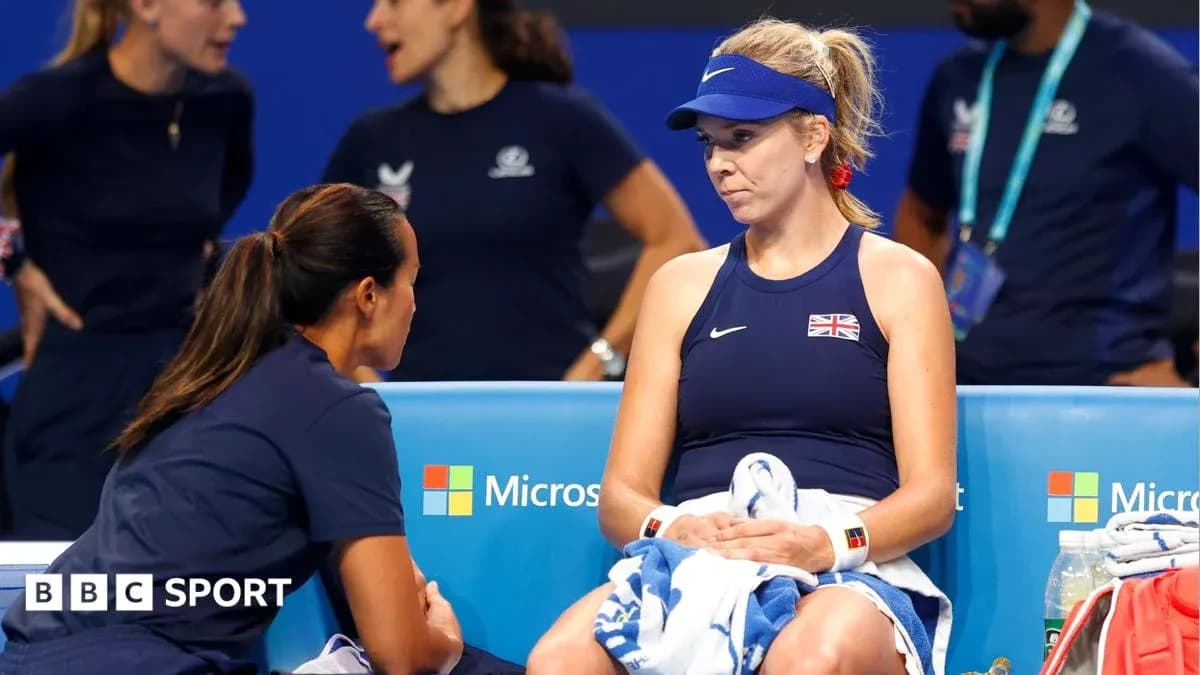
Emma Raducanu's Journey: Lessons from Andre Agassi's 'Open'
Emma Raducanu’s road back to the top is running through an unlikely but familiar companion: Andre Agassi’s “Open”.
Five years on from that surreal fortnight in New York, when an 18-year-old qualifier tore through the US Open draw without dropping a set, Raducanu is no longer the wide-eyed upstart with nothing to lose. She is 23, ranked 98 in the world, and fighting her way through the kind of turbulence Agassi once laid bare on the page.
What began as a casual read has become something more serious.
“I was especially intrigued by the passage where he got out of his slump in the late 1990s by creating his own training regimen and finding his way back to the top,” Raducanu told Uniqlo. “It speaks in depth about his early successes and the lows he reached, perhaps as a result of them. A lot of it was so relatable.”
Those are not throwaway lines. They come from a player who has lived a condensed version of the Agassi arc: early explosion, suffocating expectation, and the harsh reality of a body that refuses to cooperate.
A prodigy reading a prodigy
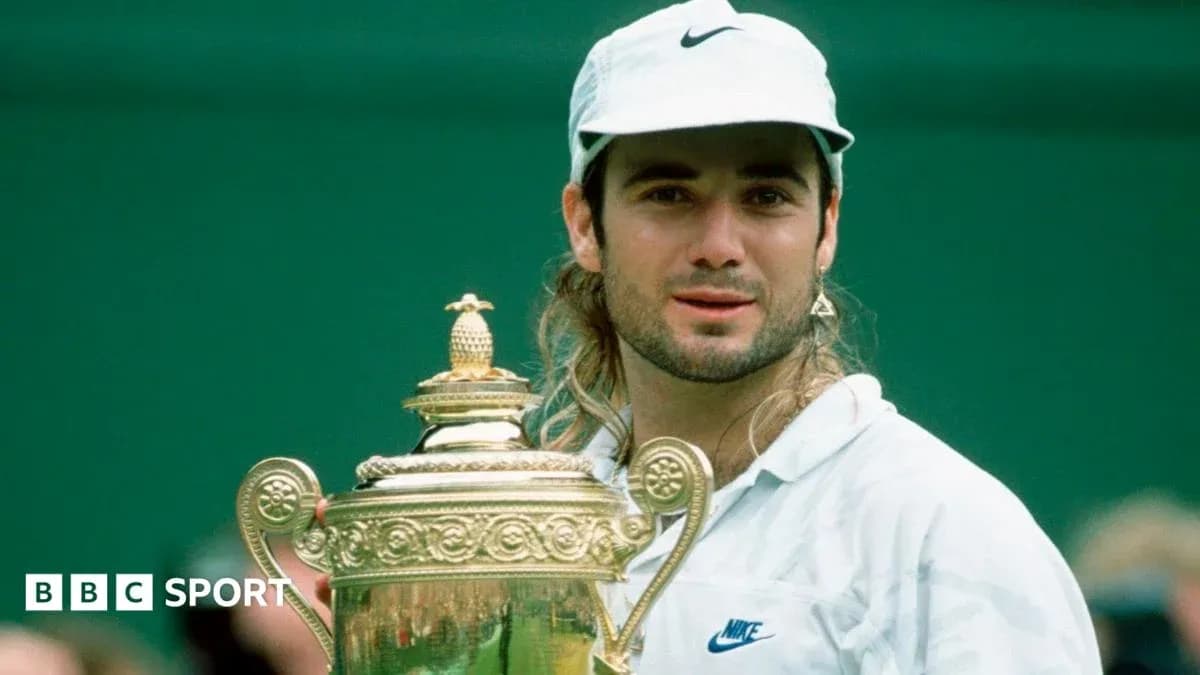
Agassi knows this terrain better than most. The American, like Raducanu, was a teenage prodigy. He lifted his first major at Wimbledon in 1992 at 22, the first of eight Grand Slam singles titles. Yet between those glittering peaks sat a long, uncomfortable valley.
He went four years without a major. His ranking fell all the way to 141 in the world. His relationship with tennis, already fragile, frayed further.
That descent, and the climb back, became the spine of his 2009 autobiography. He wrote it hoping it might offer a lifeline to someone else trapped in the same cycle.
“It was literally the hope that if one person read it and it gave them hope, some tools to understand that they're not alone, they can figure it out and get to a healthier place without having to direct their frustrations at the game of tennis, then it was a success for me,” Agassi told BBC Breakfast.
“So, hearing that 17 years later it can still impact somebody, especially in this game, it does make me feel good.”
The connection between the two is not manufactured. Raducanu knows what it is to stand on top of the sport’s loudest stage and then, almost overnight, feel like an outsider again.
From New York euphoria to the grind
In July 2022, Raducanu hit a career-high ranking of 10. It felt like the natural next step after New York. The narrative wrote itself: a new star, a new era, a new standard-bearer for British tennis.
Reality has been far messier.
Her ranking has slid to 98. Her progress has been repeatedly checked by her body. A stress fracture in her lower right leg kept her out of this year’s US Open. A foot injury disrupted pre-season. A post-viral illness then forced her off court for two and a half months.
Stops. Starts. More stops.
Yet the story is not simply one of setbacks. At Queen’s Club in June, Raducanu produced one of the most complete weeks of her career, reaching her biggest final since that US Open title run five years ago. It was a reminder of what still lives in her game when her body allows it and the noise fades.
That is where Agassi’s voice, and his experience, cut through.
Agassi’s message: identity before results
Agassi did not just win. He completed the career Grand Slam, captured Olympic singles gold at the 1996 Games, and rebuilt a career many thought finished when he tumbled outside the top 100.
Asked what he would tell Raducanu now, his advice did not revolve around technique or tactics. It went straight to mindset.
“I would encourage her to focus on being the best of herself on a daily basis, but don't judge that by results or thinking that somehow you have to be 100%,” he said.
“You have to learn to be 100% of whatever percent you're at [and] be comfortable in your own identity inside of that – not what people say.”
That last line lands hard in 2026. Agassi could once simply “put down the paper and not read it.” Raducanu lives in an era where the paper chases her, endlessly, across every platform.
“Now it seems like it's harder for these youngsters to avoid,” he added.
For a player whose every appearance, every withdrawal, every ranking change is dissected in real time, the idea of being “100% of whatever percent you’re at” is more than a neat phrase. It is a survival strategy.
Fear, pressure and a different way to win
Agassi’s own childhood sits at the far end of the spectrum. Tennis was not his dream; it was his assignment. His father introduced him to strangers as a future world number one. Every hit, every drill, every match carried that weight.
That pressure, Agassi admits, forced him into a career built on “fear”. Only when he dropped from world number one to 141 did he find the space to reconnect with the sport on his own terms.
During that same period, he founded a charity focused on education for under-served children, a move that shifted his sense of purpose away from the scoreboard.
“I had more success from that point forward than I did playing out of fear,” he said.
It also shaped his view on how the next generation should be raised in sport.
“The first thing I would advise a parent to think about is that it's not their life, it's their child. You raise a child in their way and they'll never depart from it. You just have to find out what their way is.”
Raducanu’s “way” is still being written. The raw materials are obvious: clean timing, sharp instincts, a proven ability to handle the biggest stage when the stars align. What she is trying to build now is something sturdier than a single fairytale run.
A new stage, the same game
Agassi, now 54, has long since stepped away from the weekly grind of the tour, but he is not done with big arenas. This week he will captain Team USA at the Laver Cup at The O2 in London, from 25–27 September.
“Tennis is a hamster wheel of sorts – the fact that these guys make room in their schedule to play this incredible event tells you how great this event is,” he said.
“We're obviously playing Team Europe, in Europe, so I don't know where the crowd is going to have their heart. But I know one thing – they're going to see some spectacular tennis.”
Spectacular tennis. That is what Raducanu once delivered in a blaze and what she is now trying to rediscover, piece by piece, with a different understanding of what success looks like.
If Agassi’s book helped her see that the climb back can be as defining as the first ascent, the question now is simple and brutal: how much of that journey will her body, and her belief, allow her to complete?