IPL Media-Rights: The Future of Cricket Economics
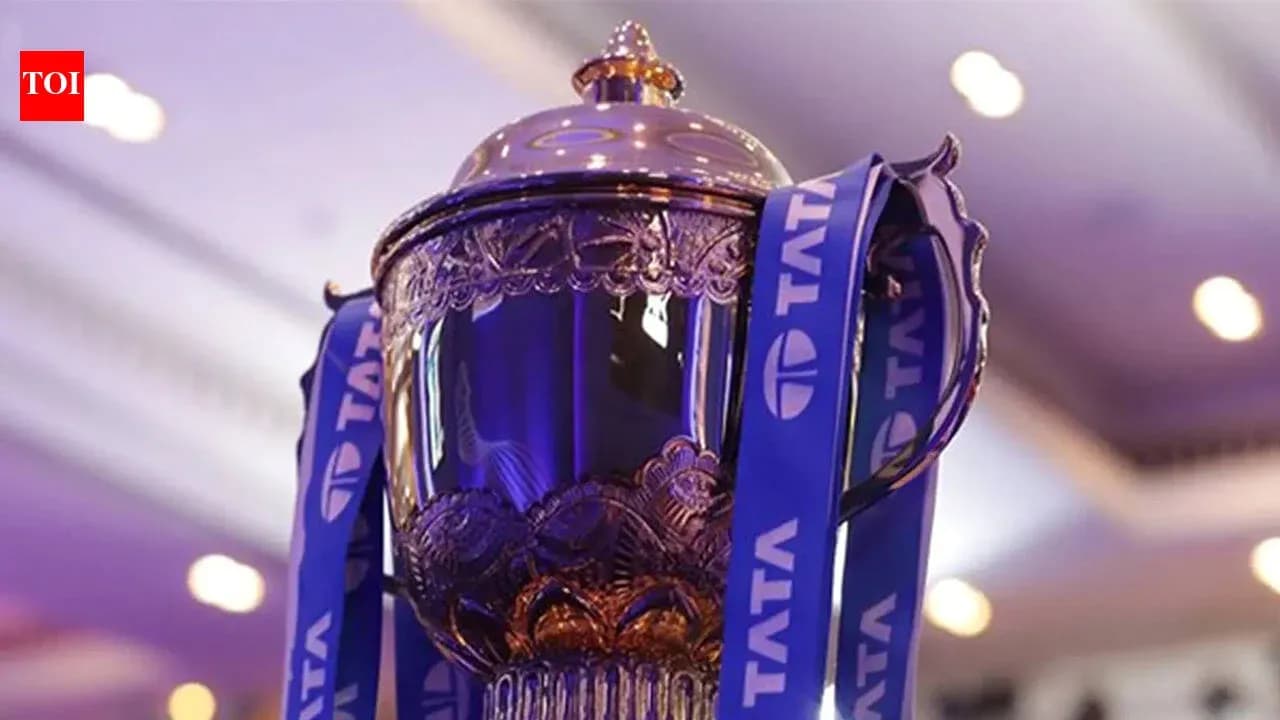
The race for cricket’s next great pile of broadcast money has already begun. And, as ever, all eyes are on India.
Last week, the ICC quietly pulled the first lever, appointing a five-member working group to prepare for the 2028-31 media-rights cycle. The brief is blunt: protect the current value of its rights, or push it higher, by finding the sharpest possible price-discovery model in a fast-changing marketplace.
But there’s a catch. The ICC can’t move until the BCCI does.
IPL First, Everyone Else Later
The world governing body knows the order of play. No major cricket property will come to market before the IPL media-rights tender lands. Once the IPL goes, everything else – including ICC events – will follow in its slipstream.
For now, though, the BCCI has yet to make its move.
The Indian board, often likened to a sleeping giant that only stirs when it must, hasn’t decided whether to bring in an external financial adviser this time, as it did for the previous cycle. That decision alone could define how aggressively the IPL is packaged and sold to a market that no longer watches sport the way it did even five years ago.
There’s an intriguing overlap here. BCCI secretary Devajit Saikia sits on the ICC media-rights working group, chaired by ECB chief Richard Thompson and featuring ICC chairman Jay Shah. The same people helping shape the ICC’s strategy are close to the BCCI’s thinking on IPL – or lack of it, so far.
The KPMG Blueprint and a Digital Turning Point
In 2022, the BCCI hired KPMG to help draft the IPL tender. That document did more than list matches and packages. It changed the economics of Indian cricket.
KPMG and the BCCI carved out a special non-exclusive digital-rights package: a curated “bouquet” of 18 high-value matches per season in a 74-game structure, exclusively for the Indian subcontinent. It was a bold experiment.
It paid off.
That single package surged to Rs 3,273 crore, at Rs 33.24 crore per match. For the first time in history, Internet rights from the subcontinent brought in more revenue for the BCCI than traditional TV.
That shift still reverberates around the industry.
“We were expecting to hear something from them (BCCI) on this,” said one industry executive, pointing to how technology is reshaping sport consumption. The executive highlighted the YouTube sports-bundling model in the US and called the NFL Sunday Ticket “a case study in itself.”
The message from the market is clear: digital is no longer the add-on. It’s the engine.
Untapped Giants: Netflix, Amazon, YouTube
Sports executives tracking the IPL believe the upside is enormous if the BCCI is willing to dig deeper into this space.
From Friday, BCCI members assemble in Mumbai for the AGM. Those watching the board closely struggle to think of a more critical topic than the next media-rights sale. This is not just about who shows the matches. It’s about what the IPL becomes as a media product.
“India has a strong cricket platform. The IPL is already a premium property on that platform,” the same executive noted. The real play, they argued, lies beyond the live feed: archives, highlights, documentaries, regional storytelling, fan-engagement products. The kind of layered content that keeps fans inside an ecosystem long after the last ball is bowled.
You might only have one or two serious broadcasters bidding for live rights. But building a separate, non-live consumer base – and then selectively monetising premium properties for that audience – is an entirely different game.
Right now, the IPL model leans heavily on a single live broadcast ecosystem, dominated by JioStar. One franchise executive didn’t mince words, warning that “all your eggs happen to be in one single basket.”
That’s not just a strategic risk. It’s a missed opportunity.
OTT giant Netflix, for instance, has barely touched live sport. It has avoided putting games behind its paywall. Yet it has shown no hesitation in investing in sports-adjacent content – the kind that keeps subscribers hooked and justifies renewals.
So why haven’t Netflix, Amazon, or YouTube made a serious play for the India live-sport market?
The franchise executive put the responsibility squarely back on Indian cricket’s power brokers: “We keep wondering why an Amazon or a Netflix or a YouTube hasn’t looked at the India market. Well, the fact is, the onus lies on us to market our products to them and only then can we catch their attention. So, in the case of IPL rights, the onus certainly lies on the BCCI to go out and start talking to these platforms.”
Modular Future or One-Basket Risk?
At the heart of the debate sits a simple philosophical choice.
Does the IPL continue with an “all-inclusive” approach, bundling as much as possible into one or two giant deals? Or does it shift towards a modular model – slicing and structuring rights in ways that attract different kinds of buyers, from traditional broadcasters to global tech platforms and niche digital players?
Executives pushing for change insist the modular route is the only way to unlock full value. Different audiences, different platforms, different products. Live matches in one lane, deep-dive documentaries in another, regional and grassroots stories in a third, all monetised on their own terms.
That’s where the ICC’s working group is looking for answers. That’s where the BCCI’s silence is starting to feel louder by the day.
The IPL has already proved it can rewrite the rules of cricket economics. The next tender will decide whether it can do the same for how the world watches the game – or whether it lets that chance slip to someone else.