India's Explosive Start Against Afghanistan: A Cricketing Showcase
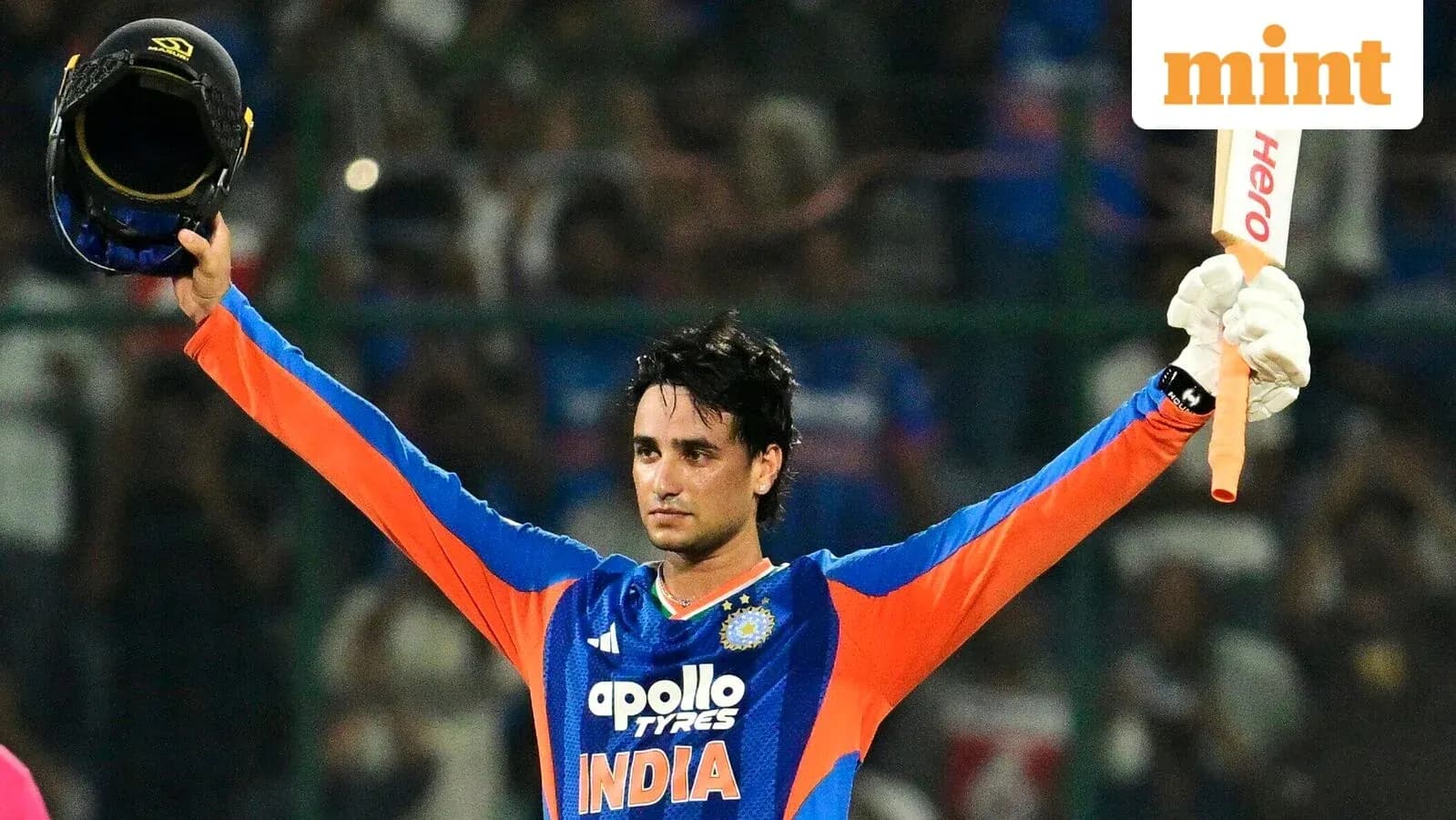
India didn’t so much begin their innings as detonate it.
Mohammad Nabi, Afghanistan’s old warhorse, came on with the ball and a plan. Pitch it up, test the surface, feel his way in. Sanju Samson tore that script up in two deliveries.
First ball: Samson rocks back to what should have been a drive length, clears his front leg and launches straight back over the bowler’s head. A clean, soaring six that barely seemed to climb – it just went. Nabi turns, watches, walks back. Same spot next ball. Same result. Same brutal swing, same straight arc, same message.
The crowd roars. Afghanistan suddenly look very small in a very big outfield.
And then Abhishek Sharma joins in.
The left-hander, already humming, decides this over belongs to him as much as it does to Samson. He picks up the same length, the same line, and sends the ball on the same route – over the bowler, over the ropes, with the kind of easy violence that makes a bowler question his lengths, his plans, maybe his career. A crunching four follows, threaded with disdain. He finishes the over with yet another six, this one a final stamp on a savage passage of play.
Twenty-nine runs off Nabi. India 85 without loss after just five overs. Afghanistan’s plan to exploit a helpful surface lies in pieces.
The carnage had started earlier.
Fazalhaq Farooqi, back into the attack, tried to drag things back with a shorter ball. Samson was having none of it, heaving to deep backward square for a single that simply handed the strike back to the man of the moment. Abhishek, eyes narrowed, planted his front foot to a fuller ball and sent it straight back over the bowler, holding the pose as the ball sailed into the stands. The next short one he didn’t hit; he guided. Inside the line, a neat swivel, and the ball flew over fine leg for another six.
Farooqi shortened his length again, searching for control. Abhishek just rolled his wrists and pulled past deep square leg for four. When the bowler strayed to the pads, he glanced him fine for another boundary. Two more to deep extra cover closed the over, India storming to 45 for 0 after just three, Abhishek already racing on to 42 from 13 balls.
The tone had been set even earlier, in Azmatullah Omarzai’s first over.
Omarzai began short and wide, nerves evident. Samson carved him to deep point for a single. That was the only reprieve he got. Abhishek, seeing width and a leg-side line soon after, swivelled and clubbed him over deep square leg for six. He swung and missed at a sharp short ball angling across him, but any hint of uncertainty vanished with the next stroke – a clean hit to long-on for four.
A dot ball flickered some hope for Afghanistan. Abhishek extinguished it immediately, striding out and lifting Omarzai over deep extra cover for another six. India walked away from the over at 22 without loss, Abhishek 20 off 8, the run-rate already spiralling.
All of this came against the backdrop of a toss that told its own story.
Shreyas Iyer, having lost it, barely blinked. He admitted he would have batted first anyway, reading the surface and, more importantly, his side’s mindset. He spoke of challenge, of fun, of not going “completely berserk” despite the freedom of batting first. Adapt, he said. Back instincts. No complacency. Just one change: Yash Thakur in for Arshdeep Singh.
Across from him, Ibrahim Zadran finally got what he’d wanted for two games: the chance to bowl first. He looked at the same strip and saw assistance for his attack, a chance to squeeze India, to stop them from running away with a massive total. His words were clear – apply pressure, restrict the score, finish the series on a high after two bruising defeats.
Afghanistan’s reality, though, has been harsher than their plans.
Their top order has wobbled, their middle order has crumbled, and Rahmanullah Gurbaz, usually the tone-setter, has endured back-to-back ducks. They have not given themselves a platform, not given their bowlers a score to defend. Against a heavyweight like India, 150 and 160 have looked like invitations to a chase, not challenges.
Zadran knows it. He has said it. The target is simple, the route far less so: turn those middling totals into something closer to 200. Bring intent. Swing hard. Take the game on.
“We thought about the things that how to improve that 150-160 to 200 plus. So we need to bring that intent to the team... we should go with the right intent to score, 200 plus. I'm pretty sure we will improve that area if you want to beat, biggest team in international stage,” he explained before this game, outlining not just a plan for one night, but a blueprint for how Afghanistan must evolve.
Because this isn’t just about a dead rubber. It’s about pride, about belief, and about momentum before they board a flight to Japan with their confidence either dented or repaired.
For now, though, they stand under a barrage from Abhishek Sharma and Sanju Samson, watching the ball disappear into the night and wondering: where, exactly, do you bowl when intent looks like this?