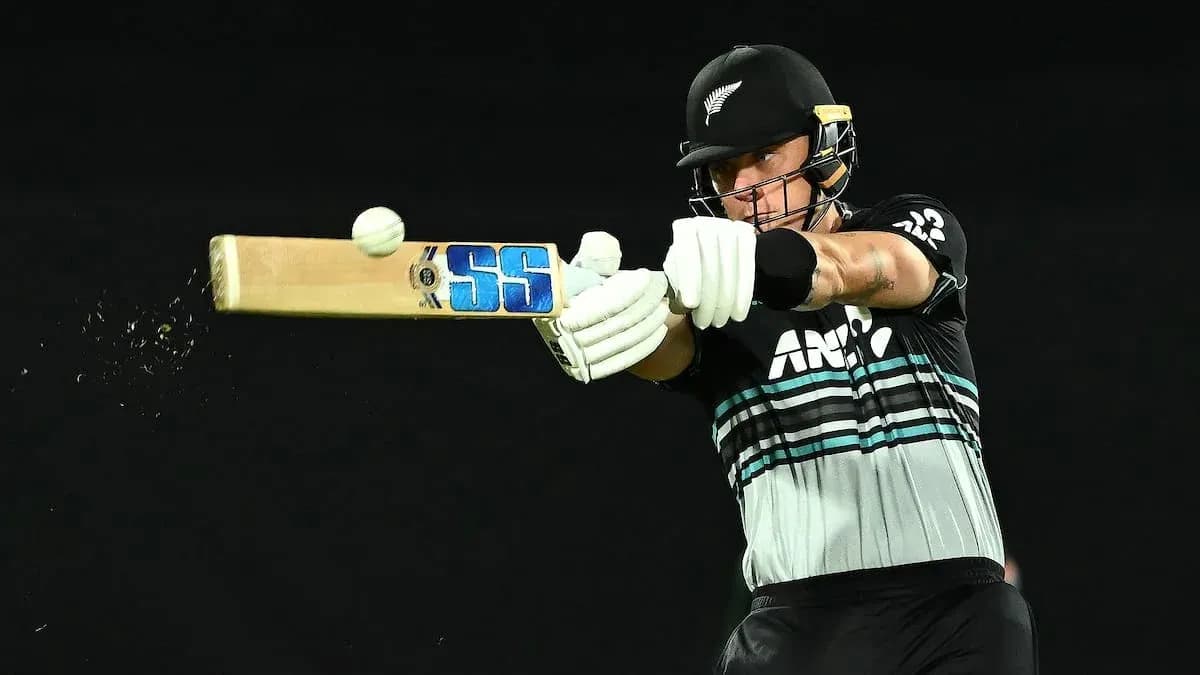
India’s Cricket Triumphs: Mandhana and Sen Shine at Asian Games
The tricolour kept finding its way to centre stage, but India’s day at the Asian Games was anything but straightforward. It swung between crushing defeats, nervy finishes and one of the most intelligent comebacks you’ll see on a badminton court.
Mandhana, Shafali and Richa light up the gold-medal final
India’s women’s cricket team did not just turn up for a final. They imposed themselves on it.
Smriti Mandhana set the tone with a 45-ball 79 that oozed control and class. She drove on the up, pulled with authority and kept Sri Lanka’s bowlers chasing shadows. While Mandhana anchored, Shafali Verma did what she does best – disrupt. Her 48 kept the scoring rate surging, dragging the game away from Sri Lanka before they could even think about squeezing.
When Mandhana finally fell for 79, Sri Lanka sensed a sliver of hope. India were 163/3 after 17 overs, three wickets down since Shafali’s dismissal, and the fielding side suddenly had something to cling to. For a brief moment, the gold-medal clash looked like it might tighten.
Richa Ghosh tore that script up.
Walking in with a platform set but the innings at a crossroads, she exploded at the death. Her 49 off just 22 balls turned a strong total into a statement. Sixes rained, gaps opened, and Sri Lanka’s lines disintegrated under pressure. India stormed to 216/3 in 20 overs – a mammoth score in a final, and a mountain that looked more like a cliff for the chasing side.
Athapaththu falls, India smell gold
Sri Lanka needed something historic. They needed Chamari Athapaththu to play the innings of the tournament.
Instead, India’s bowlers ripped out the heart of the chase early.
Kranti Goud took the new ball with 217 to defend. Athapaththu and Imesha Dulani walked out knowing there was no room for hesitation. The target demanded aggression; the Indian attack demanded caution. That tension defined the start.
Then Deepti Sharma landed the blow that changed everything.
Athapaththu, on 29, miscued the opportunity her team desperately needed her to convert. Deepti sent the Sri Lanka captain back, and the reaction said it all. Athapaththu knew she had left a gaping hole in her side’s hopes. Sri Lanka slumped to 43/3 after seven overs, their biggest weapon gone in a chase that already bordered on impossible.
From there, the Indian fielders rose as one. Every dot ball drew roars. Every mis-hit felt like another step towards gold.
Shafali Verma, having bruised Sri Lanka with the bat, turned tormentor with the ball. She struck twice, including the wicket of Hasini Perera, tightening the noose around a chase that never truly got going. With Shafali’s double strike and Deepti’s breakthrough, India’s path to the top of the podium started to look brutally clear.
Lakshya Sen’s masterclass in adaptation
On another court, in another hall, Lakshya Sen was living a very different story.
His men’s singles quarter-final against World No.7 Kodai Naraoka began badly. Too badly. Sen never found rhythm in the opening game, lost control of the rallies, and went down 11-21 in just 18 minutes. Naraoka dictated the pace, dragged him front to back at will and looked every bit the favourite.
Sen needed more than a reset. He needed a rethink.
Switching to the better side of the court, he started to understand the drift – that invisible, infuriating factor that can wreck even the best-laid plans. The shuttle was dipping faster than expected, drops were tumbling into the net, lifts were sailing long. Naraoka suddenly looked uncertain, his timing scrambled.
Sen pounced.
He flipped the pattern of the match. Defend, defend, defend, then punish anything played flat. He began to drag Naraoka into long rallies, refusing to blink, asking the Japanese star to find winners from awkward positions. Under pressure, Naraoka’s unforced errors mounted. Wide tosses. Misjudged drops. Smashes into the tape.
The scoreline of the second game told its own story: 21-5 to Sen. A hammering. The momentum had turned, and it had turned violently.
The decider began on the “bad” side for Sen, and Naraoka tried to reassert control. Lakshya trailed 5-7, then 13-17, and the match tilted back towards the World No.7. But Sen stayed with the plan. He trusted the waiting game, trusted his defence, trusted the drift to work for him once the change of ends came.
From 14-19 down in the decider, he launched one of the most composed comebacks of his career.
He refused to rush. He refused to panic. He kept the rallies long, kept testing Naraoka’s patience, and when the Japanese shuttler tried to force the issue, the errors came. Naraoka suffered a meltdown in the final exchanges, unable to break through Sen’s wall of defence or read his disguised half-smashes.
Sen reeled off point after point, turned 14-19 into 21-19, and closed out a 1 hour 6 minute epic with ice-cold clarity. From a heavy 11-21 defeat to a 21-5, 21-19 turnaround, he had not just beaten the World No.7 – he had out-thought him.
The best of Lakshya Sen? On this evidence, very close.
Next up, India’s top-ranked men’s doubles pair, Satwiksairaj Rankireddy and Chirag Shetty, stepped into the spotlight to face World No.9 duo Takuro Hoki and Yugo Kobayashi. The tone had been set: this Indian team was ready to fight every inch.
Pain on the tables and the piste
Not every Indian campaign ended with a roar.
In men’s team table tennis, the 2018 bronze medallists crashed out in the pre-quarterfinals, beaten 0-3 by a ruthless Korea. Harmeet Desai went down 1-3 to Jang Woojin, Manush Shah fell 2-3 to Oh Junsung in a tight battle, and Manav Thakkar lost 1-3 to An Jaehyun. The tie raised an uncomfortable question: did India miss the experience of G Sathiyan, who was left out of this crunch encounter?
On the fencing piste, Mitva Jesangbhai Chaudhari’s campaign ended in heartbreak. In the women’s individual Epee Table of 32, she led Jingwen Yang 5-4 after the first period, only to lose 14-15 by the narrowest of margins. One point. One touch. Fine margins that separate progress from exit.
India’s hopes in the event now rest with Taniksha Khatri, who moves into the women’s individual Epee Table of 16.
On a day of towering scores, tactical brilliance and brutal exits, the question lingered: how far can this Indian contingent push, when the stakes rise again tomorrow?