India’s Asian Games 2026 Campaign: Thrills and Heartbreaks
India’s campaign at the Asian Games 2026 rolled through a bruising, breathless day of near-misses, gritty comebacks and a few emphatic statements of intent.
This was not a day of one headline. It was a collage.
Badminton: Sen’s fightback, Sindhu’s heartbreak, women’s team bow out
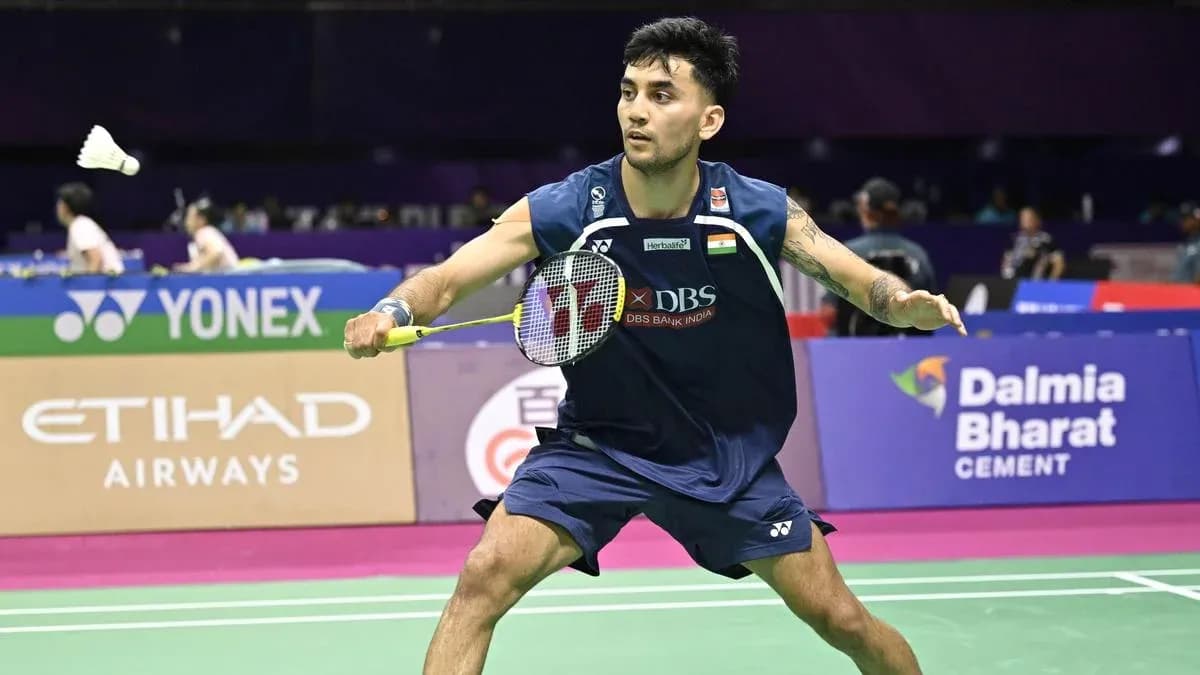
In the men’s team quarterfinal, Lakshya Sen dragged India into the contest with the kind of win that can tilt a tie. Up against World No. 7 Kodai Naraoka, he was blown away 11-21 in the opening game, then flipped the script. Sen stormed through the second 21-5 and, in a nervy decider where he trailed by five, clawed his way back to snatch it 21-19. India led Japan 1-0, the comeback complete, the tone seemingly set.
The momentum had started building even earlier in the day for India’s shuttlers, but on the women’s side, it was Japan who kept finding the last word.
The women’s team quarterfinal began with P. V. Sindhu against Akane Yamaguchi, a rivalry heavy with history. Sindhu trailed 13-17 in the first game, then reeled off a stirring run to pinch it 23-21, making no mistake on her second game point. Yamaguchi, though, refused to fade. She edged the second 21-18, then dominated the decider, racing away to a 21-11 finish and handing Japan a 1-0 lead.
Unnati Hooda stepped in with India already under pressure. She pushed Tomoka Miyazaki hard, even building a seven-point lead in the second game after losing the first 16-21. But that cushion evaporated. Miyazaki tightened up, Unnati faltered at key points, and the Japanese shuttler closed it out 21-16, 21-18. Japan stood one win from the semifinals.
Treesa Jolly and Gayatri Gopichand then dragged the tie back from the brink. In a must-win doubles rubber, the World Championships bronze medallists were sharp and composed, taking down Yuki Fukushima and Mayu Matsumoto 21-17, 21-16 to make it 1-2 and keep India breathing.
The final word belonged to Nozomi Okuhara. Facing teenager Tanvi Sharma in a do-or-die third singles, the former World Champion was ruthless. Tanvi never quite settled, dropping the first game 12-21 and finding no way back. Okuhara sealed the tie with another commanding 21-10 scoreline. India’s women fell 1-3, their wait for a first team medal since 2014 extended.
Cricket: Mandhana leads India to a mountain of runs
On the cricket field, India’s women did what they do best: pile on runs in a big final.
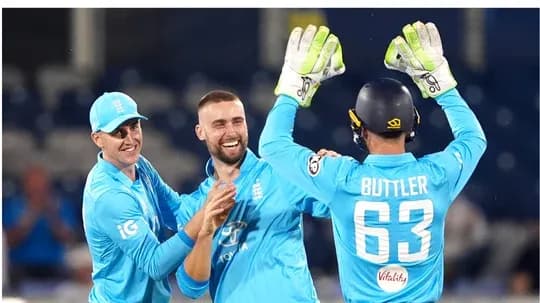
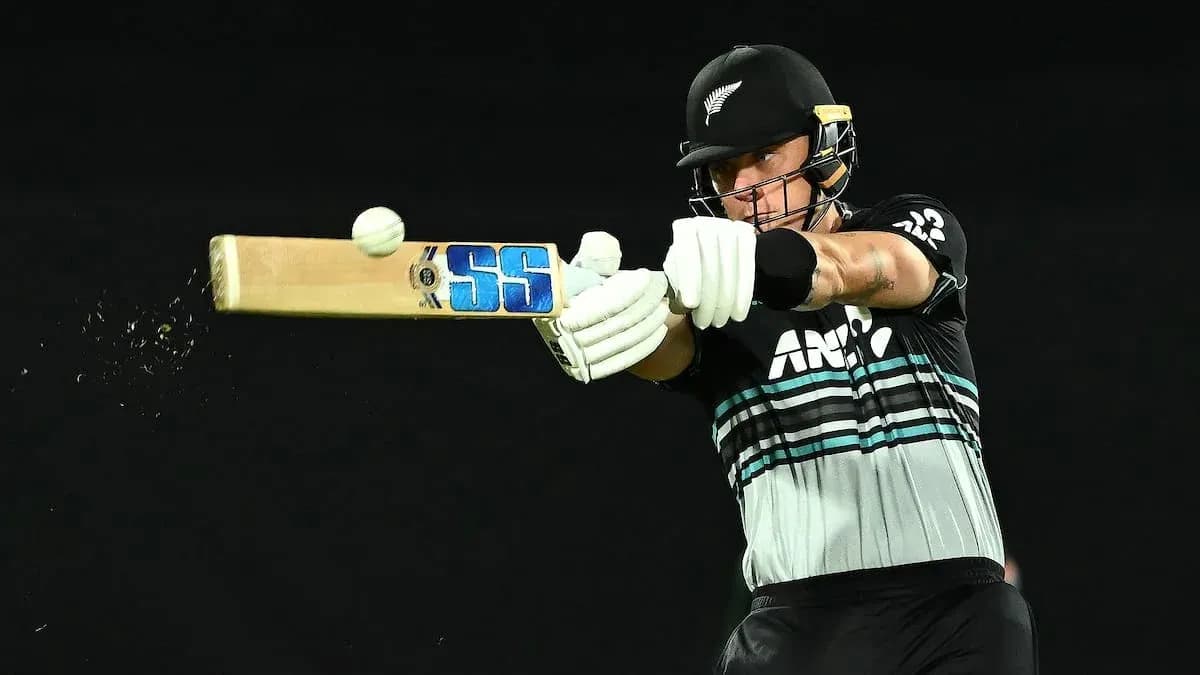
Having won the toss and opted to bat against Sri Lanka in the gold-medal match, India’s openers gave the innings teeth from the outset. At the end of the PowerPlay, the scoreboard already read 67/0, with Smriti Mandhana on 38* and Shafali Verma on 29*, both tearing into the Sri Lankan attack.
India never really let up. Mandhana top-scored with a blistering 79 off 45 balls, while Shafali fell just short of a half-century with 48 off 29. Richa Ghosh arrived and kept the pressure suffocating, hammering 49 from just 22 deliveries. India closed on 216/3 – its third-highest WT20I total – and set Chamari Athapaththu’s side a chase that borders on the improbable in a final.
Shooting: From record-chasing to a painful fourth
In 10m air rifle mixed team, Parth Mane and Elavenil Valarivan spent the morning shooting like medal favourites.
They posted 634.6 in qualification, finishing second only to China, whose pair Wang Zifei and Sheng Lihao set a new Qualification World Record with 638.9. Japan ended on 631.4, Vietnam initially took the last spot in the final before later disqualification allowed Japan through. India had done its part: top four, job done, medal round secured.
The final told a harsher story. Across the first series of 10 shots, India slipped to fourth with 103.6 as China set the early pace on 107.2, followed by Korea and Japan. The gap never quite closed. After the second series, India stayed rooted to the bottom on 207.9. By the end of the third, the total had crept to 312.3, but the standings hadn’t changed.
The medal line-up was unflinching: China took gold with a World Record 507.1, Republic of Korea claimed silver with 502.9, Japan secured bronze on 439.7. India’s total of 376.3 left Mane and Valarivan in fourth, just off the podium, the most unforgiving place in sport.
Table Tennis: Women’s team digs deep, men’s team crash out
The women’s table tennis team walked the tightrope and survived.
In the round of 16 against Thailand, India No. 1 Sreeja Akula opened with a thriller she will want to forget. She led Orawan Paranang 2-0 in games, even held match point at 10-9 in the decider, but let it slip. Paranang stormed back to win 3-2 (7-11, 1-11, 11-9, 11-6, 12-10), handing Thailand a 1-0 lead and India a jolt.
Yashaswini Ghorpade steadied the ship. Facing Suthasini Sawettabut, she clawed back from 1-2 down in games to win 3-2 (11-8, 5-11, 7-11, 11-9, 11-9), levelling the tie at 1-1. The pendulum swung again when Diya Chitale lost a tight five-game battle 2-3 (7-11, 11-5, 11-7, 7-11, 11-13) to Jinnipa Sawettabut, pushing India back into trouble at 1-2.
Ghorpade returned for the fourth singles and produced a near-flawless 3-0 (11-5, 11-8, 11-9) win over Orawan Paranang, dragging the contest into a decider. This time, Sreeja did not flinch. In the fifth singles, she overpowered Suthasini Sawettabut 3-1 (9-11, 11-6, 12-10, 11-8), sealing a 3-2 victory for India and a place in the quarterfinals against North Korea.
The men’s team, twice bronze medallists, could not find similar escape routes. Up against Republic of Korea in the round of 16, India never really gained a foothold. Harmeet Desai fell 1-3 (11-8, 7-11, 8-11, 9-11) to Jang Woojin in the opener. Manush Shah fought hard in the second rubber, forced a decider against Oh Junsung but could not close it out. Korea tightened their grip, and An Jaehyun finished the job with a 3-1 (12-10, 11-6, 7-11, 12-10) win over Manav Thakkar. A 3-0 sweep, and India’s men were out.
Kabaddi: Men’s champions send another message
On the kabaddi mat, the defending men’s champions barely broke stride.
India hammered Korea 63-31 in their second Group A match, a result that underlined the gulf in class and kept the title defence on the rails. The margin, and the authority, will not have gone unnoticed by the rest of the field.
Gymnastics, fencing, wushu: Quiet shifts in the margins
In artistic gymnastics, Pranati Nayak stayed just outside the medals in the women’s vault. She produced a 13.00 on her first vault and 12.433 on her second, for an average of 12.916 that left her in fourth place.
India’s fencers saw both progress and pain. In women’s epee, Taniksha Khatri became the first Indian to win a knockout bout on the day when she beat Thailand’s Natpapat Sangngio 15-10 in the round of 32. That set up a clash with reigning World Champion Sera Song of South Korea in the round of 16, where Khatri bowed out 9-15. Mitva Chaudhari, the other Indian in the draw, lost her round of 32 match to China’s Yang Jingwen.
In men’s foil, both Hemash Singh Sanasam and Sachin navigated the pool stage with three wins apiece to reach the round of 32. Hemash later lost 9-15 to Kazakhstan’s Galim Nurumov despite leading 6-5 after the first period, while Sachin fell by the same 9-15 scoreline to another Kazakh, Timofey Semyonov.
Wushu brought India close to the top eight. In the women’s Nanquan & Nandao combined event, Hanjabam Langlentombi Devi finished ninth overall with 18.839. She placed ninth in Nanquan with 9.403 and improved to eighth in the Nandao final with 9.436.
Soft tennis, karate, esports and swimming: Scattered highs and hard exits
Soft tennis served up a mixed bag. In men’s singles Group C, Aryan Thakur began brightly with a 4-0 win over Mongolia’s Bold-erdene Altangerel, but his campaign unravelled against Chen Po-Yi of Chinese Taipei. Thakur lost 0-4 (1-4, 2-4, 2-4, 1-4), a result that left India second in the group and denied him a place in the final-eight.
Jay Meena, cousin of national pole vault record holder Dev Meena, cruised through his sole group-stage match in men’s singles, beating Pakistan’s Hussain Arain 4-0 (4-2, 4-0, 4-2, 4-0) to reach the knockouts. In women’s singles, Aadhya Tiwari opened with a 1-4 defeat (4-1, 0-4, 0-4, 2-4, 4-6) to Thailand’s Alisha Ziegler, but responded later in Group D with a 4-0 (4-2, 5-3, 4-1, 5-3) win over Pakistan’s Kainaat Shallwani.
Karate offered a glimpse of history, then slammed the door. In men’s kumite -84kg, Chetan Bhatt started directly in the semifinals, where he was outclassed 0-8 by Jordan’s Mohammad Alja’Fari. That defeat pushed him into a bronze-medal bout against Chung Meng-yu of Chinese Taipei. The contest ended 1-1, both scoring a yuko, but Chung claimed bronze by virtue of scoring the first point. Agonisingly close, but still no first karate medal for India. In women’s kumite -55kg, Alisha Choudhary lost 1-6 to Indonesia’s Cok Istri Agung Sanistyarani in the round of 16. When the Indonesian fell in the semifinals, Alisha’s repechage hopes vanished with her.
In esports, India’s Chinmay Sahoo and Danial Patel opened their eFootball Group D campaign with a cagey 0-0 draw against Uzbekistan’s Abubakir Iminjonov and Farrukh Mirkhamitov.
The pool brought better news. India’s men’s 4x100m medley relay team of Rishabh Das, Danush Suresh, Benedicton Rohit and Akash Mani clocked 3:40.41 in the heats, finishing seventh among sixteen teams and booking a place in the final.
Equestrian eventing: A long road, a modest start
In eventing dressage, India’s trio faced a demanding 32-rider field. Fouaad Mirza, a double Asian Games silver medallist in this discipline, rode 10-year-old bay gelding Camouflage 38 to a score of 38.70 and a percentile rating of 61.33, placing 26th. Arjan Singh Nagra, on 12-year-old grey stallion Cooley Goodwood, edged ahead with 38.20 and a 61.80 percentile, finishing 23rd.
India’s best mark came from Ashish Limaye on Willy be Dun, the 14-year-old bay gelding he also rode at the Hangzhou Games. Limaye posted 35.50 with a 64.47 percentile to sit 14th. Only three riders broke the 70-percentile barrier, with China’s Tian Hua and his Irish Sport Horse gelding Manjushri topping the standings, followed by Thailand’s Korntawat Samran and Japan’s Toshiyuki.
With cumulative scores from dressage, cross-country and show jumping deciding the medals, India’s team total of 112.40 left it seventh in an eight-nation field, far from contention. Japan led on 91.60. In dressage, lower scores mean fewer errors and higher rankings; on this day, India had too many marks on the sheet.
Across arenas and disciplines, India’s athletes swung between the brink of history and the edge of disappointment. Some campaigns ended with a handshake and a hollow fourth place. Others moved quietly into the next round, or lit up the scoreboard with 216/3 in a final.
The medals will be counted later. For now, the question is simpler: which of these stories turns into a podium finish when the pressure rises again tomorrow?