Indian Cricket's Power Brokers Meet in Mumbai for Critical Review
Indian cricket’s most influential voices will squeeze into one room in Mumbai on Thursday. No formal agenda has been circulated, no public briefing promised. But everyone in the game knows what’s really on the table: a champion side that suddenly looks vulnerable, and a future that needs sharper direction.
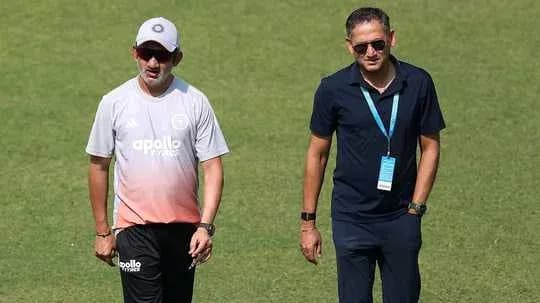
Head coach Gautam Gambhir, chief selector Ajit Agarkar and Centre of Excellence head VVS Laxman will sit alongside BCCI secretary Devajit Saikia, who will chair the discussions. This is not a routine check-in. It is a post-mortem.
The recent tours of the UK and Sri Lanka, and especially the white-ball debacles in Ireland and England, have forced the BCCI to act. The T20 World Cup winners went from lifting a global trophy to failing to win a single one of the six completed T20Is on that trip. For a side that prides itself on depth and dominance, that run cut deep.
Saikia had tried to keep the temperature down in July, even as the T20I series against England was unravelling.
“The BCCI is currently observing the performance of the Indian T20 team which has not been up to the mark in the ongoing series against England. However this is not something abnormal and can happen in international cricket. We consider it as a purely bad phase,” he said then.
The “bad phase” has now brought everyone to Mumbai.
Gill Steps Into the Inner Circle
Late on Tuesday, one significant development emerged: Shubman Gill will be in the room. The India Test and ODI captain has been invited and will attend in person, underlining both his status and the seriousness of the review.
Gill is understood to be keen on playing an active role in mapping out India’s next stretch of assignments. He is expected to offer his own assessment of the recent tours and help shape the roadmap across formats. For a relatively new captain, this is an early taste of the political and strategic heft that comes with the job.
Shreyas Iyer, the T20I skipper, will also be part of the discussions. It is not yet clear whether he will fly in or dial in, but his presence — physical or virtual — has been confirmed. Given the T20 team’s struggles in Ireland and England, his role and resources are bound to be scrutinised.
Rohit Question Hangs Over the Room
Hovering over all of this is one name that is not on any official invite list but will dominate the whispers: Rohit Sharma.
The gap between the BCCI and the selection committee over Rohit’s future has already spilled into public view. Reports suggested the selectors did not see him as part of the 2027 ODI World Cup plans and that the Lord’s ODI would be his last in the format. The BCCI moved quickly to deny that, but the damage was done. Doubt had entered the conversation.
Thursday’s meeting is expected to bring some clarity. Not through grand statements, perhaps, but through the direction taken on succession planning, leadership roles and long-term World Cup thinking. Whether Rohit remains central to those plans or gradually shifts to the margins is one of the most delicate calls Indian cricket faces.
Tough Tours, Tougher Decisions
The review is not just about what went wrong in Ireland and England. It is about what comes next.
India face a demanding away series in New Zealand, a full multi-format challenge: five T20Is, five ODIs and two Tests. Conditions will test technique, temperament and squad balance. Selection strategies discussed in Mumbai will quickly be stress-tested in Wellington, Auckland and beyond.
The 2027 ODI World Cup sits further down the road but will loom large in the conversation. So will India’s standing in the current World Test Championship cycle. The management and selectors must decide how aggressively to rotate, how to manage workloads, and what administrative or structural tweaks are needed to keep India in the hunt across formats.
That means more than just swapping players in and out. It means examining pathways, bench strength, and the alignment between the CoE, the selectors and the team management. Laxman’s presence, in that sense, is pivotal.
Agarkar, Laxman and the Power Balance
There is another subplot running beneath the surface: the futures of Ajit Agarkar and VVS Laxman themselves.
Speculation has swirled around Agarkar’s position and the possibility of Laxman stepping into a larger role with the national side. None of the three key parties — the BCCI, Agarkar or Laxman — has gone on record about it. The silence has only fuelled more conjecture.
This meeting may not end with a dramatic announcement, but it could quietly reset the power balance. If responsibilities shift, if Laxman’s influence grows, or if Agarkar’s mandate is redefined, those decisions will ripple through every selection meeting and every squad sheet over the next few years.
For now, all that is certain is this: the BCCI promised a review after the white-ball setbacks, and the review has arrived. A World Cup-winning side has hit turbulence, senior figures are under scrutiny, and the next cycle — in Tests, ODIs and T20Is — is already on the clock.
By the time the doors open in Mumbai and the key figures walk out, Indian cricket may not look radically different. But the direction they quietly choose inside that room could decide who leads, who follows, and who gets left behind before the next World Cup comes calling.