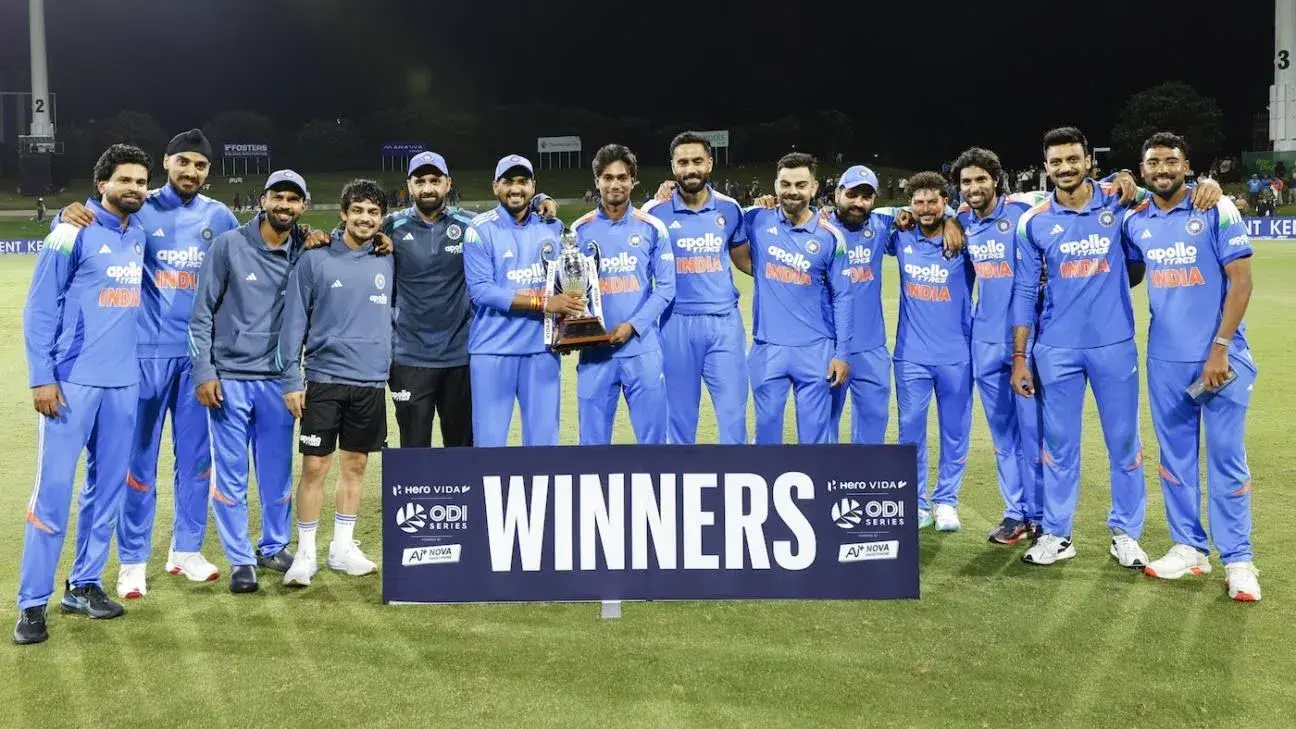
India U19 Wins Asia Cup in Last-Ball Thriller with Mohit Ulva Heroics
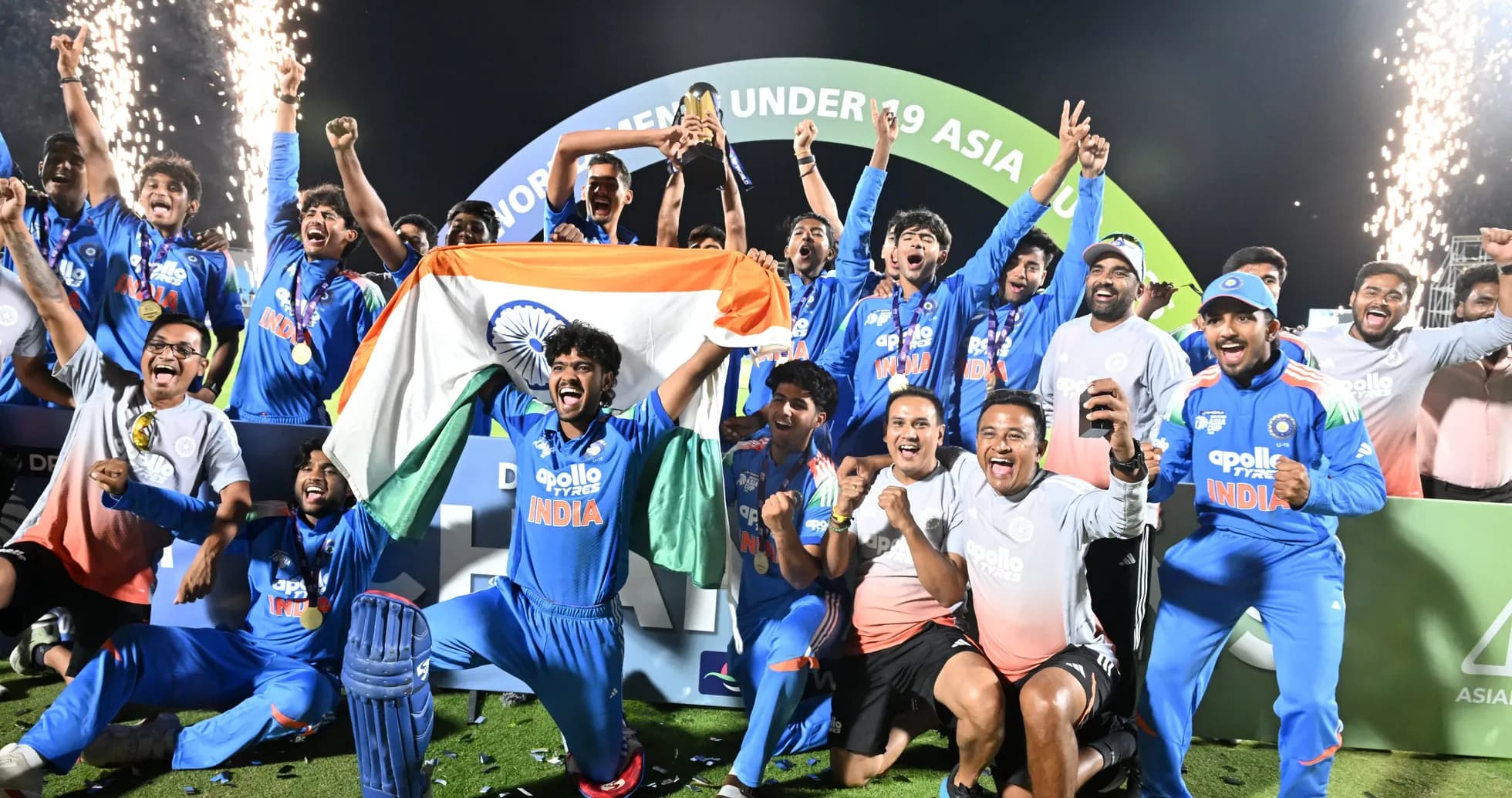
At Al Amerat, with the desert evening closing in and nerves stretched to breaking point, a teenager at No. 10 rewrote the script.
India needed three off the final ball. One wicket in hand. A continental title on the line. Mohit Ulva, 49 not out from 25 balls at that point, skipped down the pitch, swung through the line, and sent the ball skimming to the rope.
339 reached. One wicket standing. The 2026 ACC Men’s U19 Asia Cup wrestled from Pakistan’s grasp in the most dramatic fashion imaginable.
A chase that lurched, then roared
The target was vast. Pakistan’s 337/9, built on a commanding century from Usman Khan and heavy-hitting support from Abdul Qadir and captain Farhan Yousaf, looked every bit a trophy-winning total on a truer-than-expected surface.
India’s reply began with calm authority. Captain Lakshya Raichandani and Aaryavir Sehwag walked out without fuss, then quietly dismantled early nerves. They didn’t slog; they constructed.
Sehwag was the first to accelerate, threading gaps and punishing anything remotely loose. His 58 off 61 balls gave India the tempo they needed in a chase of this size, while Raichandani played the adult in the room, 80 off 101 balls of composed, almost stubborn resistance. The pair stitched together 95 for the first wicket, and for a while, India looked ahead of the game.
Then the final turned.
Pakistan’s bowlers, who had looked flat in the opening exchanges, began to chip away. Wickets arrived in clusters. The middle overs, once a platform, became a minefield. Every Indian mistake seemed to drag the chase back towards the 300 mark, then below it.
From 95/0 to 252/8, the scoreboard told a story of pressure. Set batters gone, the dressing room thinning, the equation thickening. Pakistan’s fielders grew louder, sharper. India’s dugout went quiet.
Manal Chauhan steadies the freefall
At 252/8, with the game slipping, Manal Chauhan walked in with little margin for error and even less time. He didn’t flinch.
Chauhan’s 47 off 32 balls was not just a cameo; it was a lifeline. He counter-attacked, refusing to let the asking rate spiral out of reach, and in Mohit Ulva he found a partner willing to swing, scamper and absorb the tension with him.
Together they added 57 for the ninth wicket, dragging the chase from the brink back into the realm of possibility. Every boundary from Chauhan felt like a punch back at a Pakistan side that had begun to taste victory. Every single from Ulva kept the strike rotating and the belief alive.
When Chauhan finally fell, India still needed work. The scoreline read 309/9. Pakistan were one strike away. India were one stand away.
Ulva and Venkata: the last stand
Into this cauldron stepped Chigurupati Venkata, playing his first match of the tournament. No sighters, no easing in, just a final to save.
Ulva, now fully in charge of the chase, took on the role of finisher with startling clarity. He picked his bowlers, picked his moments, and turned the closing overs into a personal assault. His unbeaten 49 off 26 deliveries was all nerve and clean hitting, the kind of innings that can define a young career.
Venkata did exactly what India needed: he stayed. Eleven not out off eight balls, every run vital, every block and scampered single a small act of defiance. Together, they stitched an unbroken 30-run partnership for the last wicket that swung the match from tense to unforgettable.
Eight runs were needed off the final over. Pakistan tightened the field, the noise rose, and every delivery carried the weight of a rivalry that stretches far beyond age-group cricket.
Ball by ball, Ulva chipped away. Two here, a single there, pressure bouncing between bowler and batter like a live wire. Then that final delivery: three required, all results possible. Ulva charged, connected, and the ball raced away. The Indian dugout exploded. The Pakistan players sank.
Pakistan’s batters set the stage
Earlier in the day, it had looked like Pakistan’s batters had done enough to keep the trophy.
Usman Khan’s 107 off 111 balls was the spine of their innings, a measured hundred that allowed those around him to swing harder. He controlled the tempo, absorbed the early scrutiny, and then opened up once set, forcing India’s bowlers to chase the game.
Abdul Qadir’s 80 off 54 was the innings that gave Pakistan their swagger. He went after anything in his zone, turning good balls into scoring opportunities and poor ones into punishment. With captain Farhan Yousaf adding a brisk 63 off 60, Pakistan surged towards a total that looked, for long stretches, like a title-clincher.
India, though, found moments of resistance with the ball. Kavya Patel, with figures of 4/68, kept prising out key wickets, ensuring Pakistan never completely ran away. Venkata, before his batting heroics, had already made his mark with the ball, returning an excellent 3/40 that checked Pakistan’s charge just enough.
Yet 337/9 still felt imposing. On a big day, under big pressure, it was the kind of total that usually wins you finals.
Usually.
Revenge, and a statement
Just days earlier, Pakistan had beaten this same Indian side in the group stage. That result lingered. It added edge to the contest, added bite to every appeal and celebration.
This time, India did not blink.
They matched Pakistan’s batting muscle, rode out the middle-order collapse, and then found heroes where finals so often find them: in the lower order, in the players who are supposed to be supporting acts, not headliners.
Ulva’s 49* from No. 10 and Venkata’s all-round impact turned a strong campaign into a defining one. A title, a last-ball win over their fiercest rivals, and a dressing room full of teenagers who now know what it feels like to win when everything seems lost.
Player of the Match: Mohit Ulva – 49* (26)
For a generation of young cricketers on both sides, this was more than a final. It was a glimpse of what they might become the next time India and Pakistan meet with a trophy on the line.