India U-19 vs Australia: Rain-Shortened T20 Match Highlights
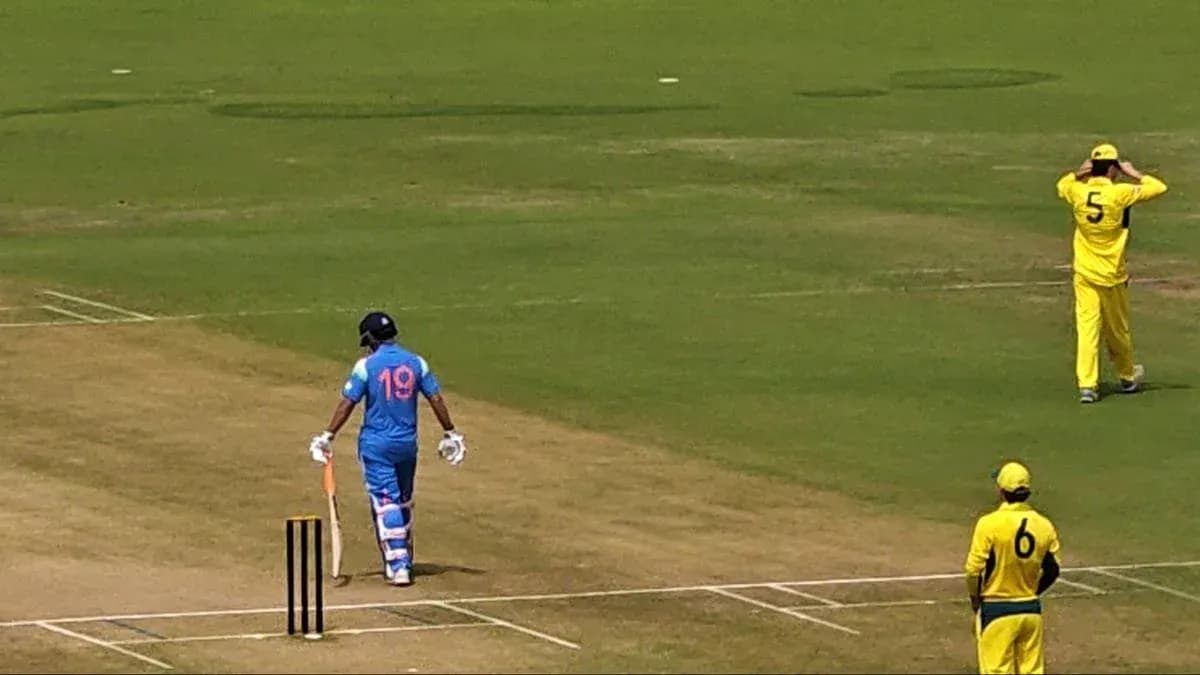
The first Youth ODI between India and Australia in Rajkot never really got to be an ODI at all. A day that began under heavy cloud, with covers nailed to the square and umpires peering at waterlogged patches, finally squeezed out a game – but only as a T20 shootout at the Niranjan Shah Stadium.
Once the rain relented and the groundstaff won their race against the cut-off time, the format was officially sliced down. From a planned 50-over examination of temperament, it became a 20-over dash. India won the toss and chose to bat, and what followed was a glimpse into a fearless generation that treats a shortened game as an invitation, not a compromise.
Sehwag surname, same intent
Aaryavir Sehwag walked out with captain Lakshya Raichandani to open for India U-19, and the nostalgia wrote itself the moment he got going. After three dots to start against Kasey Barton, Aaryavir’s first scoring shot was a boundary – and the old line resurfaced: Sehwag off the mark with a four.
He wasted little time. By the end of the second over India had 20 on the board, both openers finding the fence. Aaryavir moved to 16 off 14 balls with three boundaries, setting the tone for a PowerPlay that gave India breathing space even as the outfield, and the day, still felt heavy with moisture and delay.
At 31 without loss after four overs, India had the kind of platform that allows a side to absorb a lull or two. They would need that cushion soon enough.
Australia hit back, India wobble
The first real check came once the field spread and the Australian seamers settled into their work. Will Byrom slipped in a quiet over at 62 for 1, and then prised out Kushagra Ojha to trigger a small slide. From 74 for 2, India suddenly found themselves 74 for 3 as Byrom struck again, removing Ojha for 16 off 14.
Eli Brain – listed as Brain in the score feed – had earlier dismissed Raichandani for 15 off 15, the India captain’s innings sprinkled with two boundaries but cut short just as he looked ready to push on. Spencer Green then trapped Arjun Rajput in front for 15 off 8, a cameo that featured a six and a four but ended just when India needed a longer hand.
At 89 for 4 after 12 overs, the innings sat on a knife edge. The early promise had been checked, the ball was older, and Australia’s quicks had their tails up.
That’s when the middle order kicked the door down.
Dravid and Chauhan change the mood
Anvay Dravid, in at the fall of Rajput, began quietly with a single. It didn’t last. Green returned for the 14th over and the momentum flipped in a blur.
Yashbardhan Chauhan launched the first ball for six. A single brought Dravid on strike. He replied with his own towering hit over the ropes – his first six of the day – and Chauhan finished the over with two clean fours. Twenty-two runs ripped from it, and suddenly India were 122 for 4 after 14 overs, the innings reborn.
The assault didn’t stop there. Dravid had already found his first four in the previous Byrom over, and he kept clearing the field. Another maximum off Eli Brian pushed India to 134 for 4 after 15, and the Australian attack, so disciplined through the middle, began to fray.
Dravid’s cameo was brief but electric: 38 off just 18 balls, with three sixes and two fours. He was eventually bowled by Brain with the score 159 for 5 in the 18th over, but by then the damage was done. The tempo of the innings had been transformed.
At the other end, Chauhan was crafting something more substantial.
Chauhan’s statement finish
If Dravid provided the spark, Yashbardhan Chauhan supplied the backbone. He arrived with India under pressure and left them with a total that looked imposing for a youth T20.
Chauhan picked his moments early, rotating strike when the bowlers hit their lengths and then exploding whenever they missed. He punished Green, he punished width, and once set, he began to dominate the narrative of the innings.
By the time the final over began, Chauhan was into the 50s, his strokeplay clean and decisive. He finished with 54 off 34 balls, an innings laced with five fours and two sixes, before falling in the last over. Even his dismissal couldn’t halt India’s surge: they still squeezed eight runs from that final set of six to close on 182 for 6 from their 20 overs.
From 89 for 4 to 182 for 6 – 93 runs in the last eight overs told the story. Australia’s discipline cracked under sustained pressure, and India’s young middle order showed both range and nerve.
A day that belonged to the kids – and the parents
The cricket, when it finally arrived, had to fight for attention with the day’s other storyline: the wait. Hours earlier, steady rain had kept the players indoors, the pitch under covers and the outfield soaked. Inspections came and went. Waterlogging near the 30-yard circle threatened to wipe the game out altogether.
In the stands, the tension was different. Parents of the Australian players had travelled all the way from home, only to sit through a long, wet vigil. Among them was Puneet, father of Australia U-19 player Neel Patel. Originally from Ahmedabad and a former player for Gujarat College and ONGC, he had returned to Gujarat to watch his son play on what he calls “home ground”. His only wish in the morning was simple: “We just hope there’s some game today.”
By late afternoon, that wish had been granted, and the youngsters made sure the shortened contest still felt like an occasion.
India’s 182 for 6 now hands the ball – and the pressure – to Australia’s top order. On a day that swung from umbrellas to uppercuts, the question for the visitors is clear: can their next generation match the composure and power India’s teenagers have already shown under storm clouds?