India’s U19s Claim Asia Cup with Dramatic Last-Ball Win
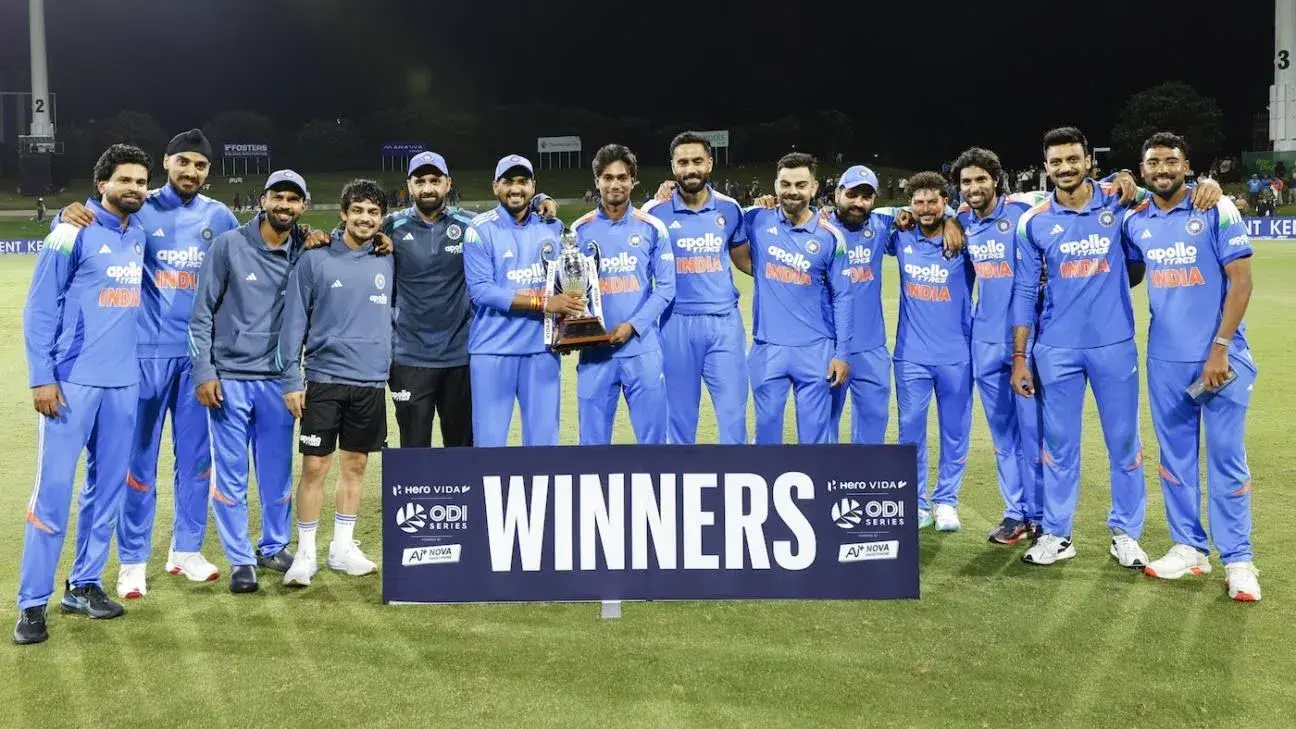
India’s under-19s pulled off a heist for the ages in Muscat. They walked away with the Asia Cup, a one-wicket, last-ball win over Pakistan and a record-extending ninth title.
They also walked into a storm.
A classic India–Pakistan finish
At the Oman Academy Ground in Al Amerat, the script felt familiar: two old rivals, a huge score, and pressure thick enough to slice. Pakistan, sent in after winning the toss, did everything a side could reasonably ask of itself in a final. They piled up 337-9, a total that should win most 50-over games at this level.
Usman Khan’s 107 off 111 balls set the tone at the top. Abdul Qadir’s 80 and captain Farhan Yousaf’s 63 kept the innings surging, the scoreboard constantly ticking, the Indian bowlers forever chasing the game. By the break, Pakistan had runs, momentum, and the psychological edge.
India needed 338. In a final. Against Pakistan.
They almost blew it. Then they didn’t.
Captain Lakshya Raichandani and Aaryavir Sehwag, son of Virender Sehwag, dragged India into the contest with a composed opening stand. Raichandani’s 80 off 101 balls gave the chase structure, while Aaryavir’s 58 from 61 deliveries – laced with nine fours – provided the early tempo and a glimpse of the famous family flair. Across the tournament, Aaryavir had been relentless; he finished as the leading run-scorer with 361 runs in five innings and walked away with the player-of-the-tournament award.
India looked in control. Then the familiar tremor of an India–Pakistan chase arrived. Wickets started to fall. The required rate climbed. The tension inside the ground sharpened with every dot ball.
At 252-8 in the 42nd over, with the lower order exposed and Pakistan circling, the final seemed to tilt decisively green.
Chauhan and Ulva turn the tide
That’s when Manal Chauhan and Mohit Ulva walked in and rewrote the night.
Their partnership didn’t just add 57 runs for the ninth wicket; it changed the entire mood of the contest. Chauhan’s 47 from 32 balls was full of intent, the kind of innings that drags belief back into a dressing room. He picked gaps, took on the bowlers, and refused to let the asking rate suffocate India’s hopes.
At the other end, Ulva held his nerve. His unbeaten 49 off 26 deliveries was all about clarity under fire. He read the field, picked his moments, and kept India in touch when a single misjudgment would have ended everything.
The equation tightened. The noise rose. The game marched to the final ball.
Three needed. One delivery. Ulva on strike.
He didn’t flinch. He found the boundary, sealed the chase, and turned a looming collapse into a famous win. For a player who admitted the tournament had not gone his way, this was redemption with a flourish.
“This tournament had not gone well for me, but I had belief that I would be able to deliver today,” Ulva said afterwards. He credited Chauhan’s support and spoke of his faith in India’s batting and the flat wicket. Number 10, he added, had been a lucky position for him – and it certainly was in Muscat.
India’s youngsters had produced a classic comeback, the sort of finish that lives in highlight reels and memory for years. On pure cricketing terms, this was a triumph of depth, resilience, and refusal to surrender.
But the story did not end with the winning boundary.
Celebration turns sour
As the final ball raced away and Indian players sprinted onto the field, joy quickly curdled into something else.
Television footage and clips shared online showed several Indian players directing their celebrations not at their own dressing room or fans, but at Pakistan’s players. One Indian cricketer was seen yelling and gesturing aggressively in the face of Pakistan wicketkeeper Hamza Zahoor, who chose not to respond. Other players kicked their legs in the direction of the Pakistan dressing room while members of the Indian team management tried to restrain them.
The trophy was theirs. The moment, though, slipped away.
What should have been a clean, jubilant coronation of a new under-19 champion side instead sparked a furious debate. Indian fans, usually quick to revel in a win over Pakistan at any level, were among the first to call the behaviour “uncalled for” and “disgusting” on social media. The criticism was sharp, emotional, and personal.
“India and Pakistan may be adversaries, and cricket may be fiercely competitive, but that is no excuse for such uncouth, crass and downright disgusting behaviour,” one Indian supporter wrote on X. Another pointed to a wider malaise: “The behaviour on display was a reflection of the culture of leadership this country has normalised. It’s a cricket match, not a war.”
The verdict from many was simple: winning is not enough.
“A country’s sporting culture is reflected not just in how its players win, but also in how they treat those who lose,” one post read, echoing the unease that spread across timelines.
Former Pakistan captain Mohammad Yousuf weighed in with a pointed reminder about what it means to wear national colours.
“You are not just representing your country. In fact, you are representing your upbringing, the values and the ethics your parents taught you as a child,” he wrote on X. “Therefore, always remain respectful and composed, whether in victory or defeat. True sportsmanship is reflected in the way you conduct yourself, regardless of the outcome.”
His words landed heavily in the aftermath of a final that had already been emotionally charged.
Handshakes missing again
The night ended with another telling image: no post-match handshakes.
Both teams skipped the customary gesture, a small act that has grown into a symbol of something larger in India–Pakistan cricket over the last year. The absence of handshakes has become a pattern rather than an exception.
Last year, then-India captain Suryakumar Yadav and his team declined to shake hands with Pakistan’s players after an Asia Cup match and also refused to accept the trophy from Asian Cricket Council President Mohsin Naqvi, who is also Pakistan’s interior minister.
The women’s game has mirrored the same tension. When Pakistan met India at the ICC Women’s World Cup 2025 in Sri Lanka, players avoided handshakes. The same scene played out at the ICC Women’s T20 World Cup in England and during their group-stage meeting in the Women’s Asia Cup. In September, India’s women’s team again declined to receive the trophy from Naqvi after winning the Asia Cup final in Dubai.
What once felt like isolated statements now looks like an entrenched stance, with political strain seeping into even the age-group game.
A night of contrast
On the scoreboard, India’s under-19s delivered exactly what their system demands: another title, another pressure chase mastered, another generation of names to file away – Raichandani’s leadership, Aaryavir Sehwag’s prolific run-making, Anvay Dravid’s presence behind the stumps and with the bat, where he added 19 runs.
On the field after the final ball, they also delivered a stark reminder that talent and temperament do not always grow at the same pace.
The cricket was gripping. The comeback was outstanding. The trophy is real.
So is the question now hanging over this group: when the next tight finish comes, what will define them more – the way they fight for the win, or the way they handle it once they’ve won?