India’s T20 Selection Dilemma: Tilak Varma's Role
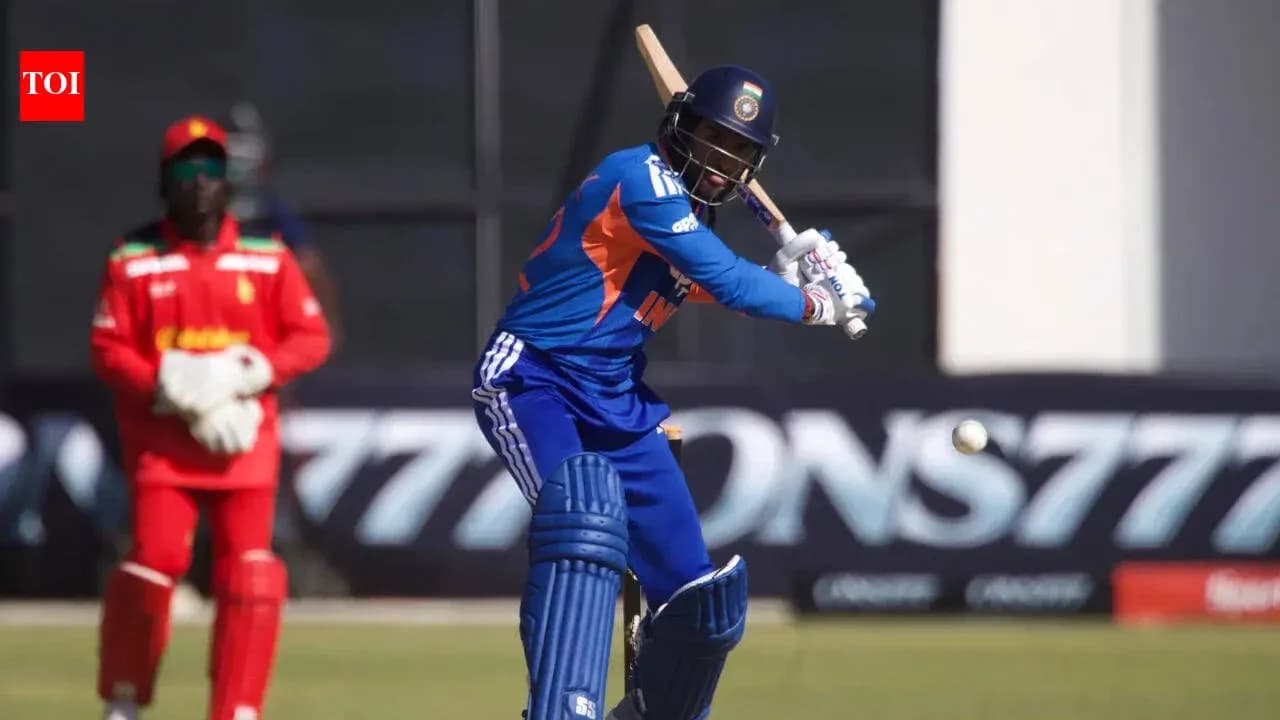
India’s search for something as simple and elusive as stability in T20I cricket moves into its next chapter against Afghanistan, and once again the batting order sits under the harshest light. The results since their second straight T20 World Cup title have been jarring: six defeats on the bounce to Ireland and England, followed by a 3-0 rebound against Zimbabwe that felt more like a reset than a statement.
Now comes Afghanistan. Then a historic T20I against Japan. Then the Asian Games 2026. A busy calendar, but one nagging question: where exactly does vice-captain Tilak Varma fit into all of this?
A vice-captain without a fixed address
On paper, Tilak’s numbers since the 2026 T20 World Cup jump off the page.
255 runs from 10 innings. Strike rate 159.36. Three fifties.
On closer inspection, the story is far less straightforward.
One of those half-centuries arrived in the recent Zimbabwe series, another in the fifth T20I against England, a dead rubber by the time India walked out having already lost the series. The stats shine in isolation, but the performances across the full stretch tell a more uneven tale. In the UK in particular, Tilak’s form dipped, his innings veering between promise and frustration, the odd big score punctuating a run that never quite settled.
That inconsistency feeds directly into the current debate. India have handed him the vice-captaincy, a clear vote of confidence. What they have not yet handed him is a clearly defined role.
Is he a powerplay aggressor? A middle-overs stabiliser? A finisher who walks in with 30 balls left and a licence to swing? Right now, he has been a bit of all three and not definitively any one of them.
AB de Villiers sounds the alarm
AB de Villiers has seen enough high-class batting line-ups to know when a team is juggling too many options without a plan. Speaking on his YouTube channel, the former South Africa star looked at India’s squad and saw quality, depth – and a looming selection headache.
“There will definitely be some selection issues with regard to the batters,” he said, before reeling off the names that crowd India’s white-ball dressing room: Shreyas Iyer as captain, Ishan Kishan, Sanju Samson, Vaibhav Sooryavanshi, Abhishek Sharma, and the all-round options that further complicate the picture. Then he landed on the sticking point.
Tilak Varma.
“I think that’s where the balance is quite tricky. Where will he bat?” de Villiers asked.
That question cuts to the core of India’s T20 identity at the moment. It is not about whether Tilak is good enough – his ceiling is obvious – but about how India intend to use him when the opposition is sharper, the stakes higher, the pressure real.
Too many batters, not enough roles
Shreyas Iyer’s side is not short of talent. Iyer himself prefers the middle order. Ishan Kishan can open or slot at No. 3. Sanju Samson is at his best when he can dictate tempo around the middle overs. Abhishek Sharma brings left-handed aggression at the top. Vaibhav Sooryavanshi adds another specialist batting option. Then come the all-rounders, each of them expecting time in the middle.
That is a lot of players for a limited number of clearly defined roles.
This is where de Villiers’ warning bites. The temptation in T20s is to simply stack the XI with the “best” batters and trust their talent to sort things out. At this level, that rarely works across a full cycle. The modern game demands clarity: who takes down spin, who targets pace, who absorbs pressure after early wickets, who finishes.
Tilak sits right in the middle of that web. A left-hander who can hit pace and spin, he looks tailor-made for the crucial No. 3–5 band. Yet India have not consistently locked him into one spot or one job. Without that, his numbers can mislead, his impact fluctuating with the chaos of the situation rather than the certainty of a role built around his strengths.
Afghanistan: dangerous opponents, unforgiving test
De Villiers did not undersell the threat either. He called Afghanistan “quite a dangerous team” and stressed that even with a “really, really strong squad”, India cannot afford to drift through this series experimenting without a plan.
Afghanistan’s attack, with its mix of high-pace and high-quality spin, will punish indecision. A muddled batting order, shuffled on the fly, is exactly what their bowlers thrive on. India, coming off a wild swing from losing streak to clean sweep, need this series to be about more than just results. They need it to be about definition.
This is where the Afghanistan games become more than a tune-up. They are a laboratory for India’s T20 future – but a demanding one, against a side that has repeatedly shown it can rattle bigger names when given an inch.
The next phase – and the Tilak question
The schedule does not slow down. Three T20Is against Afghanistan from September 13. Then the spotlight of a historic clash with Japan. Then the Asian Games 2026, where India will again be expected to set the standard.
Under Iyer, the mandate is clear: turn a champion side into a consistently coherent one. That means less chopping, more clarity. Less improvisation, more structure.
Somewhere in that process, India must decide what Tilak Varma is to this team. Not just in name or title, but in overs, in situations, in responsibility. Vice-captaincy suggests trust. The batting order will reveal how deep that trust truly runs.