India’s Spin Dominance Secures Sixth Straight Asia Cup Final
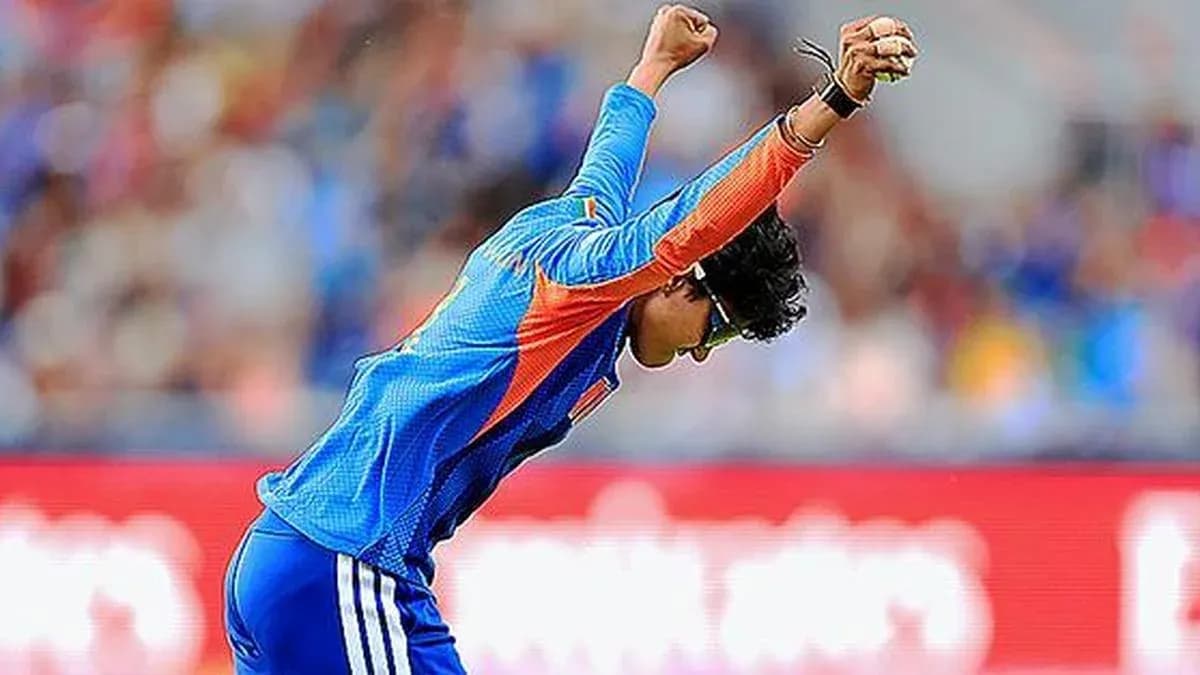
India walked into Dubai as favourites. It walked out with a 40‑run win, a sixth consecutive Women’s Asia Cup final secured, and its spin cartel once again dictating the terms of an entire evening.
Bangladesh, chasing 150 on a surface built for slow bowling, never came close. The scoreboard read 109 for eight after 20 overs. The gulf between the sides felt even wider.
Shafali’s lucky blaze sets the tone
Asked to bat first after Nigar Sultana won the toss and chose to bowl, India’s innings flickered early.
Smriti Mandhana scratched around for 2 off 5 before a leading edge off Sultana Khatun looped towards mid‑on. Shorna Akter back‑tracked, steadied, and held. India 9 for 1 in the second over, its senior opener gone and the pressure instantly on Shafali Verma.
Shafali responded in the only way she knows. By swinging.
She was reprieved almost immediately. On six, she holed out to mid‑on where Fahima Khatun grassed a straightforward chance. It was the first of three lives she would enjoy. Bangladesh’s fielding, so often its quiet strength, simply fell apart around her.
Marufa Akter, the tournament’s standout PowerPlay seamer, beat Shafali repeatedly but could not dislodge her. When she erred in length, Shafali pounced – a flick through fine leg for the first boundary, a brutal pull over mid‑wicket, a crisp drive through cover.
At the other end, Jemimah Rodrigues’ replacement, Pratika Rawal, showed early nerve. She launched Rabeya Khan over mid‑wicket for six to close out the PowerPlay, then unfurled a classy cover drive for four off her first ball from Marufa. India reached 45 for 1 after six, the foundation laid.
The field spread, and Bangladesh’s spinners clawed the game back. Nahida Akter and Fahima Khatun tightened the screws, stifling boundaries through overs 7 to 9. India’s scoring rate dipped, the middle overs threatening to become a familiar choke point.
Shafali refused to let it happen.
She went after Sultana Khatun in the 11th over, walking down to hammer her straight for six, then repeating the dose over mid‑off. A reverse sweep off Nahida, a thick edge over backward point, and a slice of fortune with a run‑out chance fumbled at the non‑striker’s end – her innings was a collage of audacity and luck.
Dropped on 6, 11 and 56, she finally fell for 64 off 40 balls, caught at deep mid‑wicket off Sultana. Seven fours, three sixes, and a hand that dragged India away from a tentative start towards a competitive total.
When she walked off, India was 92 for 3 in the 14th over. The platform was there. The question remained: could the middle order finally cash in?
Harmanpreet grinds, Deepti finishes
The answer came in fragments rather than fireworks.
Harmanpreet Kaur, promoted into a situation built for a captain’s statement, struggled for rhythm. Dot balls piled up. Marufa beat her for pace and deception. At one stage she had 1 off 7, then 13 off 22, the innings threatening to seize up around her.
Richa Ghosh, in at five, injected some much‑needed intent. She survived a miscued loft that dropped in no‑man’s land, then began to free her hands. A towering six over long‑off off Shorna Akter in the 18th over nudged India’s total towards safety.
Harmanpreet finally snapped the shackles in the 17th, launching Fahima straight for six, but mis‑timed strokes and well‑set fields kept her to ones and twos. It was a scratchy stay, not a sculpted one, yet her presence ensured the innings did not unravel after Shafali’s exit.
The real late surge came from Deepti Sharma.
Walking in after Richa’s stumping for 21 off 16, Deepti read the conditions instantly. A pull to deep backward square to get going, then a flurry in the final over against Marufa: a slash behind square for four, a clean swing over long‑on for six, a driven two down the ground.
She fell on the penultimate ball, caught at mid‑off for 13 off 6, but by then the job was done. India closed on 149 for 6, Bharti Fulmali run out off the last delivery.
On a sluggish Dubai surface where spinners had dominated the tournament, 150 felt like more than a par score. It felt like a test Bangladesh would have to pass against the best spin unit in the competition.
Charani hits 50, spin trio suffocates chase
The chase began brightly enough.
Dilara Akter and Juairiya Ferdous moved Bangladesh to 26 without loss after five overs. Dilara swivelled Kranti Gaud for fours through backward square, Ferdous muscled Nandani Sharma over mid‑wicket. India shelled a sitter in the first over, Pratika Rawal’s third drop of the tournament adding an early layer of anxiety.
Then N. Shree Charani took the ball.
On 49 T20I wickets for the calendar year, one away from history, she needed only six deliveries. Her second over produced a wicket‑maiden, the ball gripping, turning, and teasing the bat. Ferdous miscued a top edge, Richa Ghosh settled under it, and Charani joined the record books with her 50th T20I wicket of 2026, equalling the Indian mark for most women’s T20I wickets in a year.
The impact went beyond the numbers. The required rate ballooned past eight an over. The ball began to talk.
Shafali chipped in with her “golden arm”, beating the bat, forcing errors. Deepti entered the attack and immediately changed the mood. Dilara, looking to break free, carved her through cover for four but perished the very next ball, holing out to Kranti at mid‑wicket for 21 off 26.
Bangladesh slipped to 35 for 2 after eight overs. The climb steepened.
Nigar resists, India keeps tightening the noose
Captain Nigar Sultana walked out with the ghosts of 2018 hovering in the background. She and Sobhana Mostary tried to stitch together a chase that never quite caught fire.
There were flashes. A sweep from Nigar that finally broke a 14‑ball boundary drought. A lovely inside‑out drive from Sobhana off Prema Rawat. A massive slog‑swept six from Nigar off Deepti that briefly rattled the stands and the narrative.
But the pressure kept tightening.
Prema, operating with flight and drift, repeatedly beat the outside edge. Charani strangled scoring options from the other end. Harmanpreet marshalled her fields smartly, clogging the sweep and forcing Bangladesh’s batters to hit into the long pockets.
The turning point came in the 14th and 15th overs.
First, Deepti went straight at Sobhana and shattered her stumps for 18 off 24, the batter playing all around a full, skidding delivery. Then Prema removed Nigar for 19 off 17, the captain attempting to force the pace and only managing a leading edge to short third, where Nandani Sharma made no mistake.
From 65 for 2, Bangladesh slid to 76 for 4. The asking rate lurched into double figures. India’s spinners, as they have all tournament, smelled blood.
Late blows, but no miracle
Shorna Akter offered brief resistance, clubbing Deepti over long‑on for six and later sending Shafali straight back over her head. For a moment, as the ball sailed into the night, the improbable flickered.
India snuffed it out with control rather than chaos.
Charani returned for the 19th over and continued to toy with the batters, conceding just a handful and inducing false strokes. Bangladesh limped to 104 for 5 with 18 balls left, still 46 short, the contest effectively decided.
The final over belonged to Nandani Sharma. She had already done her work with the new ball; now she came back to slam the door.
Fahima Khatun produced the shot of the night for Bangladesh, a perfectly executed dilscoop for four that drew gasps even from neutral throats. It was a brief rebellion. Two balls later she tried to force the pace again and picked out short backward point, falling for 14 off 14.
Off the last delivery, Rabeya Khan trod on her stumps. Hit wicket, out for a duck. Bangladesh closed on 109 for 8, 40 runs adrift.
India’s spinners had once again owned Dubai: Charani, Deepti and Prema sharing the key moments, supported by disciplined spells from Shafali and Nandani. The figures told one story; the body language told another. Bangladesh never looked like overhauling 150 on this pitch.
Another final, another shot at regional supremacy
With this win, India marched into its sixth straight Women’s Asia Cup final, a streak that underlines its regional dominance even as it continues to chase a major global title.
Waiting now will be the winner of Pakistan vs Sri Lanka, a clash that will decide who steps into the ring with Harmanpreet Kaur’s side on September 11.
India arrives there with its formula intact: Shafali blazing at the top, a deep and varied spin attack suffocating chases, and a middle order that, while still not fully convincing, has begun to show signs of life.
The question for the final is simple. On a surface that belongs to the tweakers, who can find enough runs – and enough nerve – to prise the trophy away from a team that looks increasingly at home under this kind of pressure?