India Reclaims Women’s T20 Asia Cup Title with 72-Run Victory
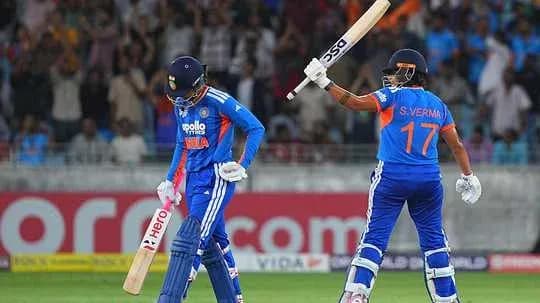
Smriti Mandhana and Shafali Verma did not just set up a final. They tore it open.
On a humid Sunday, India’s most destructive opening pair walked out with a quiet assurance and walked back having left Sri Lanka chasing shadows and history. By the time the spinners took over, the contest was reduced to a procession. A 72‑run hammering sealed India’s fourth Women’s T20 Asia Cup title and underlined, yet again, who owns this tournament.
Openers light the fuse
It began gently. Almost deceptively so.
Shafali Verma’s assault did not start with a heave into the stands but with two delicate touches off Mithali Ayodhya: one guided past gully, the next nudged to the midwicket fence. Two balls, two fours, and the tone was set.
Then she went after Chamari Athapaththu. Arms freed, feet planted, Verma launched two sixes in four balls, the familiar crack of the bat echoing India’s intent. The early sighters were done. The final was now under attack.
Mandhana, who had opened the innings with a first-ball four, slipped into a different gear. She left the fireworks to her partner, stitching together singles and doubles, content to turn the strike over. The elegance remained, but this was a senior pro reading the moment, not chasing it.
Verma, though, had only one plan. Against Chamudi Praboda, she cashed in on every loose length, carving another set of back-to-back boundaries. The fifty came in the eighth over, her third of the tournament, and the fastest in Women’s T20 Asia Cup history — 24 balls, one better than Mandhana’s own mark from 2022.
By then, Sri Lanka’s shoulders had begun to sag.
Records tumble, momentum stutters
The partnership grew into something familiar and frightening. Mandhana and Verma, operating almost on instinct now, pushed India to 120 without loss by the 12th over. At that point, the final was slipping away from Sri Lanka at alarming speed.
The stand also dragged the record books into the evening. The pair drew level with the world record for the most 100-plus partnerships for any wicket in women’s T20Is: six. Different tournaments, different attacks, same story. When they bat this way, they bend games to their will.
Sri Lanka needed a crack, any crack. It came with a miscue.
Verma fell in the 13th over, finally checked after her blitz had ripped 61 off 34 balls. The dismissal offered a sliver of hope. What followed gave Sri Lanka more than that: a terrible mix-up between Mandhana and Harmanpreet Kaur that ended with India’s vice-captain run out, trudging off after anchoring the innings.
The rhythm broke. The middle order tried to keep the run-rate high and paid the price. Wickets began to tumble as batters chased the early standard set by the openers and fell short. The scoreboard, once galloping, slowed.
Yet the damage had already been done. Even as India stumbled through the back end, there was enough muscle left in the innings. G Kamalini, drafted in for Pratika Rawal, finished with a flourish, launching the final ball for six to push India past 180. In a final, that felt enormous.
Sri Lanka’s chase unravels
History stood against Sri Lanka before a ball was bowled. Only once had a total of 150-plus been hunted down in a Women’s T20 Asia Cup chase. That solitary success belonged to them, against India, in the 2024 final.
Two years on, the script flipped brutally.
Four balls into the reply, Kranti Gaud struck. Imesha Dulani, who had opened the innings with a lap shot, tried to repeat the stroke and saw her stumps shattered. Gaud roared, the send-off underlining India’s edge and intensity.
Sri Lanka crawled through the first three overs, searching for stability and a foothold. Athapaththu, as so often, took it upon herself to fight back. She slog-swept Verma — now with ball in hand — for six, taking 12 off the over and injecting life into the chase.
Vishmi Gunaratne joined her, and for a brief passage, Sri Lanka’s reply looked organised. The pair pushed the total beyond 50 without further damage, Athapaththu then targeting Prema Rawat, plundering 11 off the over with a six and a four in successive deliveries. For the first time all evening, India had to think.
Then Deepti Sharma intervened.
Spinners slam the door
Deepti’s second over changed everything. Athapaththu, sensing the need to keep pressing, charged down the track. Deepti saw her coming, dragged the ball wider, and the stumping was completed with clinical ease. Sri Lanka’s captain was gone; with her went the backbone of the chase.
Three balls later, Gunaratne’s stumps were rattled. Two set batters removed in the space of an over. The chase, already steep, now looked almost vertical.
From there, India’s spinners suffocated the game.
Shree Charani, in a year that keeps gathering weight and meaning for her, sliced through the middle order. Line tight, length nagging, she made sure any lingering dreams of a miracle vanished. Beyond the top three, only Nilakshika Silva managed to reach double figures as the innings crumbled.
The target never came back into view. Sri Lanka folded for 111, a chase that started with ambition ending in resignation.
A statement win
The 72-run margin was not just emphatic; it was historic — the second-biggest victory margin in the final of a five-plus team Women’s T20I tournament, behind only Australia’s 85-run win over India at the MCG in the 2020 T20 World Cup final.
This time, India were on the right side of the gulf.
A record-equalling opening stand, a ruthless spin choke, and a title reclaimed. For a team that has long carried the expectation of dominance in Asia, this was more than a trophy. It was a reminder: when Mandhana and Verma light the fuse and the spinners smell blood, who in this region can live with them?