India Seals ODI Series Win in New Zealand
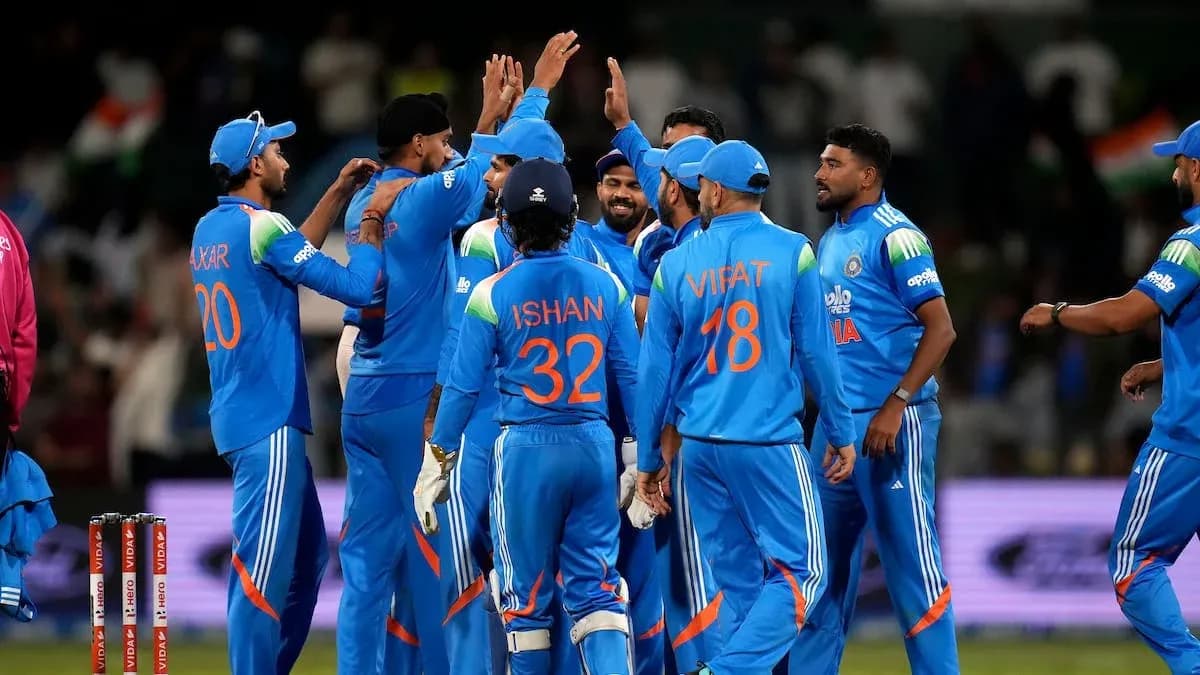
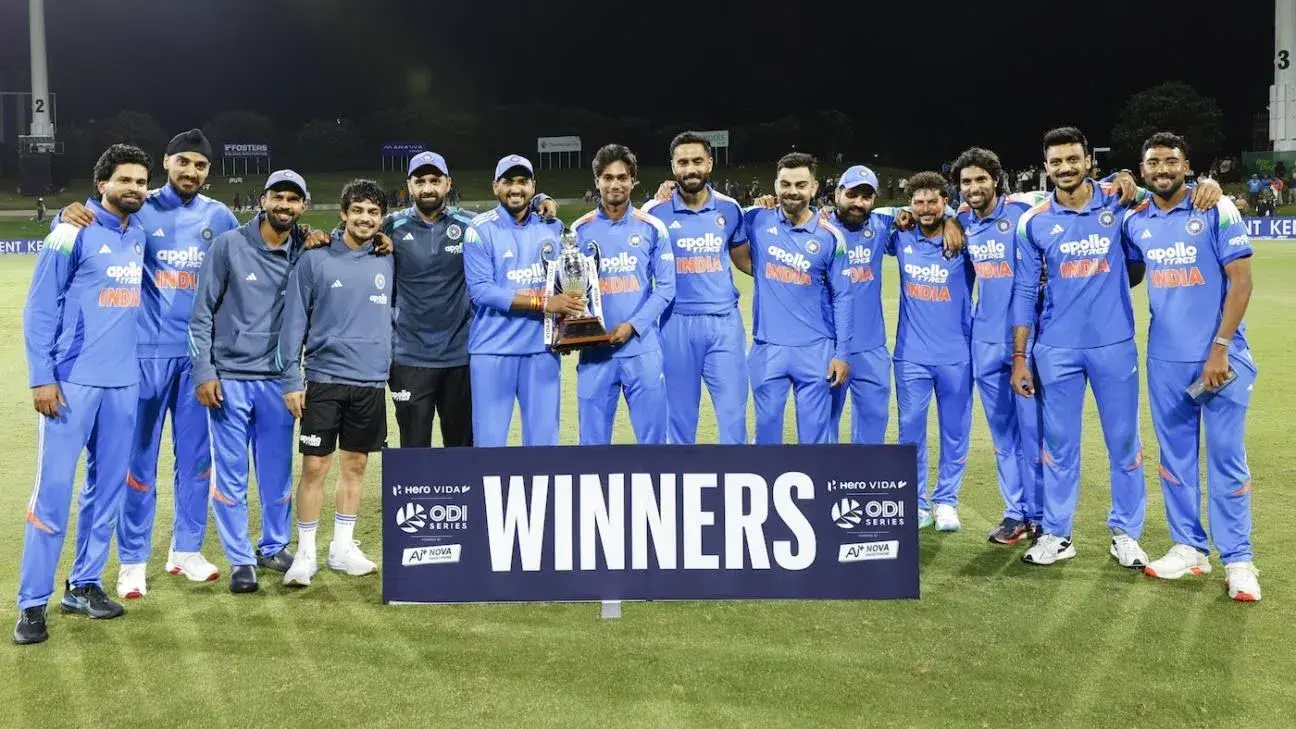
India walked out of Bay Oval with more than just a 22‑run victory. They walked out with New Zealand’s proud home streak snapped, a first bilateral ODI series in the bag under Gautam Gambhir, and a reminder that they can win ugly when the stars misfire.
The irony? On a night billed as a farewell to Rohit Sharma and Virat Kohli on New Zealand soil, it was the bowlers and middle order scrappers who wrote the script.
Rohit and Kohli silenced, India stumble early
For tens of thousands who had flocked to Tauranga over the last two games to see India’s two giants one last time, the final act was brutally brief.
Matt Henry had already sent both away for ducks in game four. This time it was Matt Fisher’s turn to spoil the party. He removed Rohit for seven, caught at midwicket, and then Kohli for five, edging behind, as India slumped to 37 for 3 inside the powerplay.
The stadium fell quiet. The marquee names were gone, the pitch still doing just enough, and New Zealand’s seamers had their tails up.
India needed resistance. They got it, but not without help.
Axar and Kishan drag India to a fighting total
Shreyas Iyer and Axar Patel began the repair job with a counter-attacking fourth‑wicket stand of 52 from 55 balls, a partnership stitched together as much from intent as from New Zealand’s sloppiness.
Axar was handed three lives in the field, Iyer one. The Black Caps shelled chances that should have buried India. Iyer, on 22, failed to cash in and fell trying to pull Blair Tickner, picking out the fielder. Axar, looking increasingly fluent, pushed to 46 before he hit Michael Bracewell straight to mid-on.
At 166 for 8 after 36 overs, that earlier carelessness loomed large. India’s last recognised batter, Ishan Kishan, could only watch as Mitchell Santner’s first telling spell of the series ripped through the middle and lower order. Naman Dhir (22), Auqib Nabi (5) and Yash Thakur (0) disappeared in the space of 11 balls. The innings threatened to collapse in on itself.
Kishan refused to let it. He cleared the ropes twice, forced the pace and tried to drag the total to something his bowlers could defend. His 46 ended when he sliced Jacob Duffy to Fisher at third man, but not before he had altered the tone of the chase.
The final twist came from the tail. Arshdeep Singh and Mohammed Siraj eked out a last‑wicket stand of 26 that nudged India past 200. On a surface where every run felt heavier than it looked on the scoreboard, that stand proved decisive.
India were bowled out for 209. Santner and Duffy shared six wickets, but the feeling lingered that 20 or 30 runs had slipped through New Zealand’s fingers in the field.
New Zealand’s chase unravels under pressure
Chasing a target a shade above four an over, New Zealand should have felt in control. This is the sort of equation home sides dine out on.
Tim Seifert’s early exit for 14 checked that confidence, but the plan was clear: let Will Young and Nick Kelly ride out the tricky twilight period as the sun dipped and the lights took over.
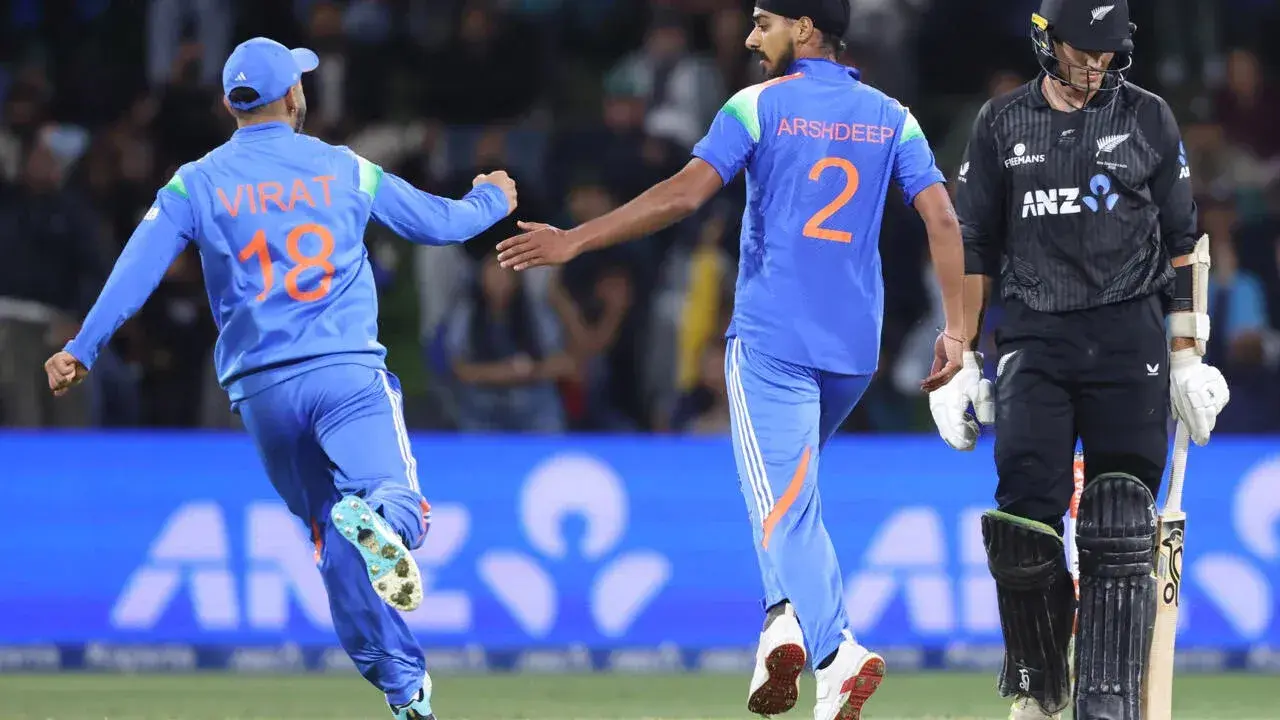
Young, fresh from a career‑best 125 in game four, looked set to anchor again. He saw off the initial burst, then blinked. Arshdeep found him on 22, Ruturaj Gaikwad flinging himself forward at deep backward square to complete a superb diving catch.
Kelly, having done the hard work, dragged Arshdeep on for 24. Two set batters gone, the chase suddenly exposed.
Dean Foxcroft edged to Kohli at second slip on five and was put down, a rare lapse from India. The reprieve didn’t change the pressure at the other end. Finn Allen, the man who can break a chase in ten balls, lasted just one, bowled by Siraj by a delivery that skidded low.
From 64 for 1 to 83 for 4, New Zealand’s innings had been yanked off course.
India squeeze as Arshdeep leads the charge
Foxcroft dug in again and found support in Bracewell during his 50th ODI. Dropped on eight by Thakur in his follow-through, Bracewell added 36 for the fifth wicket with Foxcroft. They weren’t racing, but they were steadying, chipping away, trying to drag the game back to level.
At 119 for 4, with both set and India’s seamers nearing the end of their spells, the contest hung in the balance.
Then it broke.
Nabi tempted Bracewell into the hook, and the allrounder picked out the deep fielder for 19. Next ball, Foxcroft, on 31, dragged onto his stumps. Two wickets in two deliveries, the chase ripped open again. New Zealand were 119 for 6, still 91 runs short, with their last recognised pair waiting in the wings.
Santner and Kristian Clarke walked into a situation that demanded composure and risk in equal measure. They found some of both.
India, behind on over-rates, were forced to bring on spin in the 36th over. Santner, already nursing a blow to the hand from Arshdeep, chose to counterpunch. He launched Axar over the leg side boundary twice, the second blow taking New Zealand past 150 and briefly igniting hope.
The equation shrank. The crowd stirred. India needed a moment.
Dhir provided it. Santner, eyeing a third six, went again over the leg side but this time found the fielder on the midwicket fence. Out for a fighting cameo, and with him went New Zealand’s last realistic chance.
Clarke battled to 16, but Arshdeep returned to nick him off, ending the resistance. The tail could not bridge the gap. New Zealand folded for 187, Arshdeep finishing with 3 for 30 and the new‑look Indian attack closing out a tight, nervy win.
Gambhir’s first bilateral ODI series, and a statement
The only stain on India’s night was a familiar one: a slow over-rate that forced them to bowl the closing stages with an extra fielder inside the circle. It made the final act harder than it needed to be, but it also sharpened their edge.
They still found a way.
Under Gambhir, India already own a Champions Trophy and a T20 World Cup. Now comes a first bilateral ODI series in his tenure, carved out on foreign soil, without a defining innings from Rohit or Kohli, and secured by a bowling unit that refused to let go once it had a sniff.
Both teams now brace for sweeping personnel changes and a shift to the red-ball arena. The all-format contest resumes at the Basin Reserve next week for the first of two Tests.
New Zealand’s home aura has been punctured. India have struck first. The question now is whether the Black Caps can reset in time, or whether this series marks the start of a broader changing of the guard.