India Survives Japan's Scare in Dramatic Five-Over Thriller
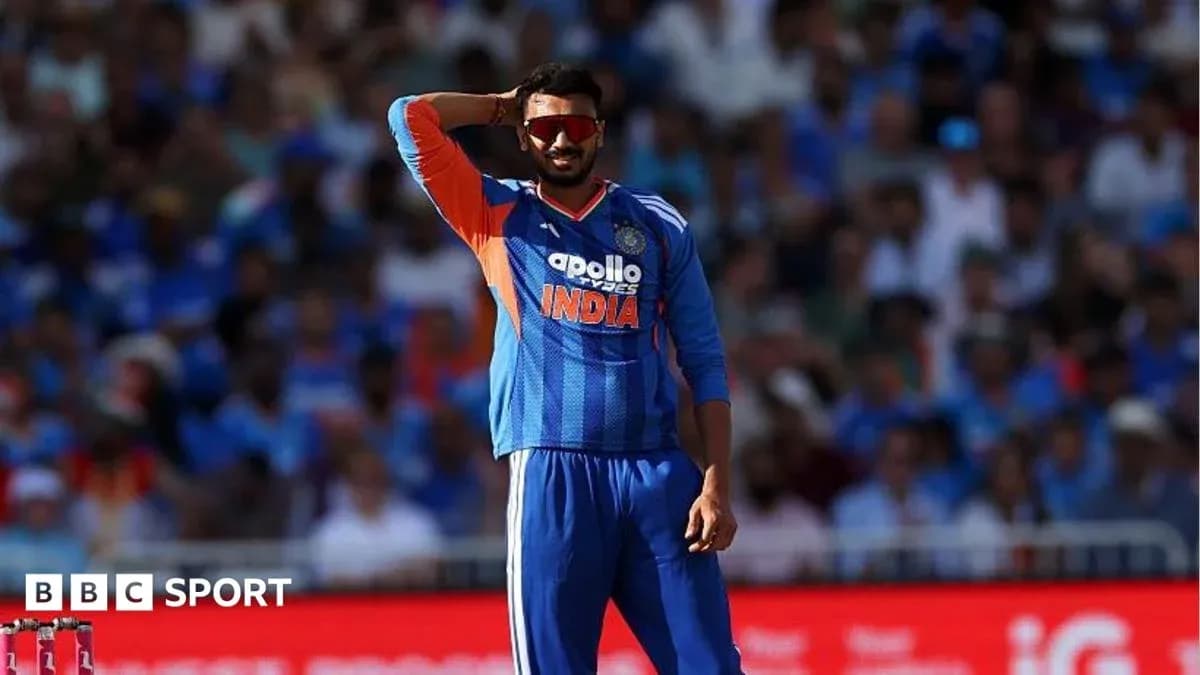
World champions India walked away with the win. They did not walk away unshaken.
On a grey day at Sano Cricket Ground, in a one-off T20 reduced to five overs a side, India squeezed past Japan by just two runs in a finish that will be replayed and debated far beyond the boundary rope.
Japan, chasing 33, needed eight from the final over. Against India. Against Axar Patel. On paper, a mismatch. On grass, anything but.
The wide that wasn’t
The tension spiked with three balls left.
Left-hander Alexander Shirai-Patmore, Japan’s great hope in the chase, shaped for the reverse sweep. Axar fired the ball down leg, which, for a conventional shot, would have been called a wide without a second thought. The umpire’s arm went out. Signal wide.
Axar erupted, arms spread, disbelief written all over his face. Captain Shreyas Iyer joined him, animated, challenging the call. This was not a casual protest; this was a world champion side staring at the possibility of being embarrassed, and fighting every inch.
The two umpires came together in the middle. No DRS. No slow-motion replays. Just a conversation, the playing conditions, and the pressure of the moment.
Then came the twist: the wide was overturned.
The equation flipped instantly. Instead of five runs needed off four balls, Japan suddenly required six from three. The air went out of the Japanese dugout. The Indian fielders, who seconds earlier had looked rattled, straightened their shoulders.
Axar, given his reprieve, shut the door. He closed out the over without conceding the boundary Japan desperately needed, finishing with 0-7 from his two overs as Japan closed on 30-3, agonisingly short.
Law, spirit, and a fine line
The decision will be argued in clubhouses and commentary boxes, but the playing conditions were on the umpires’ side.
In white-ball cricket, anything down the leg side is almost always a wide. That habit is ingrained. Yet the ICC’s men’s T20I playing conditions carry a crucial caveat: once a batter changes the position of their hands or feet to play a reverse shot, they lose the usual leg-side wide “protection”.
The wording is clear enough. A wide should be called “if the ball passes wide of where the striker is standing, and which also would have passed wide of the striker standing in a normal batting position”.
By that standard, the ball that beat Shirai-Patmore’s reverse sweep was legal. The umpires got there eventually, but the route they took is what will rankle. With no DRS in play, seeing a signal reversed after player complaints sits uncomfortably against the oft-quoted “spirit of cricket” preamble, which includes a simple line: accept the umpire’s decision.
Japan did. They had to. But the sense of what might have been hung heavy.
Japan’s near-miss
This was no fluke from Japan. They earned the right to be within a swing of history.
Defending just 32-4, their bowlers hunted in packs. Seventeen-year-old spinner Charlie Hara-Hinze led the way, fearless and disciplined. He removed the explosive Abhishek Sharma with his first ball and finished with 2-17, a spell bristling with intent and nerve.
India, usually so dominant, looked cramped. Shreyas Iyer’s 16 from 12 balls was the only innings with any real fluency, a captain’s knock that dragged his side from a precarious 14-3 to something vaguely defendable. Even then, 32 in five overs felt light.
Japan’s chase began badly. Two down for eight after two overs, they looked overwhelmed by the occasion and the opposition. But they refused to fold. Seventeen runs across the next two overs hauled them back into the contest, setting up that breathless final over.
Shirai-Patmore and his partners nudged, scampered, and kept India honest. Every misfield drew a roar. Every dot ball drew a groan. By the time the final over began, the world champions were the ones under scrutiny.
A first meeting, a clear message
This was the first time India and Japan had met in an international match. Japan have never reached a T20 World Cup; their cricket story is still in its early chapters. On this evidence, those chapters are getting more interesting.
For India, this was billed as a tune-up for the men’s Asian Games, which begin on 24 September. On the scoreboard, they got what they came for: a win. On the field, they received something far more valuable – a jolt, a reminder that reputation means nothing over 30 legal balls.
Japan walked off beaten, but not diminished. They had world champions scrambling, arguing, and hanging on. On another day, with one signal left as it was, they might have had the upset of the year.
The gap between the giants and the dreamers is still there. In Sano, it suddenly felt a lot smaller.