Heinrich Malan's Surprising Departure from Ireland Cricket
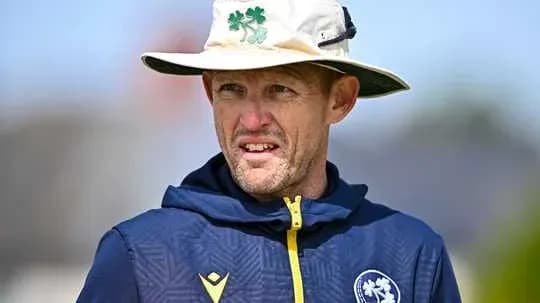
Heinrich Malan walks away from Ireland on a high, not a low. That alone makes his exit one of the more striking coaching departures in recent international cricket.
A day after Ireland swept India 2-0 in a T20I series, toppling the reigning world champions and banking the kind of result that usually buys a coach time and leverage, Malan instead chose the door. Contract to 2027 in hand, momentum behind him, he stepped aside.
The decision, he says, had been coming.
A parting after India, not because of India
“It was a fantastic series for us,” Malan reflected, delighted by how his players “implemented the plans” and “executed them under pressure in a game situation.” Beating India 2-0 was the perfect closing act, not the trigger.
The real conversations started earlier, in the wake of Ireland’s Test against New Zealand.
“We had some conversations post the New Zealand Test match around what the future (post 2027) looks like,” he explained. From there, the path slowly narrowed. New voices had entered the Irish system. New ideas, new methods. Natural evolution, but not necessarily in step with his own vision.
“We had some good conversations over a period of time and ultimately reached the conclusion that it was time for us to move on as our overall philosophies and direction didn't align moving forward.”
So the coach who had just orchestrated a landmark series win chose to leave on his terms, with the scoreboard still glowing in his favour.
A tenure built on big scalps and quiet graft
Malan departs with a CV that carries some of Ireland’s finest modern moments.
Under his watch, Ireland stunned England at the 2022 T20 World Cup in Melbourne. They claimed a first-ever Test victory, beating Afghanistan in 2024. They followed that with a first home Test win, against Zimbabwe in Belfast. And they finished by turning over India in a T20I series that will sit prominently in the country’s cricketing scrapbook.
Yet Malan doesn’t talk about those days as a highlight reel. He keeps circling back to the grind behind them.
“I honestly look back at all those ‘achievements’ with huge pride and gratitude,” he said. “But ultimately I am more proud of the daily work we did to ensure we put ourselves in these positions to compete and get across the line.”
He points to an environment that shifted, subtly but significantly. Senior players taking charge of standards. Leaders owning “our daily actions and behaviours.” Professionals acting like professionals, not just calling themselves that.
“The environment we created around being professional cricketers and what that means… the individual ownership around the holistic programme… I know have left this environment in a strong position for future Irish cricketers to thrive in.”
For Malan, the culture is the legacy. The wins are the evidence.
Progress, but not enough cricket
Behind the results, though, sat a constant frustration: Ireland simply didn’t play enough.
“Very proud of what we achieved and how we went about our daily business but also very challenging as we didn't play enough cricket sadly,” he admitted. “We showed that we can compete with any team which means we have quality players but to be consistent you need to play day in and day out.”
That “day in and day out” rhythm never truly arrived. Not domestically. Not internationally.
“The lack of consistently playing cricket (domestically and internationally) is definitely the biggest challenge across the system,” Malan said. Training filled the gaps, but training can only take a side so far. At some point, methods need to be exposed to real pressure, real jeopardy, real consequence.
“There is a place for training (which we have done lots of) but ultimately it comes down to either getting better in training or exploring new methods and then being able to test or implement them in game situations.”
He hopes the balance will tilt. More fixtures. More cricket. More chances for this group to turn flashes of excellence into a sustained standard.
“Hopefully in time the balance will be better and we will see these players go from strength to strength as they play more cricket,” he said, noting he leaves with “a lot of fond memories.”
The financial squeeze and a thin talent pool
Malan is blunt about the root of the problem. Money.
“The biggest challenge, as we well know, is the financial side of things which impacts the whole structure and system,” he said. Funding dictates schedules, domestic structures, contracts, and the sheer volume of cricket on offer. It also shapes the size and depth of the talent pool.
He believes more domestic cricket, particularly red-ball, is non-negotiable if Ireland want to build something lasting.
“Hopefully the decision makers can find a way to ensure there is more cricket (domestically and internationally). Domestically which will ensure we create opportunities for exposure to the top youth players especially around red ball (first class cricket) and ultimately more international cricket to create a wider group of players to pick from and create healthy competition which is always a good sign of a healthy system.”
He also sees the expanding European cricket landscape as a vital piece of that puzzle. Cross-border competitions, stronger leagues, better opponents.
“It's a great addition to the European cricket landscape and creates more opportunities for players to get exposure at a higher playing level,” Malan said. The chance to share dressing rooms with “some of the best players and coaches from around the world” matters. But he keeps coming back to the same core benefit: more games.
“Most importantly the actual playing of more games will stand all the players and countries in good stead moving forward.”
A new chapter in New Zealand, with an eye on the world
Malan has already moved on physically, if not emotionally. He is back in New Zealand, now head coach of Central Stags, returning to the domestic circuit where reputations are built and rebuilt season after season.
International cricket, though, still pulls at him.
“I really enjoy international cricket and will definitely miss it,” he admitted. He talks about “hopefully in time” finding opportunities again on the global stage, whether with national teams or in T20 franchise leagues, driven by a desire “to keep evolving as a coach” and “add value to the players and ultimately successful environments.”
For Ireland, his exit leaves a gap that is about more than tactics and team sheets. It raises a sharper question.
They have shown, under Malan, that they can bloody the noses of the game’s giants. England in Melbourne. Afghanistan in whites. Zimbabwe in Belfast. India in green-ball theatre.
The challenge now is no longer whether Ireland can compete. It’s whether the system around them will give the next coach, and the next generation of players, enough cricket – and enough support – to turn occasional statement wins into a sustained era.