Harry Brook's Destructive Innings Leads England to Victory
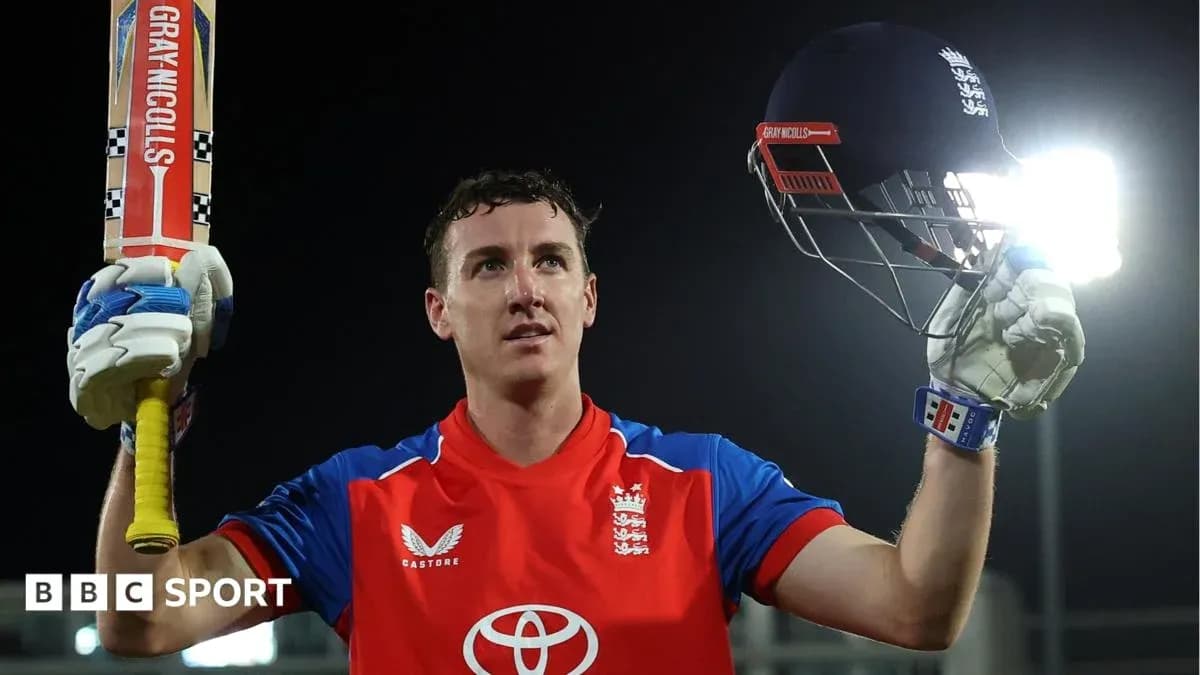
Harry Brook didn’t just light up Southampton. He tore the place apart.
On a warm south-coast evening, with Kevin Pietersen watching from the backroom rather than the middle, Brook produced an innings so savage, so controlled, that the comparisons wrote themselves. By the time he walked off, unbeaten on 114 from 49 balls, England had piled up 254-4 and Sri Lanka were already beaten in everything but name.
They eventually folded for 135. England won by 119 runs. The scoreline barely captures the gulf.
Brook, the TikTok Pietersen
Brook came into this game with a quiet itch. A summer without a Test hundred, questions about his rhythm in the longest format, and the familiar murmur that always follows cricketers who dare to take the game on. He answered all of it with an innings that felt like a highlights reel stitched together in real time.
Ten fours. Six sixes. Barely a mis-hit. He picked length as if he’d seen the script beforehand, dragging good balls into bad areas, flat-batting and carving spinners from spots where most batters are happy just to survive.
The old comparison hovered over the ground as soon as he began to motor. Pietersen, now installed as a mentor through to next year’s World Cup, defined a generation with his audacity. Brook is shaping up as the modern remix. Less switch hit, more tumbling scoop. Not that he needed the party tricks here. This was brutality with a straight bat.
He spoke once about growing up watching Pietersen, about loving the way he went at bowlers, put them under pressure, refused to retreat. You could see that inheritance in every stride down the pitch, every hard run between the wickets. The aggression was familiar. The tempo felt new.
Ben Stokes, watching from home, could barely contain himself. He called Brook a “freak” and claimed even Pietersen’s “genius” couldn’t match his former team-mate’s talent. Hyperbole? Maybe. But on nights like this, it didn’t sound outlandish.
Buttler ignites, Brook detonates
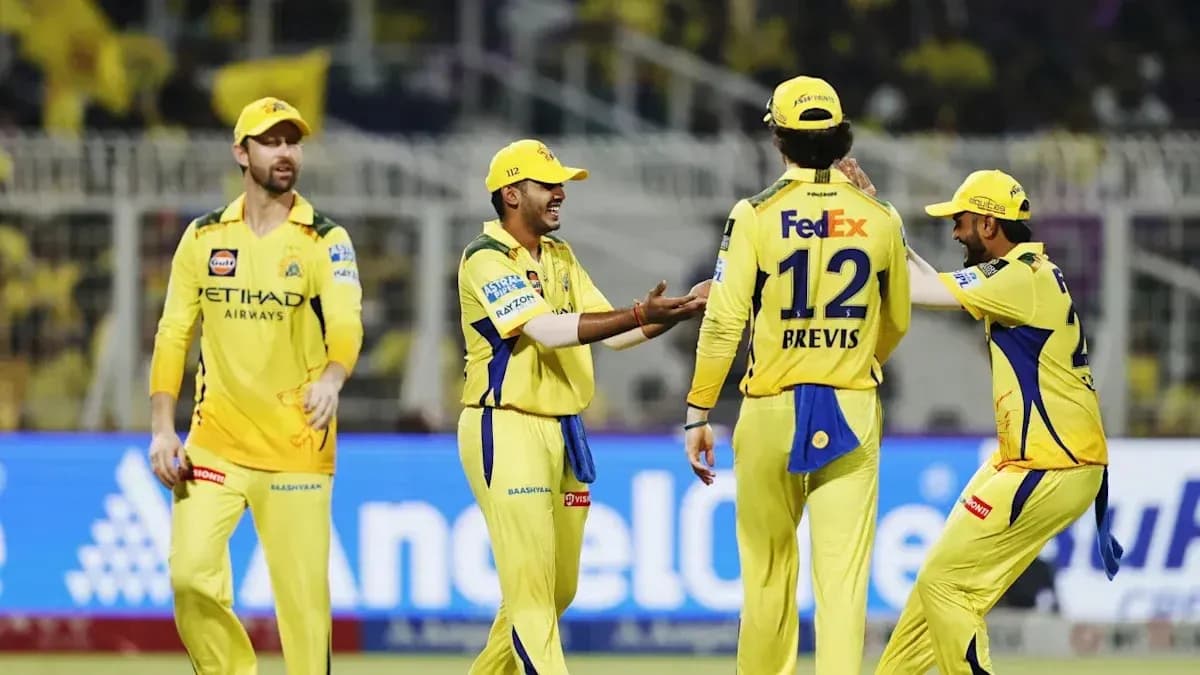
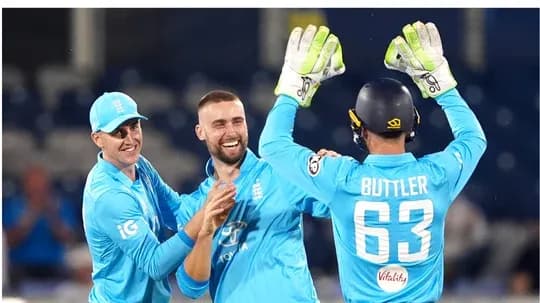
For all the noise around Brook, this demolition job began with his captain. Jos Buttler played the sort of innings that usually headlines a T20 – 80 from 44 balls, all timing and cold-eyed power – and still ended up as the support act.
After debutant Aneurin Donald’s brisk 12, Buttler and Brook settled in, then went after Sri Lanka with clinical cruelty. They added 128 together, the partnership growing from busy accumulation into something far more ruthless once Brook slipped through the gears.
Sri Lanka’s bowlers never found a length. Anything even fractionally short disappeared over midwicket or square. Full and straight vanished down the ground. Width got carved behind point. When they tried spin, Brook simply stepped back, opened the off side or dragged them against the spin into the leg-side stands.
The fielders started to go quiet long before the final overs. England’s dressing room did the opposite.
By the time the 20 overs were done, Brook had a second T20 international century to his name – two more than Pietersen ever managed in the format – and a strike-rate that made a mockery of risk. He finished on 114*, Buttler on 80, and England on a total that felt closer to a dare than a target.
The numbers – and the shadow of KP
Strip away the emotion and the numbers are already nudging Brook into elite company.
At 27, his Test average sits at 53.08, ahead of Pietersen’s mark at the same age, though the older man had two more hundreds by that point. In one-day internationals, Pietersen still holds the edge – 47.87 with six centuries against Brook’s 37.43 and three – but in T20 internationals the Yorkshireman is accelerating away.
Since being bumped up to number three at the World Cup earlier this year, Brook averages 95.20 in T20 internationals with a strike-rate of 200.84. He hasn’t been dismissed in the format for 288 runs. Those are video-game numbers, the kind that usually correct themselves. They haven’t yet.
Former seamer Steven Finn called him “maybe the best all-format batter in the world” right now, slotting him into the same conversation as Travis Head and Shubman Gill. It’s a bold claim, but Brook’s versatility across formats, the way he has tempered his Test game this summer while still retaining that instinct to attack, keeps pushing the argument forward.
Where he trails Pietersen is in the scrapbook moments. Pietersen’s 158 at The Oval to win the 2005 Ashes, the same score at Adelaide against Shane Warne and Glenn McGrath, four Ashes series wins. Brook’s Test best is a monumental 317 on a lifeless pitch in Pakistan, a feat of endurance and skill but not yet a cultural landmark. His highest Ashes score remains 85. He has not lifted the urn.
That’s the frontier in front of him. The talent is not in question. The iconic days are still to come.
A captain in waiting – in a different format
There’s another wrinkle to the Brook-Pietersen comparison: leadership.
Pietersen’s time as England captain was brief and turbulent, gone in five months. Brook, overlooked when the Test job came up, has quietly built a formidable record in T20s with the armband. He has won 18 of his past 20 matches as England captain in the format.
He spoke afterwards of a “near perfect” performance. It wasn’t far off. Without Jofra Archer or Sam Curran, England’s attack could easily have looked light. Instead, it hunted.
Sri Lanka, staring at 255, never really got going. The chase flickered only briefly when Dunith Wellalage made 33 from 21 balls, but the required rate had already vanished into the distance. Wickets fell regularly, the innings never once hinting at the sort of sustained violence Brook and Buttler had produced.
Baker’s night, too
If Brook owned the headlines, Sonny Baker quietly claimed a chapter for himself.
The young seamer, still feeling his way into international cricket, delivered his best performance in an England shirt: 3-12 from four overs, a spell of discipline and nerve amid the chaos of a huge chase. He hit the pitch hard, found just enough movement, and never allowed Sri Lanka’s middle order a way back into the game.
Brook marshalled him smartly. Fields were set with intent, not caution. England, often guilty in the past of loosening their grip once a match is effectively done, did the opposite. They squeezed. Sri Lanka were bowled out in the 19th over for 135.
The margin – 119 runs – told its own story.
The mentor’s challenge
Somewhere in the dressing-room corridors, Pietersen will have watched all this with interest. England have brought him back into the fold to sharpen minds and games before next year’s 50-over World Cup. On this evidence, he inherits a batting line-up already operating at a frightening level in white-ball cricket.
The twist is that his most intriguing project might be the player who already looks most like him – only younger, faster, and armed with a T20 game built for an era Pietersen helped create.
Brook doesn’t yet have the Ashes moments, the defining innings under maximum pressure, the scars and stories that made Pietersen such a divisive, unforgettable figure. But nights like Southampton hint at where this could go.
If this is the standard before his peak years, what does the finished version look like?