Harry Brook Calls for Brydon Carse's Return as England Faces Injury Challenges
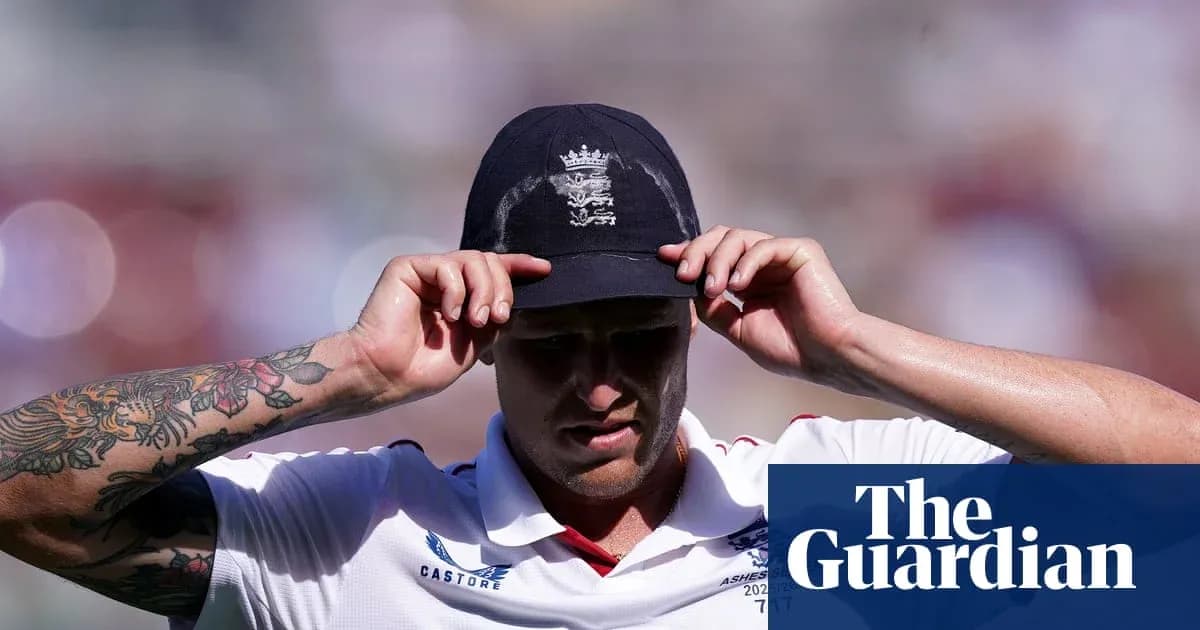
Harry Brook has made it clear: if and when Brydon Carse’s disciplinary cloud lifts, England’s white-ball captain wants his fast-bowling friend back in the fold.
Carse, 31, recently learned he will not face criminal charges after a late-night incident in Derby last month that ended with him briefly in handcuffs. The legal threat has gone, but the cricketing one remains. He has not been picked for England since, as the Cricket Regulator continues its investigation.
On the eve of the first ODI against Sri Lanka at Chester-le-Street, Brook was asked whether Carse could force his way back.
“He’s a very good cricketer. He’s been bowling extremely well for Durham. When his time for selection is up, that will be a debate,” Brook said, before drawing a firm line around the personal side of the story.
“I’m very good mates with Carsey. I’ve spoken a lot with him. Those conversations are private. I think he just needs time away from the international scene. He’s working on a few things behind the scenes and hopefully he’ll be ready at some point in the future.”
For now, Carse waits. England move on without him, but not without a message.
Standards, fitness and a harder edge
This is not just about one player’s misstep. Brook painted a picture of an England setup where the demand for off-field professionalism has sharpened, driven by Brendon McCullum with the white-ball group and Stephen Fleming as he prepares to take charge of the Test side.
Brook knows the other side of that conversation. Last winter he fell below his own standards, punched by a nightclub bouncer in New Zealand. That episode still hangs in the background when he talks about culture.
“The words Baz said the other day [were that] we want to be one of the fittest and strongest teams in the world. And to be able to do that we need to be preparing well on and off the field,” Brook said.
The message is blunt: talent is not enough. Not anymore.
Injuries bite as Rashid waits on scans
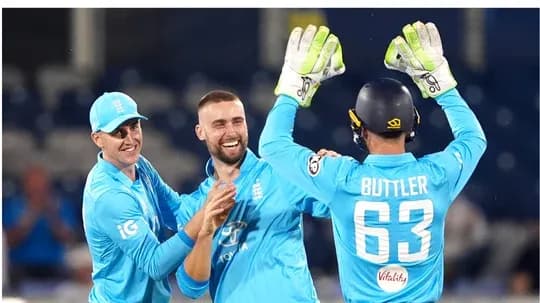
England’s first ODI of the series comes with a patched-up look. Carse is out of the picture. Jacob Bethell and Sam Curran are sidelined through injury. Now Adil Rashid, the senior spinner and a pillar of their white-ball plans, is also missing.
Rashid injured his bowling hand during the T20 whitewash-clincher at Old Trafford on Saturday. He will sit out the opener, and could miss the entire series, as he awaits scan results.
The reshuffle is significant. Tom Banton comes in to open. Jamie Overton adds pace and bounce with the ball. Rehan Ahmed, 22 and 16 years Rashid’s junior, gets a precious opportunity as the frontline wrist-spinner.
Around him, England will lean on finger spin from Will Jacks, the new vice-captain, and Joe Root. It is a different balance, younger in places, but it reflects a side that is still trying to work out its best one-day identity.
No.1 in T20s, questions in ODIs
England arrive at Chester-le-Street on a high from their 3-0 T20 sweep of Sri Lanka, a run that has taken them to No 1 in the T20 rankings. The white-ball swagger is back in that format.
The ODI picture is less flattering. They sit seventh, one place below Sri Lanka. Both their 50-over series this year have ended in comeback wins from 1-0 down. Resilient, yes. Convincing, not yet.
Brook wants that T20 edge transplanted straight into the longer white-ball game.
“We’ve gone undefeated in the T20s and I think we can take a hell of a lot of confidence from that going into this ODI series,” he said. “It’s more of the same. As a squad and a unit, we’re trying to play a higher octane style of cricket and we’re really trying to put them under pressure with bat and ball.”
High octane. Pressure. It is the language of a side that does not plan to tiptoe through the middle overs.
Archer, Tongue and the World Cup road
The selection of Jofra Archer and Josh Tongue again, after a long all-format summer, underlines where England’s priorities lie. The next 12 months are about building towards the 50-over World Cup in southern Africa. That means ODI teams as close to full strength as injuries and workloads allow, and T20s used more as a laboratory than a showroom.
Brook is at the heart of that plan. He is an all-format player but has kept his franchise commitments tight, limiting himself to the Hundred. He intends to shoulder the workload.
On a personal level, he has set himself a clear target for this series: rotate the strike better in the middle overs and sharpen his game against spin. The arrival of Kevin Pietersen as white-ball mentor has already shaped that thinking.
Brook has not yet delved into the more awkward side of Pietersen’s brief – the criticism, the shot selection, the “brain fades”.
“I haven’t had those conversations with him yet, but I’m sure it will come up at some point,” Brook said. “I think the way I’ve performed in my career so far, it’s almost a compliment to get those opinions. I’ll be trying my hardest to be the best player I can possibly be.”
It is an insight into his mindset: take the noise, twist it into fuel, move on.
New faces on the pathway
While Pietersen embeds himself with the senior white-ball group, another familiar name has been handed the keys to the next generation. Jonathan Trott has been appointed head coach of the England Lions for their winter tours of the Caribbean, South Africa and Sri Lanka.
Trott, who previously led Afghanistan, replaces Andrew Flintoff after his decision to step down last month. It is a significant move for England’s pathway structure: a meticulous former batter taking charge of the bridge between county cricket and the full international stage.
From Carse’s enforced absence to Trott’s new role, the picture is of an England operation trying to tighten its standards while still pushing the limits on the field.
The question now is whether that high-octane promise can drag their ODI cricket back to where they believe it belongs – and who will be trusted to ride with them when the World Cup comes into view.