Hardik Pandya's Return: Gambhir's Strategic Approach for India's All-Rounders
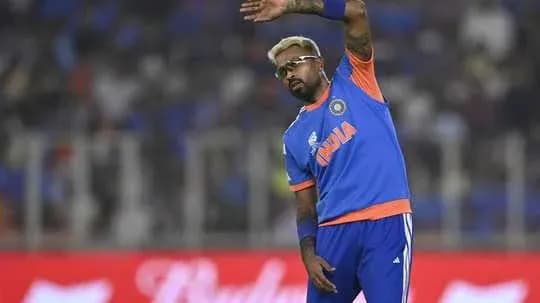
Hardik Pandya has not bowled a ball in international cricket since that T20 World Cup final in March. With the 2027 ODI World Cup now looming into its final 12‑month stretch, you might expect India to be hustling him back. Gautam Gambhir is doing the opposite.
The India head coach, speaking after the third T20I win over Afghanistan, laid out the situation with a blunt clarity that cut through any wishful thinking. Hardik, he confirmed, simply isn’t ready for the demands of 50-over cricket.
“Hardik at the moment, yes, he cannot bowl 10 overs and he hasn't played a lot of cricket since the IPL. So we don't want to push him into international cricket because international cricket can be extremely tough on your body as well,” Gambhir said.
The selectors have nudged him towards a softer return. Pandya has been picked for India A’s series against Australia A, a controlled environment where the focus is on overs, not optics. The message from the team management was clear: prove your body can cope there, then we talk India caps again.
“So if he plays that India A series, obviously he'll get some game time as well,” Gambhir explained. “And that was the clear message to him that if he can play that 'A' series and then if everything goes well, he can come back and be part of the T20s and the One Day squad as well.”
For a side building towards a World Cup in South Africa, this is not a small subplot. It shapes the entire balance of the XI.
Nitish Reddy steps into the gap
Hardik’s delayed return has sharpened the focus on Nitish Reddy. The young seam-bowling all‑rounder, himself just back from injury, has used the Afghanistan T20I series to plant a firm marker: six wickets across the games, a live, bustling presence with the ball.
Gambhir’s planning around him has been deliberate. Nitish was pulled out of India’s Asian Games squad and redirected towards ODI cricket, a move that underlines how the management views his role over the next year.
“From Nitish's point of view, it's actually a great thing that he's been withdrawn from a T20 format and he'll get game time against West Indies as well,” Gambhir said. The reasoning is simple and ruthless: seam-bowling all‑rounders will define India’s balance in South African conditions. They need overs in their legs now, not a medal chase in a different format.
“We know how important seam bowling all-rounders will be probably in a year's time when we go to South Africa and once Hardik comes back, obviously he's going to be good. Sometimes we could even go on to play both of them in the playing 11,” he added.
That last line will interest India’s opponents. Hardik and Nitish in the same XI is a template India have long craved: two seamers who can bat in the middle order and stretch the side to almost unfair depths.
For now, Nitish is still in the audition phase. But Gambhir’s assessment of what he has shown so far was unambiguous.
“It's been a huge plus for us because we want to expose him to most of the international game because we know how important he is, whether it's in 50-over format or going forward in T20s as well,” he said. “Because, you know, there are not many going around guys who can bowl and who can bat at the middle order. So it's a massive positive that the way he's bowled in this series.”
Those are not throwaway compliments. They are the sort of lines that usually precede a long run in the side.
World Cup clock ticking, schedule fighting back
While Nitish prepares to stretch into the rhythms of 50-over cricket, India’s broader ODI build-up hits a familiar snag: scheduling.
The upcoming ODI series against West Indies, crucial in theory for World Cup prep, will not feature India’s strongest possible side. A chunk of regulars will be away at the Asian Games in Japan. For a coach trying to shape a settled core 12 months out from a World Cup, it is a headache he did not bother to disguise.
“Look, it's not ideal. Obviously, we know that it's not ideal when we are preparing for a World Cup, which is in years' time. But again, the Asian Games squad was selected long back,” Gambhir said.
The irritation isn’t only about combinations and workloads. It also cuts into leadership development. Shubman Gill, still at the formative stage of his captaincy journey, is being asked to steer an ODI side that will not always resemble the one India hopes to take to South Africa.
“You want your best players to play as much as possible because the next World Cup is a 50-over World Cup. And more importantly, it's not fair on a young captain as well if he doesn't get the best team, playing consistently and regularly and not being on the path consistently,” Gambhir pointed out.
Then he drove the point home.
“That's why I have to be dead honest. I think it is important for Shubman to get the best team as many times as he can in red ball and in white ball formats as well.”
The honesty cuts both ways. Gambhir understands the selectors’ bind, too. They had to pick a strong Asian Games squad, and once that decision went through, compromise elsewhere became inevitable.
“Sometimes it's difficult for the selectors when they have to put the best squad in place. So, we always knew that if the best team goes to the best, the front-line players go to the Asian Games.
“Obviously, we will have to probably compromise a bit in this one-day series against West Indies,” he admitted.
Open doors for the next wave
Compromise for some, opportunity for others. With senior names away, the West Indies ODIs open a side door for those on the fringes to stake a claim.
“But again, it gives other people the opportunity as well,” Gambhir said. “And obviously, in a series like this, we've got young guys like Naman Dhir, Auqib [Nabi], getting those opportunities in this squad. So, they can also show what they bring in white ball format.”
This is the constant tension of modern international cricket: the need for continuity against the reality of crowded calendars and split squads. India will not get their perfect run‑in to the 2027 World Cup. Few teams ever do.
What they can control is how they manage their most precious resources. With Hardik, Gambhir has chosen patience over panic. With Nitish, he has chosen exposure over protection. With Gill, he wants stability but must navigate disruption.
The next 12 months will show whether those calls harden India into a tournament side, or leave them still searching for the complete all‑round package when the plane takes off for South Africa.