Graeme Hick Denies Khawaja's Sandpaper Claims
The storm from Australia’s 2018 tour of South Africa refuses to blow itself out. Every time it seems to drift into the distance, another voice drags “sandpapergate” back into the headlines.
This time, it’s Graeme Hick.
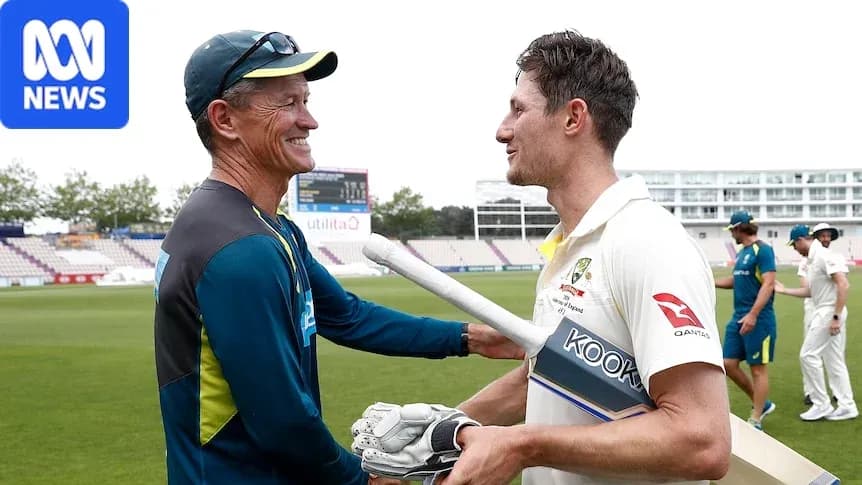
The former Australia batting coach has hit back hard at Usman Khawaja’s explosive claim that the entire team knew about the plan to use sandpaper on the ball during that ill‑fated series eight years ago, branding the suggestion “absolutely false”.
Hick, who was on Justin Langer’s staff from 2016 to 2020, broke his silence in an interview with the Sydney Morning Herald, making it clear he wanted no part in the widening net of blame.
“I have seen the various statements around the coaches and I'm very disappointed with the broad nature of them,” he said. Khawaja, in his new book, had written: “It was all of us. Not the batters, not the bowlers, not the staff. All of us.”
Hick did not dance around his response. “To me, what Khawaja is implying here is absolutely false,” he insisted, before stressing that he had no knowledge of any plan to tamper with the ball in Port Elizabeth or Cape Town.
“In regard to any discussions around the ball-tampering in Port Elizabeth or Cape Town, I will say in true honesty that I did not hear or know anything. My first knowledge of all this was, like many, when it appeared on the big screen in Cape Town as I was sat on the outside balcony at the time.”
With that, Hick joined Mitchell Starc and former head coach Darren Lehmann on the list of high-profile figures publicly rejecting Khawaja’s version of events. The dressing room that once closed ranks around three players is now openly split on how much everyone really knew.
And into that divide has stepped David Warner. Again.
Warner, one of the three men who carried the can in 2018 alongside then captain Steve Smith and Cameron Bancroft, has been quick to back Khawaja’s account. He thanked his former opening partner for speaking out and declared: “It’s 100 per cent accurate what you’ve said. Now everyone knows the truth.”
Those words were always going to sting inside Australian cricket. Hick’s denial only sharpened the edges.
Once the former England batter’s comments surfaced, Warner went back to social media and turned his attention squarely on Hick’s role in the set-up, suggesting the coach was never truly central to the inner workings of the team.
“Let’s get the facts straight,” Warner wrote. “Graeme Hick was only appointed because Cricket Australia was unwilling to pay Michael Di Venuto what he deserved.
“As players, we valued Michael so highly that we even offered to contribute from our own salaries to retain him.
“These discussions were taking place during the New Zealand tour. That alone speaks volumes about how highly we regarded him and how determined we were to keep him involved. Adds to why Graeme has spoken!!”
It was a pointed reminder of where the players’ loyalties lay at the time – and a not‑so‑subtle suggestion that Hick’s perspective comes from the fringes rather than the core of that dressing room.
What began in Cape Town as a shameful, self-contained scandal has become something else entirely: a running battle over memory, responsibility and reputation. Khawaja’s book has ripped open scars that Cricket Australia once tried to stitch up with bans, statements and a line in the sand.
Six years on, the bans have long expired. The questions clearly haven’t.