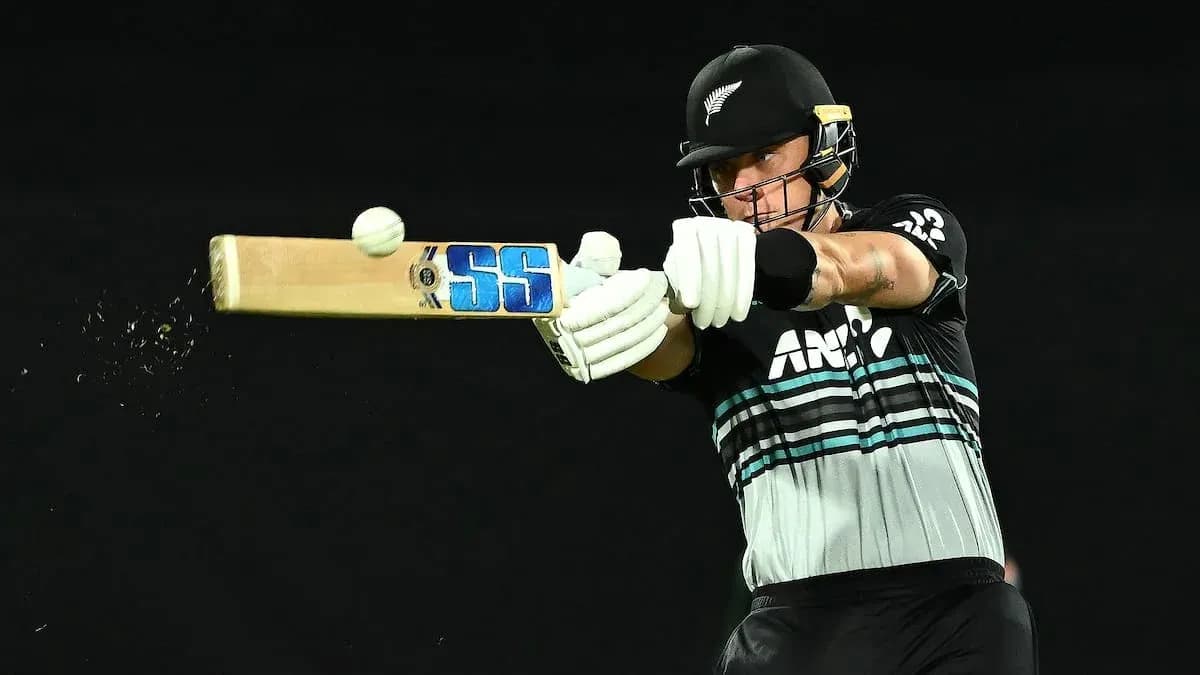
Gagan Khoda: A Brief ODI Career with Untapped Potential
An 89 in your second ODI usually buys you time. A third game at least. Add a Player-of-the-Match award, and most careers are just getting started.
Gagan Khoda walked out of Bengaluru in May 1998 with all of that – and never played for India again.
In six days, his entire ODI life began and ended: two matches, 115 runs at 57.50, one half-century, one match award, and a story that never quite became what it promised to be.
A prodigy from Rajasthan
Khoda did not arrive from obscurity. By the time he wore India colours, domestic cricket had already marked him out as a serious opening prospect.
He was 17 when he made his Ranji Trophy debut for Rajasthan. The stage didn’t daunt him. Against Uttar Pradesh in 1991, he scored 116 in his first first-class innings, an opener announcing himself with a hundred before most teenagers have finished school.
Three seasons later, he produced the campaign that pushed his name firmly into national conversations. In 1994-95, he piled up 618 runs in the Ranji Trophy at an average of 77.25, with two centuries and two fifties. The numbers were heavy, but it was the manner of one particular innings that stayed with selectors.
In the quarter-final, again against Uttar Pradesh, Rajasthan were buried early. They conceded 487, replied with just 237, and stared at elimination. Khoda responded with an unbeaten 237 in the second innings, batting Rajasthan to 417/5. It still wasn’t enough; they went out on first-innings deficit. The result hurt, but the impression lingered: here was an opener who could bat forever, turn starts into monsters, and carry a team on his shoulders.
By 1997, that body of work took him to the edge of Test cricket. He travelled with India’s Test squad to Sri Lanka, close enough to feel the cap but not close enough to wear it. The door stayed half-open.
Lahore, 189 and a harder knock
The following year, the selectors handed him a different responsibility: captain of India A on a tour of Pakistan. It was a squad stacked with future internationals – Ajit Agarkar, Wasim Jaffer, Murali Kartik, MSK Prasad, Sairaj Bahutule, Reetinder Sodhi. Khoda led them, and in Lahore, he played the innings that should have kicked the door down.
Opening against Pakistan A, he faced an attack featuring Aaqib Javed, Abdul Razzaq and Shahid Afridi. He settled in, then dug in. Ball after ball, over after over, he ground them down. By the time he fell, he had made 189 from 328 deliveries, batting for almost seven hours and finishing just 11 short of a double century.
It was another monumental entry on a growing résumé: runs in India, runs as captain, runs against serious bowling in Pakistan. The case for a senior call-up looked as strong as it would ever be.
The call finally came.
Two ODIs, one award, and a closed door
When India faced Kenya in Bengaluru in May 1998, Khoda opened in a chase of 224. Kenya had made 223/9. Early in the reply, Sourav Ganguly fell for nine. The chase could have wobbled. It didn’t, because Khoda and Rahul Dravid steadied it.
They added 98 for the second wicket. Khoda anchored, Dravid threaded the gaps, and the pressure eased. Khoda’s 89 came from 129 balls, with eight fours, an innings built on control rather than fireworks. He stayed deep into the innings and left India firmly in charge of a four-wicket win.
He finished as India’s highest scorer. The Player-of-the-Match award followed. His ODI numbers at the end of that night read: two matches, 115 runs, average 57.50. They would never move again.
The timing, for him, could not have been worse.
As quickly as the door had opened, India’s established hierarchy slammed it shut. Sachin Tendulkar and Navjot Singh Sidhu returned to reclaim the top of the order. Khoda remained in the squad but watched from the sidelines. He was retained for the final of the triangular tournament, then taken to Sri Lanka for the Nidahas Trophy, again without breaking into the XI.
India also took him to the 1998 Commonwealth Games in Kuala Lumpur. Those matches, though, did not carry ODI status. They did nothing to alter his official record, or his place on the fringes. By the end of that year, the temporary space created by senior absences had vanished. So had his path back into the side.
There would never be a third ODI.
The 300* that refused to be ignored
Domestic cricket, however, still listened. In February 2001, Khoda produced the innings of his life.
Playing for Central Zone against South Zone in the Duleep Trophy, he faced an attack led by Javagal Srinath and Venkatesh Prasad, with Sunil Joshi and Venkatapathy Raju in support. It was the kind of bowling unit that often separates domestic hopefuls from international-ready batters.
Khoda did not just survive. He dominated.
He batted for 610 minutes. Faced 467 balls. When Central Zone finally declared at 550/7, he walked off unbeaten on 300, with 33 fours and six sixes behind his name. Srinath finished wicketless. So did Prasad. Central Zone won by an innings and 14 runs, and Khoda’s triple century forced his name back into the selectors’ notebooks.
The reward came in the form of another India A selection, this time against the touring Australians. The senior recall, though, never arrived. That 300*, like the 189 in Lahore and the 89 in Bengaluru, became part of a pattern: performances that shouted loudly, in a generation where the queue ahead of him was already crowded.
A career in the shadow of giants
Khoda’s domestic record by the end of his playing days spoke of consistency and endurance. He finished with 8,516 first-class runs, 20 centuries, 42 fifties, and an average just under 40. In List A cricket, he added nearly 4,500 runs at an average above 40, with 10 hundreds.
Under normal circumstances, those numbers might have translated into a longer international run. His circumstances were anything but normal.
India’s batting in his peak years was among the strongest in its history. Tendulkar, Ganguly and Rahul Dravid were immovable pillars. Sidhu remained a serious opening option when Khoda first broke into the ODI squad. VVS Laxman was pushing through. Around them, a generation of prolific domestic batters jostled for a handful of vacancies.
Even in that congestion, Khoda’s journey stood out. A Ranji hundred on debut at 17. A season averaging 77.25. A place in a Test squad. India A captaincy. A 189 in Pakistan. An 89 and a Player-of-the-Match award in only his second ODI. A 300* against an attack led by Srinath and Prasad.
Yet the international column stayed frozen at two matches.
From hopeful to selector
More than a decade after he last played, Khoda’s name returned to the national frame in a different context. In 2015, he joined India’s senior selection committee, moving from the side of the hopefuls to the side that decides.
He became one of the men weighing up domestic numbers, judging temperaments, and choosing who would get the chances he had spent much of his own career chasing.
For a player whose international story lasted six days, the game still found a way to bring him back to the table where futures are made and unmade.