England Women’s Team Sets Record Chase Against Ireland
England’s second string produced a record chase that looked anything but second tier, brushing aside Ireland by six wickets in Leicester and rewriting their own ODI history in the process.
A target of 282 had never been reeled in by an England women’s side before. This experimental XI knocked it off with 71 balls to spare.
Bouchier and Dunkley rip up the script
If there were any nerves about life after Heather Knight and Tammy Beaumont, Maia Bouchier and Sophia Dunkley buried them in a blur of clean striking and crisp running.
England’s reply exploded from ball one. Dunkley drove, cut and pulled with intent; Bouchier’s timing was silk. The pair hurt Ireland early, rattling along at well over a run a ball, and by the time the 20th over closed, the game already felt lopsided.
They had piled on 143 for the first wicket inside those opening 20 overs. Ireland’s lines frayed, their lengths slipped, and the boundary balls kept coming. Mis-fields crept in. Pressure mounted.
Dunkley’s 73 from 61 balls ended when she chipped a return catch to leg-spinner Cara Murray, but the damage was done. Bouchier simply kept going.
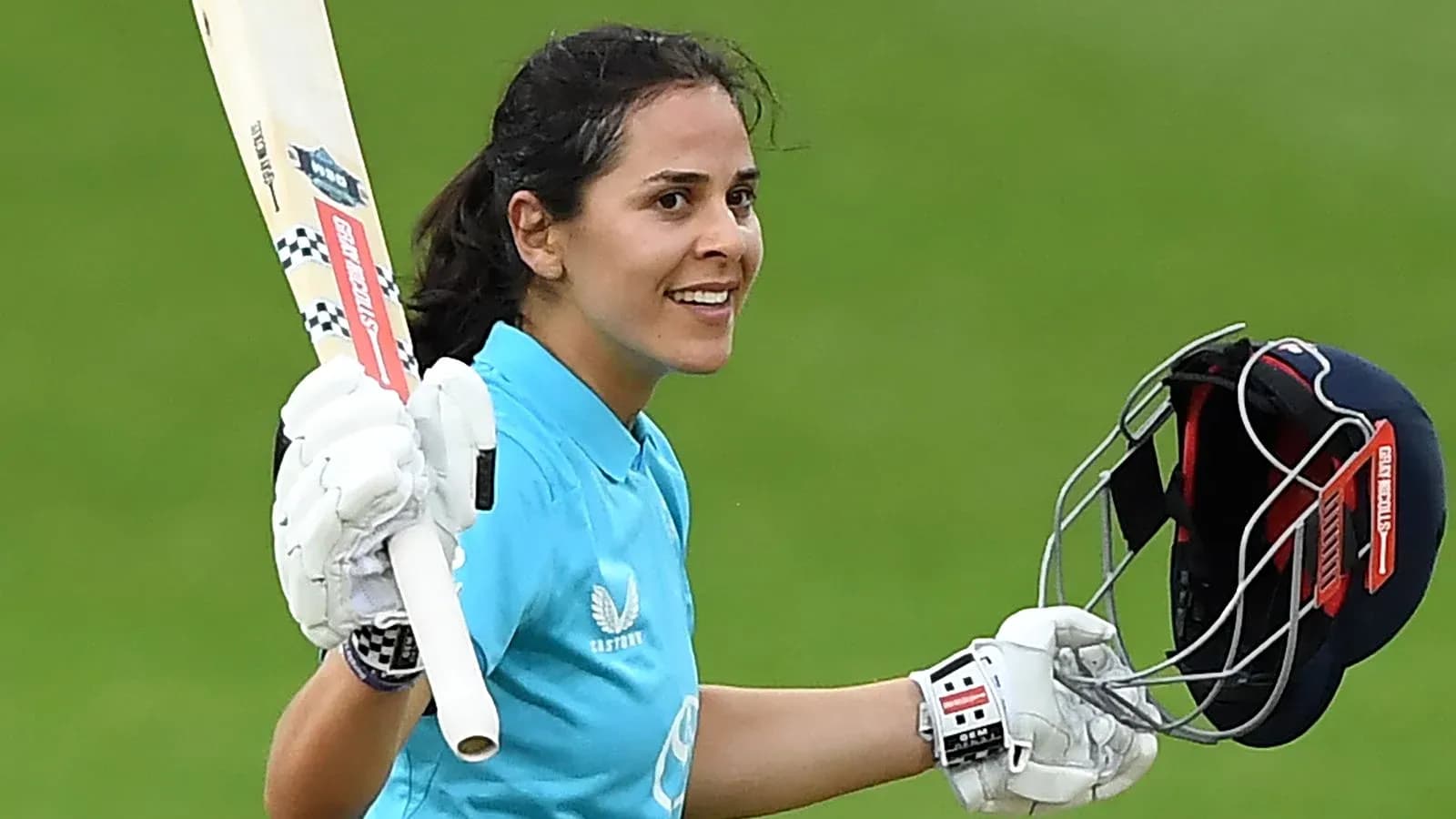
Her second ODI hundred came in 95 balls, a measured, authoritative innings that controlled the chase. She picked off anything short, drove with precision and never allowed the required rate to threaten England. By the time she holed out to Arlene Kelly for 104 in the 32nd over, only 59 were needed. The job was almost finished.
Capsey and Kemp slam the door
Ireland needed a cluster of wickets. What they got instead was Freya Kemp and Alice Capsey swinging the door shut.
Capsey first dovetailed calmly with Bouchier, adding 50 from 47 balls to keep the tempo high and the chase utterly routine. Then Kemp arrived and turned a procession into a demolition.
In the 34th over, Kemp tore into Kelly, drilling four consecutive fours, echoing the earlier assault Bouchier had launched on Jane Maguire. The left-hander’s 36 from 22 balls was pure intent, a statement from an all-rounder who dominated a 54-run stand with Capsey off just 38 deliveries.
Capsey, standing in as wicketkeeper and finishing 41 not out from 40 balls, had the final say. A mis-field on the deep midwicket fence allowed her to thump the winning boundary, England striding past 282 for the loss of only four wickets.
It was their highest successful ODI chase, surpassing the 267-8 against Australia in Bristol during the 2023 Ashes. That day, Knight and Beaumont led the way. This time, a new order took the stage.
Scruffy England still find a way
The batting was ruthless. The bowling and fielding were anything but.
Without Sophie Ecclestone and Lauren Bell, both rested along with Nat Sciver-Brunt, Danni Wyatt-Hodge and Amy Jones, England looked disjointed with the ball. They sprayed 20 wides and conceded 33 extras in total. The radar went missing too often, the discipline frayed.
Issy Wong embodied the chaos early on. She removed opener Alice Tector for 11, but her third over included four wides in a row outside off stump. Ireland happily accepted the freebies and built a platform.
Stand-in captain Charlie Dean, though, held things together. Her off-spin returned 2-44, and she marshalled an inexperienced attack well enough to keep Ireland in sight.
Behind the stumps, Capsey was the revelation. Drafted in with Jones rested, she looked natural with the gloves, pulling off a sharp one-handed catch to her right in the fifth over and staying tidy throughout. If she maintains that standard across the series, selection conversations around the wicketkeeping role will not go away.
Lewis and Hunter lay down a marker
Ireland’s batters did plenty right. The visitors were 13-1 when Gaby Lewis and Amy Hunter came together; by the time they were parted, the scoreboard read 149-2.
Lewis’ 69 and Hunter’s 62 formed a 136-run stand for the second wicket built on smart running and selective aggression. They punished width, nudged singles, and turned ones into twos, stretching England’s fielders and exposing their rust.
The breakthrough came from Wong, who bowled Lewis through the gate. Once that partnership broke, Ireland faltered. Hunter soon followed, bowled by Dean, and Orla Prendergast’s 19 ended with a heave to deep midwicket, where Bouchier flung herself forward to cling on to a superb diving catch.
From a position of real strength, Ireland suddenly found themselves scrapping again.
Stokell’s fightback, England’s late squeeze
Ireland refused to fold. Rebecca Stokell and Leah Paul rebuilt, adding 84 from 71 balls for the fifth wicket. Stokell’s unbeaten 54 was composed and busy, Paul’s 29 an important foil as Ireland eyed a total well beyond 280.
England, though, finally tightened the screws at the death. Dean and Wong shared the final four overs and allowed just 24 runs, with no boundaries off the bat. Ireland’s only four in that spell came in bizarre fashion when a Wong delivery thudded into Stokell’s leg stump and somehow failed to dislodge the bails, the ball racing away for four byes.
Ireland closed on 281, a total that looked imposing at halfway given England’s missing senior batters and the home side’s ragged work with the ball.
Once the chase began, that illusion vanished.
Dean’s verdict and the road ahead
Dean did not hide from the flaws.
“We probably could have been a little tighter with the ball,” she admitted afterwards, even as she praised the intent of her top order and the clinical nature of the chase. She refused to criticise the fielding effort, pointing instead to effort levels, but the message was clear enough: sharpen up.
For all the sloppiness, this was a commanding win. England’s young and fringe players stepped into a space vacated by giants of the dressing room and did not blink. Bouchier’s hundred, Dunkley’s tempo, Capsey’s all-round influence and Kemp’s fearless hitting gave the series an immediate narrative: this is an audition, and several candidates have seized it.
Ireland, 1-0 down, will take heart from their batting and from Cara Murray’s 3-58, which included the dismissal of Dunkley and a beautifully flighted ball that cleaned up Jodi Grewcock for nine. They know, though, that their own sloppy fielding and loose bowling turned a competitive total into a comfortable defeat.
Derby on Thursday, Worcester on Sunday. England with a new record in the book, Ireland with a point to prove. The question now is simple: was this a one-off statement, or the start of a genuine shift in England’s white-ball era?