England's Test Opener Debate: Flexibility and New Faces
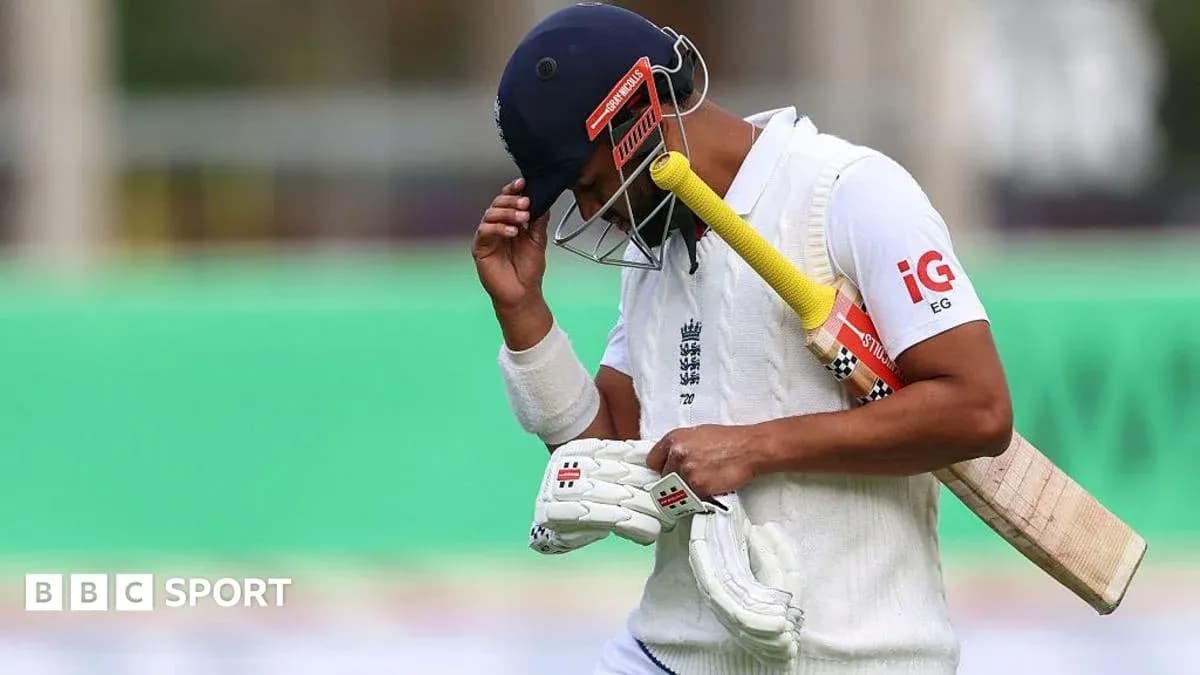
Marcus Trescothick has thrown open the door on England’s traditional view of a Test opener, insisting the man at the top of the order does not have to be a specialist as the selectors wrestle with how to fit Jacob Bethell back into a reshaped batting line-up.
The debate comes at the end of a summer that has posed more questions than answers about England’s top order and arrives just as Stephen Fleming prepares to take full control of the Test side ahead of December’s tour of South Africa.
Opener role up for grabs
Emilio Gay has spent his first season as a Test cricketer walking out with Ben Duckett. Three half-centuries hint at promise, but an average below 25 underlines the fragility that has stalked England’s starts.
Duckett, one of the senior figures in this evolving side, supplied the only century of England’s summer – a fluent hundred against New Zealand at Trent Bridge in June. Since the beginning of the Ashes, though, his returns have tailed away sharply. He failed to reach 20 in any innings of the three-match series against Pakistan and is averaging under 24 in that period. For an opener, those numbers bite.
Into that uncertainty steps Bethell, currently sidelined by a knee injury but due back for the South Africa tour. He has already been nudged up to open in England’s one-day team and has long been talked about as a possible Test opener. His return forces a simple, awkward question: who makes way?
Jordan Cox has complicated the picture in the best possible way. Finally handed his Test debut this summer as Bethell’s replacement at No. 3, he has averaged more than 42 and looked entirely at home. Earlier in his first-class career he opened the batting, so the idea of him moving up a spot is far from fanciful.
Dan Lawrence, the other new face in England’s top six against Pakistan, brings his own protection. His off-spin offers valuable balance, and Bethell’s left-arm spin would only deepen that all-round pool. Dropping either would not be a purely batting decision.
Amid all of this, Trescothick’s stance is clear: pick your best seven batters and build from there.
“You generally want your best top seven, however that looks,” said the interim coach. “Who that's going to be, I don't know. That's for someone else to work out.”
Trescothick backs flexibility in modern game
Trescothick, one of England’s finest modern openers and a pillar of the 2005 Ashes win, knows exactly what the job used to demand. He also believes that job has changed.
“I reckon times have changed a little bit,” said the 50-year-old. “I think you look at your best batting line-up, however that fits up.
“If that's with a specialist opener, great. If not, I think you can plan around it in this day and age. Players adapt pretty quickly because they're chopping and changing formats.”
It is a pointed observation from a man who once embodied the classic opener’s craft. Now, in an era of fluid roles and format-hopping, England may be about to abandon the idea that the top of the order must be the preserve of hardened specialists.
Fleming arrives to shape the next phase
Trescothick’s words also carry the weight of a man about to step back. His stint as interim coach for the 3-0 win over Pakistan is over; Stephen Fleming, appointed Test coach in July but absent during that series, is finally on his way.
The former New Zealand captain is due in the UK in the coming days to begin detailed planning for South Africa. He will sit down with the England hierarchy, cast an eye over the ongoing white-ball series against Sri Lanka, and may drop in on the counties as he takes stock of his new player pool.
The ODI and T20 sides remain under the charge of Fleming’s close friend and fellow New Zealander Brendon McCullum. When McCullum ran both red- and white-ball teams, he kept a single backroom group, Trescothick included. That era looks to be over.
Backroom roles are being redrawn. Former Australia batter Mike Hussey has already revealed Fleming sounded him out, though reports in Australia say Hussey has turned the approach down.
Trescothick himself is still in the dark about what comes next.
He admitted he has a preference for his future role but refused to reveal it. “It's probably best I don't mention it at the moment because it may not be the case of what happens,” he said. “I love doing both formats. It's brilliant and I've been privileged to be in the position of assistant coach.”
Pietersen back in England colours
Into this shifting structure strides one of English cricket’s most combustible figures. Kevin Pietersen is back.
The former England star has been appointed as a consultant for the white-ball team, returning to the national set-up 12 years after he was effectively sacked in the fallout from the 5-0 Ashes defeat in 2013-14.
Now 46, Pietersen will report for duty on Sunday, linking up with the squad as they prepare for the first T20 against Sri Lanka in Southampton on Tuesday. For a generation of England fans, the sight of Pietersen back in team gear will be jarring, intriguing, maybe even thrilling.
“We've spoken already, to plan a little bit,” said Trescothick. “I gave him a couple of things that I wanted him to look at, to get his advice on.
“He is buzzing. Putting back on the shirt or the tracksuit, he is buzzing for that opportunity.
“Having his presence around and the knowledge he has about batting – he sees batting in a different light to many different people. If we can tap into that, it's only going to benefit the team.”
So England stand at a crossroads: a new Test coach incoming, a legendary but polarising batter returning to the fold, and a top order that might soon be built not on old certainties but on flexibility and firepower.
South Africa in December will reveal whether that gamble on modernity holds – and who gets the coveted walk to the middle when the first ball is bowled.