England's Resilience Amidst Political Tensions at Lord's Test
On a day when Lord’s expected a straight contest between bat and ball, the cricket kept slipping into the background. By the time bad light dragged the players from the field with England 248 for 9 in the second Test against Pakistan, the scorecard told only half the story.
The other half belonged to a political flashpoint that briefly threatened to halt the match altogether.
Diplomatic tension in the Long Room
During the lunch interval, English broadcaster Sky Sports aired an 18‑minute interview with the sons of Imran Khan, the Pakistan great and former Prime Minister who has been held in solitary confinement for three years and is in deteriorating health.
Kasim Khan, speaking to former England captain Michael Atherton, did not soften his words.
“It is not very clear what they are doing, just blatantly trying to kill him in there. Keep him in as long as possible, and silence him,” he said.
Atherton framed the segment as a direct appeal.
“This is a humanitarian appeal, because there are increasing concerns about the health and wellbeing of Imran Khan,” he told viewers, noting that many of the former internationals who co‑signed a fresh letter to Pakistan’s authorities this week had faced Imran in his pomp and hold him “in the highest regard.”
According to Cricinfo, the Pakistan Cricket Board contacted Sky before the interview aired, protesting the segment and warning that their players would not return to the field after lunch if it went out. Sky delayed the broadcast, then ran the full clip. By the time it ended, Pakistan’s players were already preparing to resume, emerging at 2.40pm for the second session.
The match continued. The tension lingered.
Abbas rips through England’s top order
Once the focus swung back to the middle, Mohammad Abbas seized it with both hands.
Under low, heavy cloud and on a green‑tinged surface that Babar Azam was never going to refuse after winning the toss, the 36‑year‑old seamer produced the kind of spell that has made Lord’s his personal hunting ground.
His figures at one stage: three wickets for four runs in 16 balls.
Emilio Gay went first, faintly glancing down the leg side and watching Mohammad Rizwan fling himself to his right to cling on one‑handed. Fortunate? Perhaps. Effective? Absolutely.
Ben Duckett followed for 17, pinned lbw by a nip‑backer that straightened late. The real prize came next. With Rizwan standing up to the stumps to cramp him, Joe Root was trapped on the back leg for four by another Abbas seamer that jagged in.
“Joe is a big batter, so I was pleased to get him with Rizwan coming up,” Abbas said later. “When the ‘keeper is up, I am asking (questions), so we are making a plan.”
England slumped to 36 for 3, the top order shredded, the decision to drop Brydon Carse after another late‑night drinking incident suddenly feeling like an unwelcome distraction rather than a footnote.
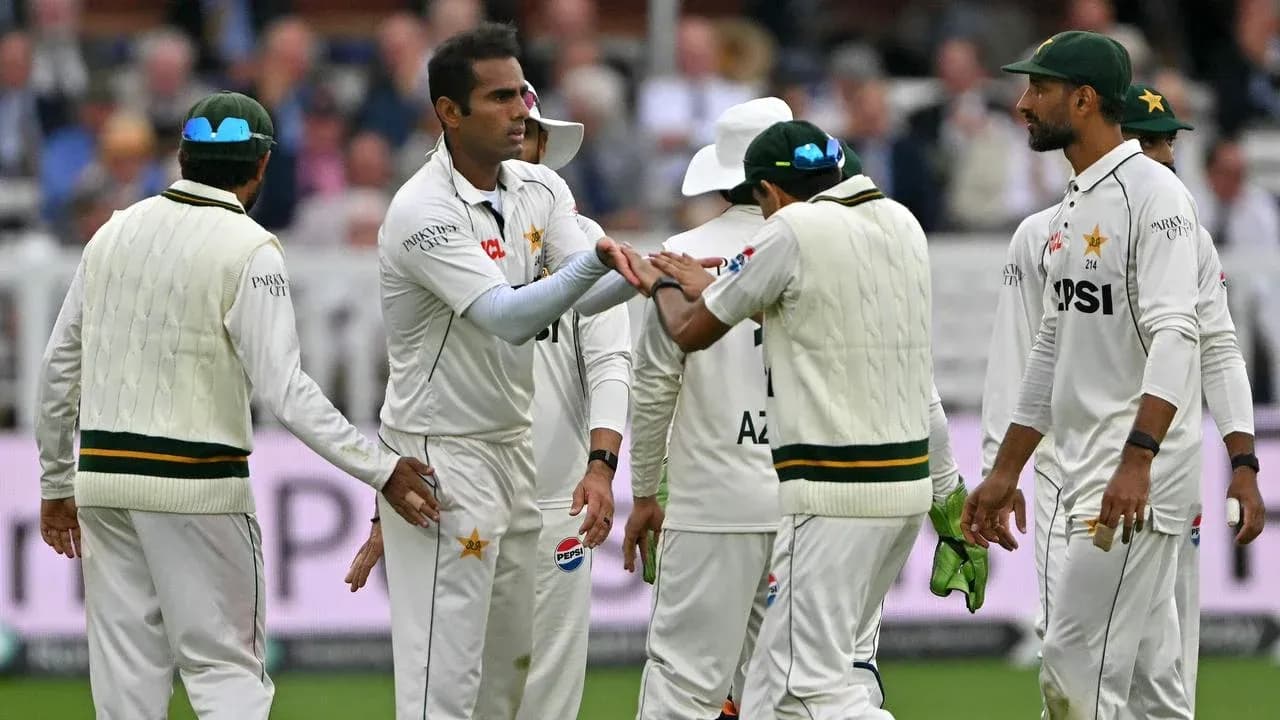
Harry Brook briefly counter‑punched, then lost his off stump for 15 to a superb delivery from Mohammad Ali that cut back sharply. At lunch, England were 80 for 4 and hanging on.
Abbas, who took eight wickets and the player‑of‑the‑match award in Pakistan’s last Test win at Lord’s in 2018, ended the day with 4 for 56 from 15 overs. Ali backed him with 3 for 67 from 17 as the seamers exploited every inch of assistance.
“This is my favourite ground,” Abbas said, eyeing the honours board. “Hopefully I will put my name on the honours board this time.”
Smith and Cox drag England off the ropes
The pressure finally told on Pakistan in the middle session.
Jamie Smith and Jordan Cox, two players still feeling their way into Test cricket, chose resistance over retreat. With the ball still moving and the clouds refusing to budge, they rebuilt with an authority that belied their experience.
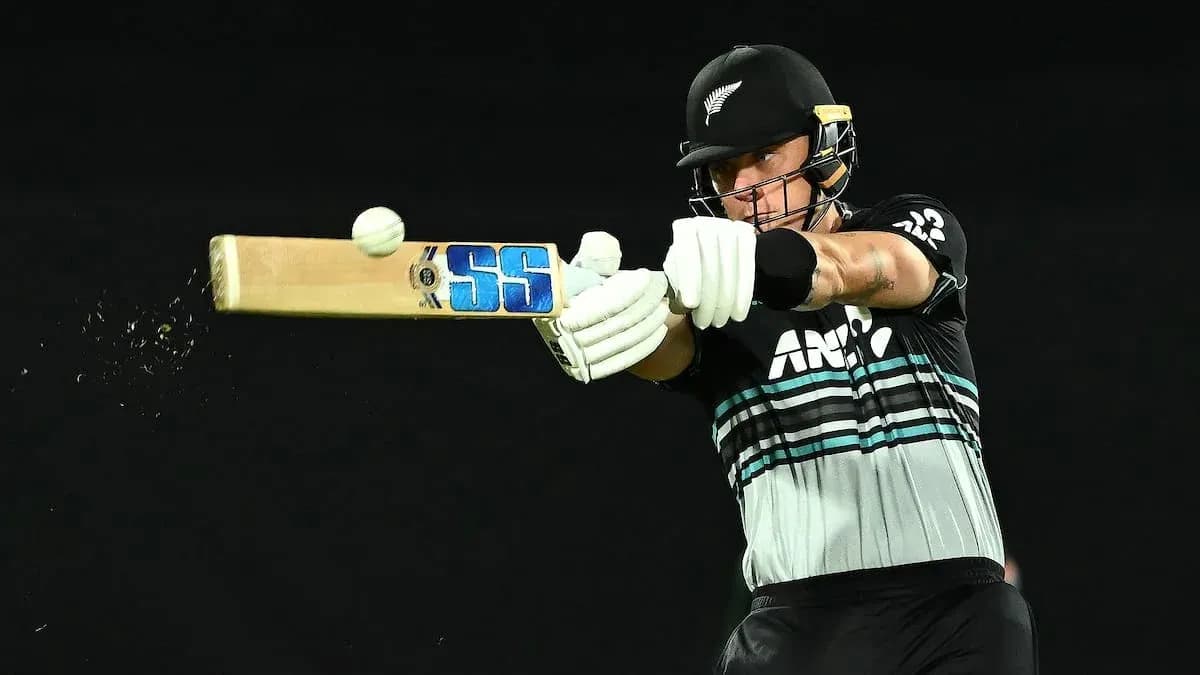
Smith’s 61 came from just 63 balls, a busy, positive innings that pushed back at Pakistan’s lines and lengths. Cox, in at No.3, compiled 55 — his second fifty in as many Test knocks — and looked increasingly secure as the ball softened.
Pakistan’s old frailties crept in. Dan Lawrence, on 10, flicked to midwicket and should have been walking back, only for Shan Masood to spill a regulation chance. It felt like Leeds all over again, where Pakistan’s ragged fielding helped condemn them to an innings‑and‑103‑run defeat and the bottom of the World Test Championship table.
Lawrence did not cash in. When he turned spinner Ali Usman to the leg side and set off for a single that was never there, Cox sent him back. Masood, given another opportunity, made no mistake this time, firing in a sharp throw from midwicket that Rizwan gathered to complete the run‑out.
Cox responded with intent, taking consecutive leg‑side boundaries off Usman to reach a 50 from 88 balls, with seven fours. The partnership with Smith was worth 67 and, for the first time all day, Pakistan’s seamers looked briefly short of answers.
Then the game flipped again. Substitute fielder Salman Ali Agha, on for the returning Babar, flung himself to his right at second slip to pluck a superb catch off Khurram Shahzad and remove Cox. Smith pressed on, but once Ali shattered his stumps, England’s lower order began to fray. Two balls later, Ali struck again, nipping one back to remove Ollie Robinson.
By the time the umpires decided the light was no longer safe, even with the floodlights blazing, England had staggered to 248 for 9. Not dominant. Not broken either.
“I think it is a decent enough day for us,” Smith told Sky Sports. “The ball was doing enough, nipping around — overhead conditions obviously assisted.”
Pakistan’s response and what comes next
For Pakistan, this felt far removed from the chaos of Headingley. Babar, back from a finger injury and restored as captain in place of Salman Ali Agha, used his seamers smartly and got the conditions he wanted. The attack, led by Abbas and Ali, repeatedly exposed England’s long‑running discomfort against medium pace with the wicketkeeper standing up.
The fielding, though improved, still flickered between the excellent and the exasperating. Masood’s drop, then his sharp run‑out. Agha’s outstanding grab. Moments that could yet define a tight Test.
England, minus Carse after his latest off‑field misstep, leaned heavily on Smith and Cox to salvage a total that might still be competitive if the morning brings the same heavy skies and lateral movement.
Pakistan will resume knowing that anything close to discipline with the bat could tilt the match decisively their way. England, bruised but not beaten, must find a way to turn 248 for 9 into a platform rather than a missed opportunity.
On a day when a humanitarian appeal for one of Pakistan’s greatest cricketers echoed around the home of cricket, the game itself refused to stand still. The question now is whether Pakistan can match the fire of their politics with the steel of their batting.