England's Focus on Red-Ball Cricket Ahead of Ashes Test
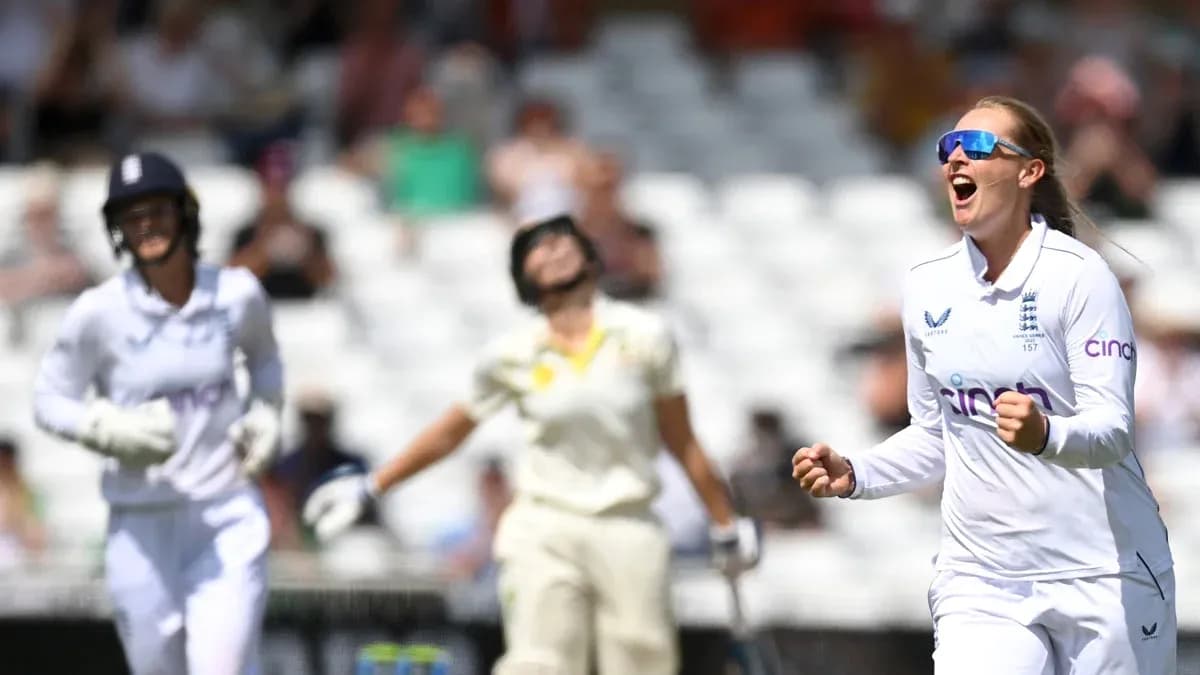
England are stripping their Ashes build-up back to the essentials. No frills, no sightseeing, no sentimental fixtures. Just red-ball cricket, at home, geared entirely towards one four-day Test at Headingley next June that could define their era.
The ECB has torn up plans for a landmark women’s Test in the Caribbean against West Indies, choosing instead to flood the calendar with long-format preparation on English soil before Australia arrive.
All roads lead to Headingley
The equation is brutally simple. In the multi-format Women’s Ashes, a Test win is worth four points; each white-ball victory earns only two. England have not held the urn since 2015. Since Meg Lanning’s Australians prised it away 11-and-a-half years ago, England have twice battled to 8-8 draws – away in 2017-18 and at home in 2023 – but that has never been enough to wrench the trophy back.
The most recent chapter was even harsher. A 16-0 sweep to Australia in the 2024-25 series underlined the gulf when it mattered most.
Australia’s victory at Trent Bridge in 2023 told its own story. They lost four of the six white-ball matches that followed, yet that solitary Test win locked in retention of the Ashes. If England are to change the script in 2027, Headingley from June 24-27 is non-negotiable. They will likely need at least nine points overall to reclaim the urn. The Test is the biggest single swing available.
So England are treating it like it.
India camp, home focus – and a cancelled Test
The plan starts in January with a 10-day red-ball camp in Bengaluru, a warm-weather block of specialist work that will anchor the build-up. After the inaugural ICC T20 Champions Trophy in February, England had been due to fly to the Caribbean for a multi-format series, including what would have been West Indies’ first women’s Test since 2004.
That match is now gone.
In a statement, the ECB confirmed it had asked Cricket West Indies to reshape the tour, prioritising time and overs in home conditions.
“Accommodating this thorough programme of preparation in home conditions has necessitated revising the schedule of matches for England Women’s tour to West Indies in April, which is due to take place once the English domestic season is already under way,” the governing body said, thanking CWI for its “understanding and collaborative approach”.
The series will now consist of three IT20s and three ODIs only. There is, the ECB made clear, “insufficient time to accommodate the Test match which had originally been anticipated”.
It is a ruthless decision, but not an isolated one. Last year, Australia and West Indies similarly agreed to shelve a proposed women’s Test to sharpen T20 World Cup preparations. The trade-off is becoming familiar in the women’s game: fewer rare red-ball fixtures, more targeted build-ups for global or marquee series.
Best versus best – in English conditions
Where England differ this time is what fills the gap. Rather than a one-off overseas Test, their leading players will be immersed in four red-ball practice matches before Headingley.
A three-day game against Australia A will sit in the immediate run-up to the Test. Alongside it, three further “best versus best” red-ball fixtures will pit England’s top players against each other, with selection pressure baked into home conditions.
ECB chief executive Richard Gould framed the Headingley Test as one of the centrepieces of the 2027 summer – and a fixture that demands a bespoke build-up.
“(The Test) will undoubtedly be one of the highlights of the summer and is worth four points in the multi-format series, so it is important that our players have the right preparation leading into the match and are given the best chance to succeed,” Gould said.
“A 10-day warm-weather red-ball camp in India followed by four further matches in English conditions will provide Charlotte Edwards and her team with the appropriate game time to be ready for that challenge.
“Best versus best in English conditions provides a valuable opportunity for the team.
“It also allows us to assess our strength in depth, give opportunities to more players and get a number of competitive multi-day cricket matches across a longer period into the wider group.”
The message is clear. This is not just about the starting XI. England want a squad hardened by overs, not nets; by long spells with the ball and long stays at the crease, not short-format improvisation.
What about Australia?
Across the divide, Australia are plotting their own red-ball reset. Sophie Molineux’s side will play their first Test since March when they face South Africa in KuGompo City next April, a timely chance to reacquaint themselves with the format before they cross the world for another away Ashes.
Australia have not yet confirmed whether they will take on a three-day warm-up ahead of the Headingley Test, but recent history suggests they may. They played England A in red-ball games before each of their last two away Ashes campaigns, using those fixtures to tune up their seam attack and settle their batting order.
If they mirror that approach again, both teams will arrive in Leeds with fresh red-ball miles in the legs – a rare luxury in the women’s calendar.
The summer that follows
Once the Test is done, the Ashes will tilt into more familiar territory.
The T20I series opens at Trent Bridge on July 3, before moving to The Oval on July 6 and Old Trafford on July 9. The ODIs then take over: July 13 at the Rose Bowl, followed by Lord’s on July 16. All carry two points apiece, all will matter, but none can match the weight of that four-point Test in late June.
England have tried parity with Australia. They have matched them punch for punch across formats and still watched the urn stay put. This time, the strategy is bolder, narrower, more ruthless.
They are betting that a summer built around red-ball rhythm, not white-ball habit, is the only way to finally drag the Ashes back.