England's Stunning ODI Comeback in Adelaide
England finally found their snarl in Adelaide.
Two days after being skittled for 131 in Perth, Jos Buttler’s understudies thumped 355-6 and then ripped through Australia for 220 to seal a 135-run win, level the series 1-1 and drag this erratic ODI side back into something resembling contention.
On a ground where England had lost seven in a row to Australia across formats, they didn’t just correct the course. They tore up the script.
Banton’s statement innings
Tom Banton has had chances before. This felt like a claim to ownership.
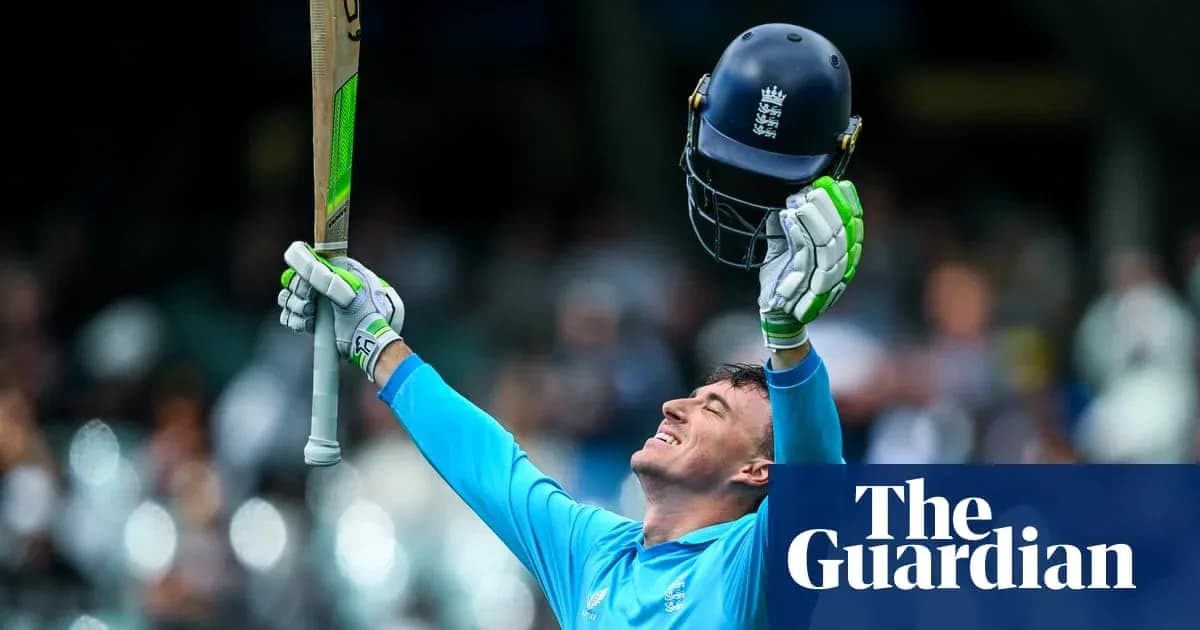
Given the opening berth by Jacob Bethell’s knee injury, the 28-year-old right-hander produced a superb 121, his second ODI hundred in just nine innings at the top. Four fifties, two centuries. That’s not a trial any more, that’s a body of work.
It wasn’t smooth from the outset. On 10, he took a blow to the helmet from left-armer Spencer Johnson. He shook it off, reset, and then went after Adelaide’s short square boundaries with a ruthless pull shot that Australia never managed to shut down.
He added 137 with Joe Root, a partnership that didn’t dazzle but mattered deeply. Ben Duckett had already slashed to point for nine, the memory of that Perth collapse still hanging over England’s dressing room. Root anchored, Banton expanded. Root’s 62 gave the innings its spine; Banton supplied the muscle.
The hundred came as the innings tilted from consolidation to control. Once he was set, every drag, pull and drive through the line looked like a man batting in his own time zone. When he finally holed out at deep square leg, again going to the pull once too often, he walked off having done the heavy lifting.
That spot at the top of the order should now be his to lose.
Cox and Jacks light the afterburners
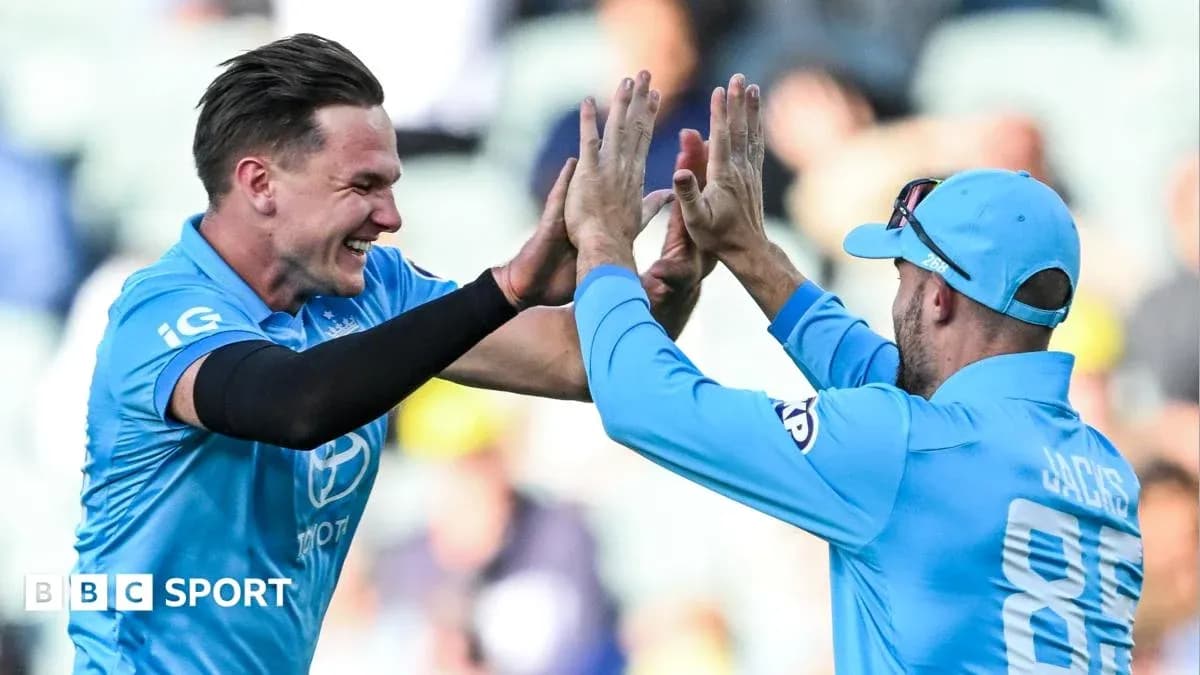
If Banton built the platform, Jordan Cox and Will Jacks detonated the finish.
England were 245-4 after 40 overs, scoring at a run a ball. Respectable, not terrifying. By the end of the 50th, they had 355. Australia had been dragged into a storm.
Cox, filling in again for Jos Buttler and under pressure after a run of low scores, arrived in awkward fashion. Captain Harry Brook, on five, tried to ramp and only succeeded in deflecting the ball onto his own stumps. Another wobble, another test of England’s nerve.
Cox responded with 67 from 49 balls, a busy, inventive innings that never allowed Australia’s attack to settle. He drove through the covers, cut square, scooped fine, pulled hard. One moment summed up his intent: a reverse scoop for four off Xavier Bartlett, outrageous in idea and execution, that told Australia this was no damage-limitation job.
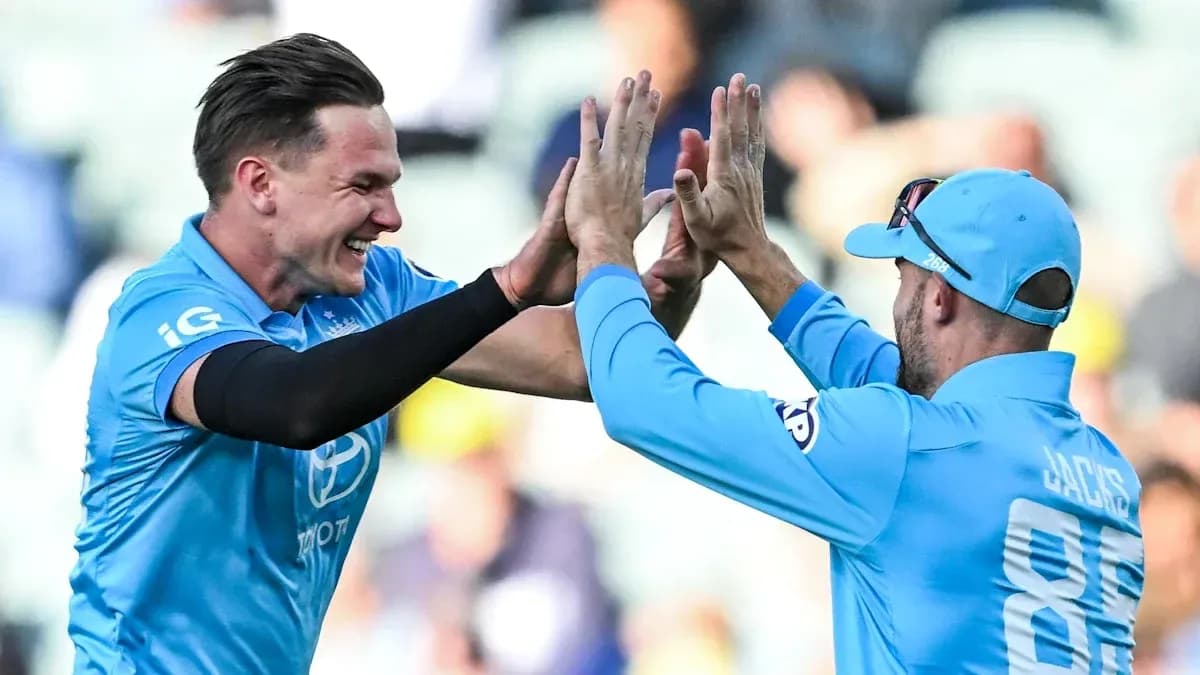
Jacks, 54 not out, played the perfect foil. He ran hard, picked gaps, and then, as the death overs opened up, joined Cox in stripping what was left of Australia’s discipline. Together they plundered 110 runs from the final 10 overs.
By the time the players walked off, the absence of Mahli Beardman – rested after his match-winning spell in Perth – felt enormous. Australia’s attack had been stretched, then broken.
New-ball bite at last
If England’s batting has been mercurial, their bowling has been downright baffling. This is the same attack that failed to defend 430 against Sri Lanka last month and somehow contrived to lose to Pakistan courtesy of a last-wicket heist.
In Adelaide, the new ball finally bit.
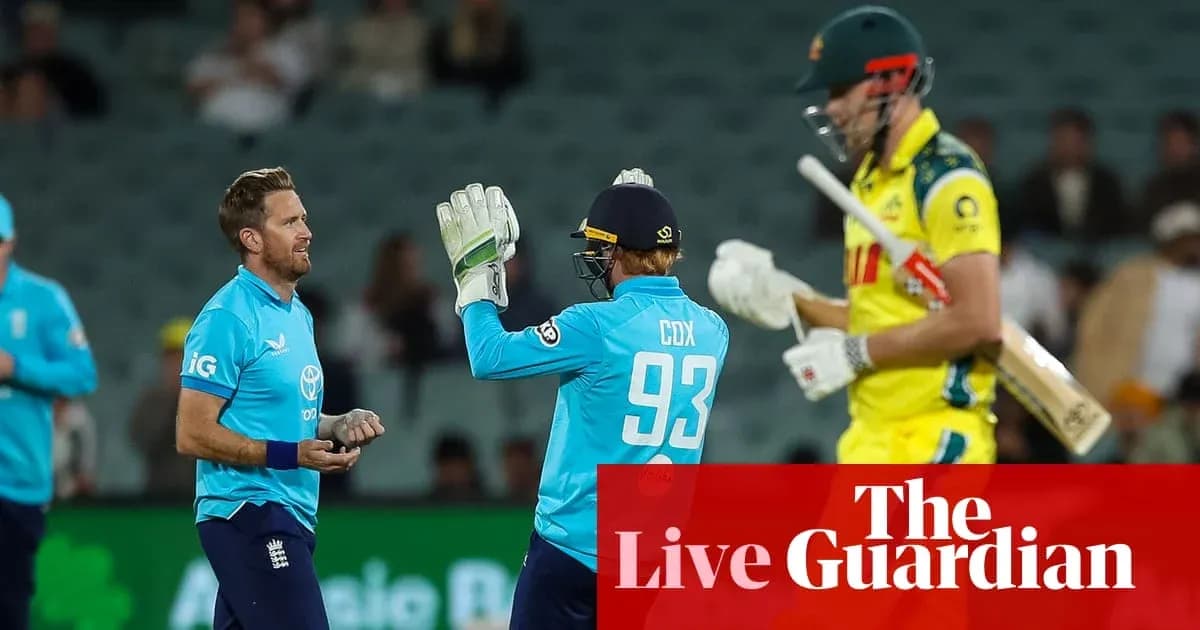
Sonny Baker, brought in for Jamie Overton specifically to address England’s chronic early-overs problem, found swing and purpose. He nicked off Australia captain Mitchell Marsh for two, Joe Root taking a sharp, diving catch at slip. It was the kind of early incision England have talked about for months without delivering.
At the other end, Gus Atkinson went to work with relentless accuracy and just enough movement. He removed Travis Head for seven – the second time in as many matches he has dismissed the dangerous left-hander – and then prised out Cooper Connolly and Josh Inglis, both caught behind.
By the time Australia slumped to 29-4 inside seven overs, the contest had been yanked away from them. Atkinson’s figures, 4-28, were a career-best return and long-overdue reward for the hard spells he has bowled recently without much to show.
This time, the numbers matched the threat.
Flaws, fortune and a much-needed finish
England were far from flawless. They shelled four chances – Inglis first, then Matt Renshaw and Cameron Green, both of whom made them pay for a while. Renshaw’s 63 and Green’s 64 stretched the chase beyond what it should have been, forcing England to work harder than the scoreboard suggested.
Yet the pressure never really lifted.
Liam Dawson, again preferred to Adil Rashid, bowled with control for 2-41, stifling any thought of a miracle rebuild. Green’s dismissal summed up Australia’s day: stumped in freakish fashion when the ball ricocheted off Cox’s shin and onto the stumps.
Sam Curran, searching for rhythm after a poor run, found a late spark. He struck twice in two balls, including the spectacle of bowling Jack Edwards with his looping slower “moon ball”. It was a small but important personal boost inside a much larger team statement.
Australia were finally all out for 220 in 44.3 overs. No late twist, no sting in the tail this time.
An enigma heading for Hobart
So where does this leave England? Harder to read than ever.
Before those chastening defeats in Rawalpindi, Lahore and Perth, they had quietly pieced together three ODI series wins this year. Then came the chaos: 430 not defended, a last-wicket nightmare, 131 all out. Now this – their highest ODI total in Australia and a crushing win over their oldest rivals on a ground that has haunted them.
Banton’s emergence as a genuine opening option, Cox’s resurgence, Atkinson’s new-ball menace, Baker’s swing, Dawson’s control, Curran’s late lift – these are the kind of performances that hint at a side capable of challenging at next year’s World Cup.
But hints are not habits.
The decider in Hobart on Wednesday will not just settle this series. It will ask the same question that has hovered over England for months: is this the team that collapses in a heap, or the one that walks into hostile territory and dominates?
Soon enough, we find out which version turns up.