England's Dominant ODI Chase: Bouchier and Dunkley Shine
At the Uptonsteel County Ground, where England officially turned the page on one era and opened another, the chase that followed felt less like a tentative beginning and more like a statement.
Ireland’s 281-5 looked healthy enough at halfway. On most days, in most places, that total asks serious questions. Here, on a flat Leicester surface and against a batting line-up stripped of some of its biggest names, it was dismantled with 11.5 overs to spare.
Bouchier seizes her moment
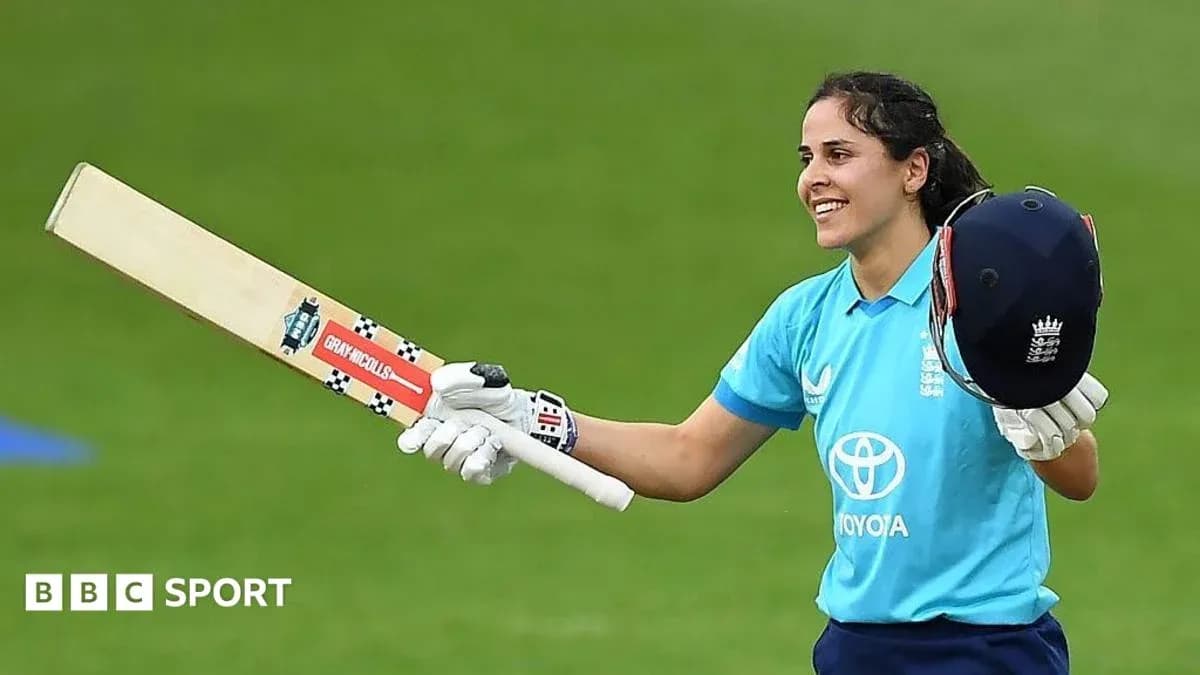
Maia Bouchier has worn an England shirt often enough to feel part of the furniture, yet never quite secured the seat with her name on it. This innings changed the conversation.
She began cautiously, almost anxiously: eight runs from her first 19 balls, Ireland’s seamers probing just enough to keep her honest. Then came the sixth over, Jane Maguire in her sights, and suddenly the innings caught fire. A cluster of boundaries flipped the tempo, and from that point Bouchier batted like a player who understood exactly what this opportunity meant.
By the time she walked off, caught at long-on for a superb 104 from 95 balls, England needed only 59. The job was done; the applause around Leicester carried the sound of a player stepping into a vacancy at the top of the order and refusing to give it back.
Her partnership with Sophia Dunkley set the tone. The pair added 143 for the first wicket, a stand that sucked the tension out of the chase almost before it had begun. If Bouchier’s innings built steadily, Dunkley’s crackled from the outset.
Dunkley turns the screw
Dunkley, like Bouchier, has been on the fringes of making the ODI XI her own. On this evidence, Charlotte Edwards has two openers who intend to make the next few months very uncomfortable for any rival.
England surged to 72-0 in the powerplay, Dunkley the aggressor, clubbing a 47-ball fifty – her fastest in ODIs – as Ireland’s attack wilted under the pressure. Lengths slipped, lines frayed, and the ball kept disappearing through and over the infield.
Cara Murray eventually ended Dunkley’s stay on 73 from 61 balls, a sharp caught-and-bowled in the 20th over that briefly stalled England’s procession. It did not change the direction of travel.
Jodi Grewcock, the new face in this transitional line-up, looked every inch a debutant – nine uneasy runs that spoke of nerves rather than ability. Bouchier, now the senior partner, took charge. She marshalled the chase, picked off the gaps, and made sure Ireland never sensed a way back.
Her dismissal, a misjudged loft to long-on, brought a flash of visible frustration. It also brought Ireland’s last sliver of hope. It vanished quickly.
Capsey and Kemp close the door
Alice Capsey walked in with 59 needed and immediately batted as if she had a train to catch. Freya Kemp joined her and between them they turned a dominant chase into a stroll.
Their stand of 54 from 38 balls underlined the depth England are cultivating. Kemp’s 36 off 22 deliveries was a clean, brutal exhibition of power hitting, the kind of cameo that exposes any looseness in line or length. Capsey, unbeaten on 41, finished the job by drilling the winning boundary, a fitting full stop on England’s record women’s ODI chase of 282.
This, remember, with Heather Knight and Tammy Beaumont retired from the format, Nat Sciver-Brunt injured, and Lauren Bell and Sophie Ecclestone rested. Five pillars of last year’s World Cup semi-final side missing, yet the batting order still brushed aside a target that once would have felt imposing.
Ireland’s promise, England’s response
Ireland’s bowlers never truly found their range. They were erratic with the new ball, ragged in the field, and once Bouchier and Dunkley settled, the gulf in experience showed. Only Orla Prendergast offered anything close to sustained threat, and even that was not enough to stem the flow.
With the bat, though, Ireland had earned the right to believe they were in the contest.
After an early loss, captain Gaby Lewis and Amy Hunter stitched together a composed second-wicket stand of 136, the kind of partnership that usually shapes an ODI innings. Lewis anchored with 69 from 89 balls, Hunter mirrored her with 62 from 90, and for a long stretch England’s attack looked short of ideas in the middle overs.
Without Bell’s new-ball bite and Ecclestone’s control and menace through the middle, England lacked their usual cutting edge. Ireland took advantage. When Lewis and Hunter fell, Rebecca Stokell arrived with intent and changed the tone again.
Her unbeaten 54 from 48 balls was a sharp, counter-attacking hand that lifted Ireland from solid to competitive. She picked off anything short, drove cleanly down the ground, and ensured the innings did not drift. At 281-5, Ireland had something to bowl at, something that should have kept them interested well into the chase.
On this pitch, against this England, it wasn’t enough.
A new order taking shape
This series is framed by transition. No Knight, no Beaumont, no Sciver-Brunt. Edwards has made it clear she is building towards next summer’s Ashes, and that the top order is open for business.
On day one of that project, the candidates did not just put their hands up; they raised the bar. Bouchier delivered a first ODI hundred in the kind of chase that selectors remember. Dunkley matched her for authority. Capsey and Kemp hammered home the advantage and showcased the bench strength that England believe will define their next cycle.
Ireland, for all their sloppiness with the ball, did enough with the bat to suggest this series will not be a procession if they sharpen their disciplines. But the gap in know-how, in handling pressure, was brutally exposed once England began their reply.
The series moves to Derby on Thursday with England 1-0 up, their record chase banked and their new era already carrying a clear message: the shirts vacated by legends are not empty for long.