England’s New Pace Quartet: Echoes of 2005 and Future Challenges
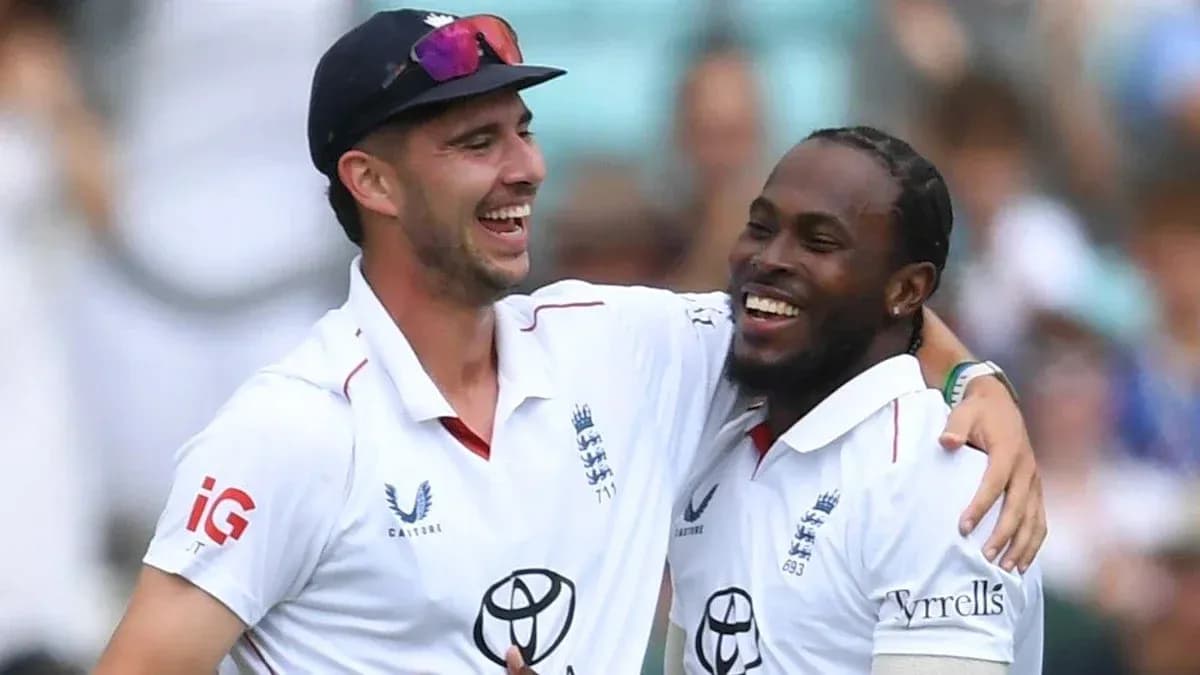
Marcus Trescothick has seen this movie before. Back then he was at slip, watching a snarling, perfectly balanced pace attack rip through Australia and drag the Ashes back to England in 2005. Now he’s in the dressing room as interim head coach, looking out at another quartet and daring, just a little, to draw the same line.
Ollie Robinson. Jofra Archer. Gus Atkinson. Josh Tongue.
Four names that have suddenly given England’s Test side shape and menace again, in the first weeks after Ben Stokes’ retirement and Joe Root’s return to the captaincy. Four bowlers who have just carried England to a series win over Pakistan and snapped a grim run of only two victories in 10 Tests.
“We do have some real skill,” Trescothick said, thinking back to 2005 and the old gang – Stephen Harmison, Andrew Flintoff, Simon Jones, Matthew Hoggard. “You could easily make those sort of comparisons.”
He’s careful with the nostalgia, but he doesn’t dodge it. He was in that 2005 dressing room. He knows what a properly balanced attack looks like.
A New Shape After Stokes
Stokes’ departure as captain didn’t just leave a leadership gap. It ripped a hole straight through England’s team balance. For years, his presence as an all-rounder allowed them to pick three seamers and a specialist spinner without blinking. Once he walked away, England had to start again.
The answer, for now, is blunt but effective: four frontline seamers, no specialist spinner. Dan Lawrence’s part-time off-breaks sit there as a safety net, but this is a pace-led side in the old-fashioned sense.
The identity of that attack marks a subtle but important shift from the Stokes–Brendon McCullum era. That regime chased raw speed almost as a principle. Trescothick’s England still has plenty of pace, but it also has something else: variation, contrast, awkward questions from both ends.
Robinson is the symbol of that change. Recalled after more than two years out of Test cricket, he rarely touches 80mph, often bowls with the keeper standing up, and yet has been the most ruthless of the lot. This summer he has taken 23 wickets at an astonishing average of 8.3, nagging away on a length, finding movement, and looking – as many have noted – like a modern echo of Glenn McGrath.
“We’ve got a good contrast in what we’re trying to do at the moment,” Trescothick said. It’s an understatement.
Archer, Tongue and Atkinson can all push up towards 92mph. They intimidate, they hurry, they bruise. Robinson just keeps landing it on the seam and dragging batters into mistakes. Different speeds, different angles, the same relentless pressure.
“What we do have is three guys bowling at 92 miles an hour, which is really nice to have in your armoury,” Trescothick added. “And the more that they play together and the more experience that everyone gets together, then it fits into place to how you want it to be.”
From Slump to Surge
The turnaround has been sharp. England’s previous stretch of two wins in 10 Tests felt like the end of something – the tail end of Stokes’ reign, the slowing of the Bazball surge, the sense that opposition attacks had finally caught up.
Root’s second stint as captain has started with something very different: back-to-back wins over Pakistan and, with them, England’s first series victory since 2024. The mood has shifted. So has the conversation.
This is no longer about whether England can cling on. It’s about what this attack might become.
Michael Vaughan, who captained that 2005 Ashes side, put it plainly in his Telegraph column. You can only truly compare this group to Harmison, Flintoff, Jones and Hoggard when they win a major series. He’s right. The 2005 quartet earned their legend the hard way, over five brutal Tests against a great Australia side.
But Vaughan also wrote that this current attack is “certainly capable of doing something really special, and winning back the Ashes for England next summer.” That’s the scale of the expectation already building around Archer, Tongue, Atkinson and Robinson.
Edgbaston Looms – and So Does Selection
Before any talk of Australia, there is a more immediate task. England head to Edgbaston on 9 September, chasing a 3-0 clean sweep over Pakistan. The squad for the third Test in Birmingham will be named in the coming days, and Trescothick has made his priorities crystal clear.
“First and foremost I want to win the series 3-0,” he said. “And I think if you’re going to do that you want to play the most consistent team possible.”
That points strongly towards sticking with the same frontline attack, fitness permitting. The schedule has been relentless, and Trescothick knows it.
“We’ve got to see how they all pull up from this game,” he said. “They’ve got four or five days now of break which they’ve not had for a good period of time because the schedule has been so busy. Once we know that then we’ll be able to make that decision, but emphasis massively on winning the series 3-0.”
The temptation to experiment is there, especially with a clutch of inexperienced but intriguing quicks waiting in the wings. At Lord’s, England named seven pace bowlers. Brydon Carse was initially included before being removed after an incident outside a nightclub in Derby. He is not expected to be considered again until police and the Cricket Regulator complete their investigations.
In his absence, Sam Cook, Sonny Baker and Matthew Fisher are the reserve seamers. Between them, they own just four Test caps. This might have been a natural moment to blood one or two, but Trescothick’s tone suggests that the door to rotation is only half open. Series whitewashes are rare things. Coaches don’t toss them away lightly.
The Shadow of 2005
So the comparisons with 2005 linger in the background. Trescothick, now 50, can feel the echoes: the blend of pace and precision, the sense of an attack that complements itself, the belief that a group of fast bowlers can change the direction of English cricket.
But the reality is harsher. Harmison, Hoggard, Flintoff and Jones didn’t become a “quartet” in the public imagination because they looked promising. They did it by knocking over great players, under the fiercest pressure, over and over again.
Archer, Tongue, Atkinson and Robinson have made a thrilling start. They’ve dragged England out of a slump and into a series win. They’ve given Root options and Trescothick optimism. They’ve made people talk about the Ashes again.
Now comes the hard part. Can this group stay fit? Can they survive the grind of a long winter and still be firing when Australia arrive next summer?
And when that moment comes, will those 2005 comparisons still feel flattering – or simply accurate?