England's Dominance: Jacks and Cox Lead Charge Against Australia

England’s ruthless charge with the bat set up a commanding position, and their bowlers then tore into a shell-shocked Australian top order in a chaotic reply that veered from bad to disastrous in a matter of overs.
Jacks and Cox light the fuse
England’s innings had already done the damage.
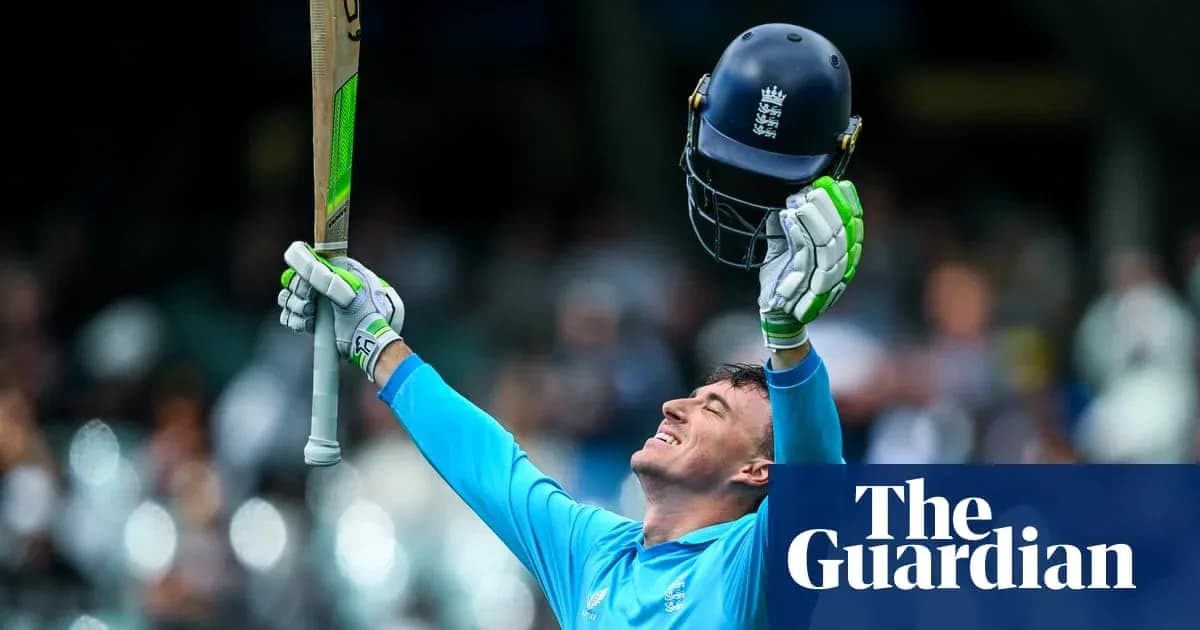
Will Jacks anchored the back end with a controlled half-century, reaching his fifty in the final over, while Cox provided the spark alongside him. Their stand surged past 100, taking England beyond 300 and breaking Australian resistance in the field.
Cox was superbly inventive, even unveiling a reverse scoop to the boundary as the pressure mounted on the bowlers. When their partnership ticked into three figures, England’s total roared past the 300 mark and the mood shifted sharply: Australia were no longer trying to restrict; they were clinging on.
Australia briefly thought they had the breakthrough when Adam Zampa created a chance, getting both hands to a catch that would have removed Jacks. He spilled it. England stayed in control.
The punishment continued. Cox moved to 67 from 49 balls, only to fall to a brilliant piece of work on the rope. Bartlett’s over contained two wides, but he induced the big moment when Renshaw judged a catch right on the boundary edge to remove Cox at 5-314 after 46.3 overs. A crucial wicket, but the damage was already heavy.
Sam Curran walked in to join Jacks, and England still had time to accelerate again. The final over underlined their intent. Jacks nudged the single he needed to reach his half-century, then Gus Atkinson arrived and swung as if he had a plane to catch. First ball: a wild swing and a miss. Next two: back-to-back sixes. England stormed to 6-338 with two balls left in the innings, a towering total that asked serious questions of Australia’s batting.
Atkinson rips through the top order
Those questions were answered quickly – and brutally.
Mitchell Marsh and Travis Head strode out to launch the chase, but Atkinson immediately found rhythm and hostility with the new ball. Head took four balls to get going, then launched his first six from the fifth delivery he faced, a statement shot that hinted at a counter-attack.
It didn’t last. On just seven, Head miscued and paid the price. Atkinson struck, Joe Root took the catch behind the bat with minimum fuss, and Australia slipped to 1-13 after 2.4 overs. The tone was set.
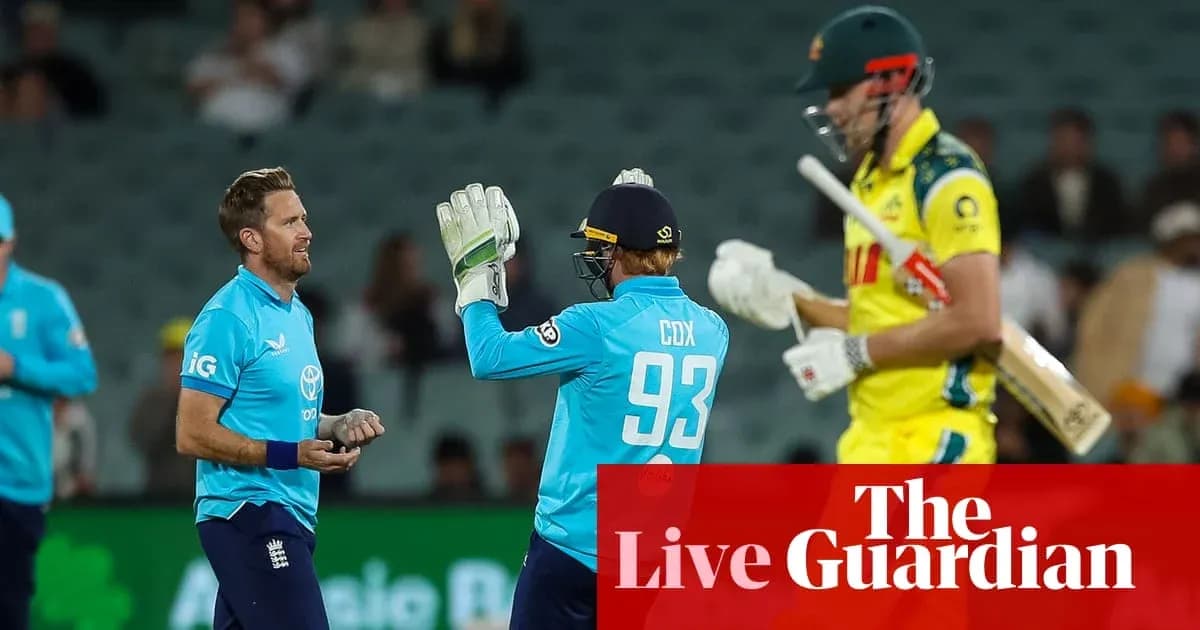
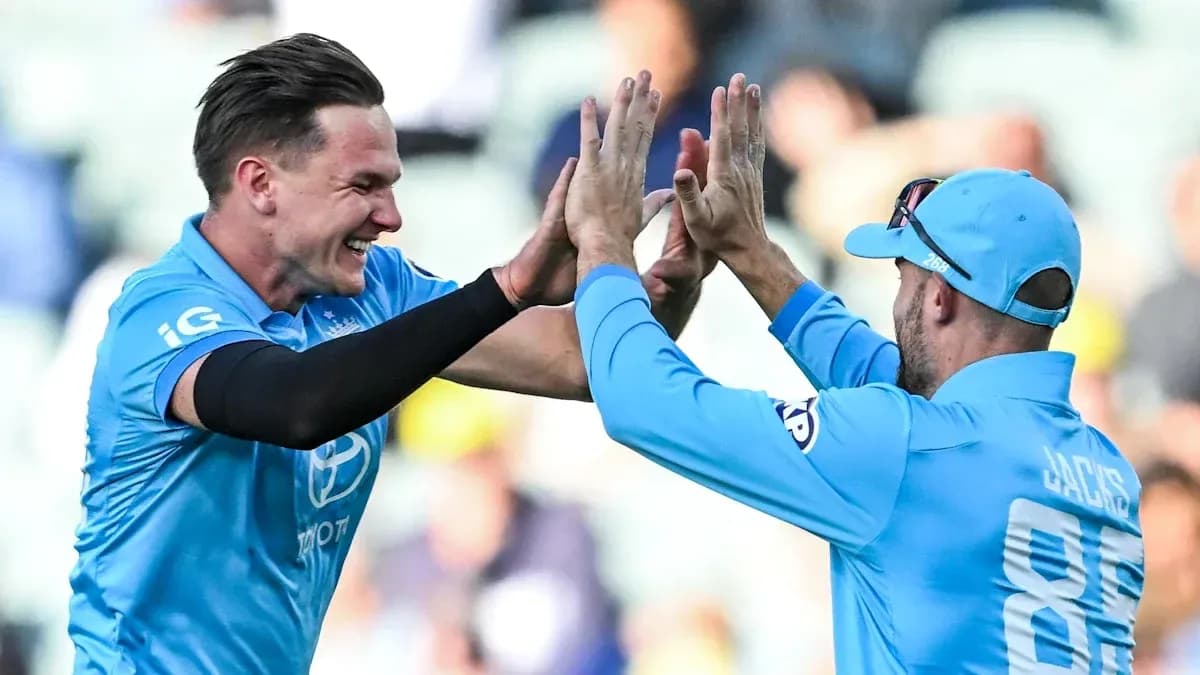
The collapse gathered speed. At 2-23 after 3.1 overs, Atkinson claimed a second wicket in the over. In a near carbon copy of Head’s dismissal, Brook held on to the chance and Connolly departed without scoring from two balls. England’s quicks smelled blood.
Then came the real freefall. Australia crashed to 3-13 after 3.3 overs as Baker joined the party, finding the edge and watching Root swallow another chance to remove the captain. Three wickets had fallen for no runs in the space of six deliveries. The chase for 356 was already disintegrating.
Renshaw and Inglis walked in with the scoreboard in ruins and the pressure suffocating. They tried to steady things, nudging and prodding, but England refused to loosen their grip. At 4-29 after seven overs, Inglis’s resistance ended under the cold glare of technology. England reviewed for a possible dismissal, and the decision went against Inglis. He was gone for 3 from 5, another body in a growing pile.
England circle, Australia stumble
Renshaw at least found some fluency. He carved his first boundary, then followed with another, moving to 13 from 15 as he tried to drag the innings into calmer waters. But every run felt like a negotiation, every over a minor escape.
By the 11-over mark, Australia were 4-50, miles adrift of the required rate, the target of 356 receding into the distance. Renshaw had worked to 24 from 26, Green to 10 from 13, but the task already looked mountainous.
England kept coming. Atkinson banged in a short ball at Cameron Green, drawing a mistimed pull that should have ended another Australian hope. Liam Dawson settled under it, perfectly placed, only to spill a straightforward chance. Green, who should have been walking off the Adelaide oval, survived by sheer fortune.
Root almost added to his collection of catches as well, stretching for another opportunity that just evaded his fingers and allowed Inglis – briefly – to survive earlier in the innings. Those were rare moments of charity from an England side otherwise in ruthless, clinical mood.
By the time Australia reached 4-50, this was no longer a chase. It was damage limitation. England had runs on the board, momentum in hand, and a bowling attack that had already ripped out the heart of the reply.
If Australia are to find any way back from here, it will take something extraordinary – the kind of innings that changes not just a match, but a tour.