England Cricket's Summer: Joe Root and Kevin Pietersen Return
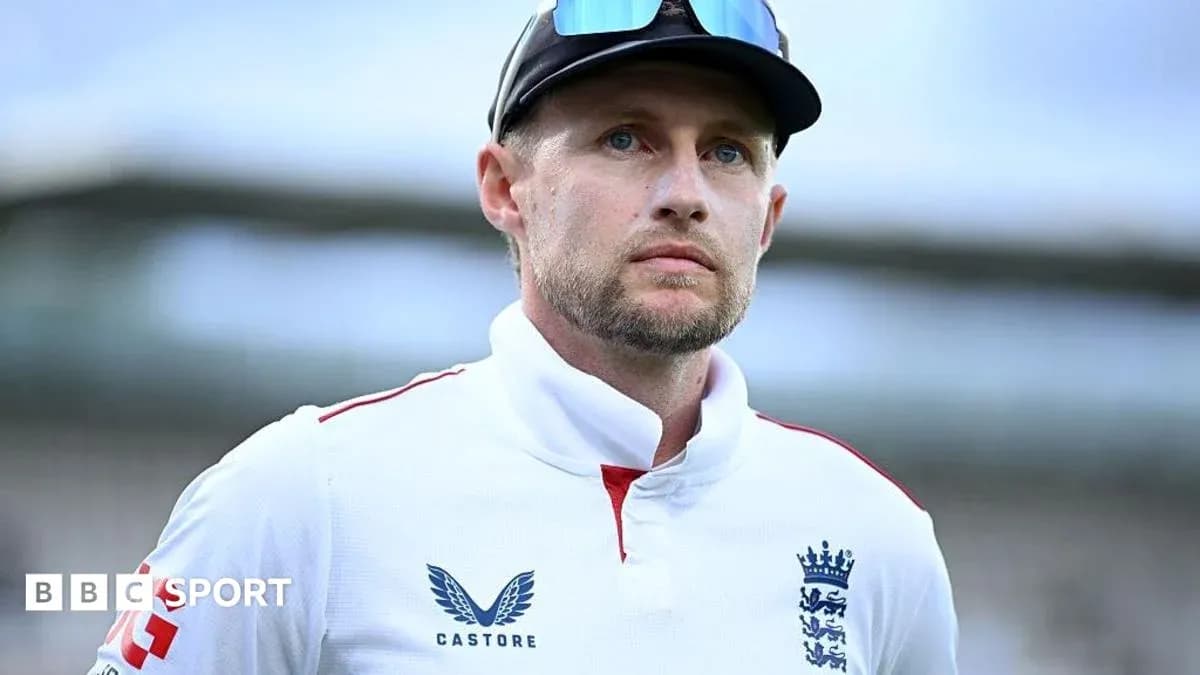
Joe Root back in charge. Kevin Pietersen back in the dressing room. It is 2026 and somehow English cricket has looped back on itself.
For those two things to feel normal again tells you everything about a summer that has lurched, swayed and finally staggered to its conclusion. One of the most turbulent in recent memory has ended with England out of the Bazball age without ever formally slamming the door on it.
The argument about whether the hierarchy should have acted after the Ashes is now irrelevant. The change has come anyway, not via a press release, but through a slow unravelling of an era. Ben Stokes is gone. Root has had to rummage in the garage for his old captain’s blazer. Pietersen has walked back through the door. The landscape looks familiar, yet entirely different.
Has a lack of decisive action in the spring wasted the summer? Try that line on Jordan Cox, Emilio Gay or Dan Lawrence. Or on Ollie Robinson, reborn and rampant. Or on Root himself, who has slipped back into the job with the air of a man who never quite finished it the first time.
Are England better now than they were in June? Strip Stokes out of any side and the answer tends to lean one way. Losing a talisman does not make a team stronger. That does not erase what they have done to Pakistan: a 3-0 sweep, emphatic on paper and often convincing on grass.
Under Stokes, England were defined by his force of will. His words, his body language, his refusal to blink. The team became a reflection of one man’s personality, gloriously so at times, suffocatingly so at others.
Root is wired differently. Quieter, more measured, less inclined to wage war on convention in every session. For much of the Pakistan series, that change felt like a blessing. There was a calmness about England’s cricket, a sense of control that suggested the scars of his first captaincy stint had healed.
Then came Edgbaston. Third evening. Third Test. Razaullah swinging as if the laws of probability did not apply to him.
Two hours of mayhem shredded England’s composure. Every slash, every heave, seemed to drag old doubts back to the surface. Fields scattered. Plans frayed. Root, under siege, briefly left the field. It was a snapshot that cut sharply against the memory of Stokes, who almost never appeared to lose his grip on the wheel in that fashion.
The session hurt. Yet in the aftermath there was a different sort of honesty. Stand-in coach Marcus Trescothick did not pretend black was white. He admitted his disappointment. No sugar-coating, no “Kool Aid” slogans, no insistence that chaos was all part of the grand design. Just a blunt assessment that England had lost their way.
And so the summer closes with a familiar, nagging truth: no one really knows how good this England side is. The pattern is becoming wearyingly clear. The drawn Ashes in 2023. The shock defeat to Sri Lanka at The Oval in 2024. The failure to finish off India last year. Each time the defining series has arrived, England have stepped up to the line, looked it in the eye, and not quite crossed it.
That is the enduring frustration of the Rob Key era as director of cricket. The marquee contests have not been won. Between them, there have been bursts of brilliance, fresh questions, half-answers. The brass ring always just beyond reach, the pot of gold always at the far end of the rainbow.
What England do have, right now, is a pace attack that feels like a throwback to 2005 in its depth and variety. A blossoming four-man seam unit that has opponents glancing at the team sheet with a flicker of unease.
At the heart of it stands Robinson. This has been his summer. Twenty-eight wickets at 9.32 is the sort of return that belongs in sepia, in scorecards from before World War I. Relentless lines, nagging bounce, the sense that every spell might unlock another collapse.
Around him, Jofra Archer, Josh Tongue and Gus Atkinson supply the speed and hostility. England have built themselves a Swiss army knife of an attack, every blade sharp, every tool distinct. The one thing missing is a left-armer, the angle that completes the picture.
Scratch beneath that frontline, though, and the depth looks thinner. One injury, maybe two, and the conversation turns quickly to untested names. Sam Cook, Sonny Baker, Matthew Fisher and Henry Crocombe have only four caps between them. Brydon Carse sits in the frame, but the Derby incident still hangs over his immediate future. Olly Stone, in form and perpetually on the brink of another recall, lurks as the tempting wildcard.
The next challenge is about balance. How do England shape this attack for a winter that demands versatility? The four quicks can operate in South Africa and in the one-off pink-ball 150th anniversary Test in Melbourne. Those conditions will indulge pace, bounce, aggression.
Bangladesh in February will not. Two Tests there will require a different type of courage, a different kind of craft. On turning pitches, with long days in the field, spin suddenly becomes the main weapon again. The problem is England do not yet know whose hand they want on the trigger.
A scorching English summer has turned spin into a luxury item, barely used. The result is a long, messy list of contenders and no obvious first choice. Shoaib Bashir, Jack Leach, Dom Bess, Will Jacks, James Coles, Mason Crane, Liam Patterson-White, Calvin Harrison, Jack Carson – each can make a case, none has kicked the door off its hinges.
For the moment, the incumbent is Lawrence, a batter whose part-time off-breaks have become more than a novelty. He has not had many overs to prove his worth, but the fact he can bowl at all gives him a crucial edge in selection meetings.
When Jacob Bethell returns from knee injury, that debate sharpens again. Bethell’s all-round promise will squeeze the options further, likely leaving a straight fight between Cox and Gay for a top-order spot in the first Test in South Africa in December.
Root is back. Pietersen is back. The pace stocks are brimming, the spin cupboard cluttered, the big questions still unresolved.
Four years into this project, England stand once more on the brink of a defining winter. At some point, they have to stop circling the brass ring and finally grab it.