Emilio Gay's Trustworthy 60 at Edgbaston
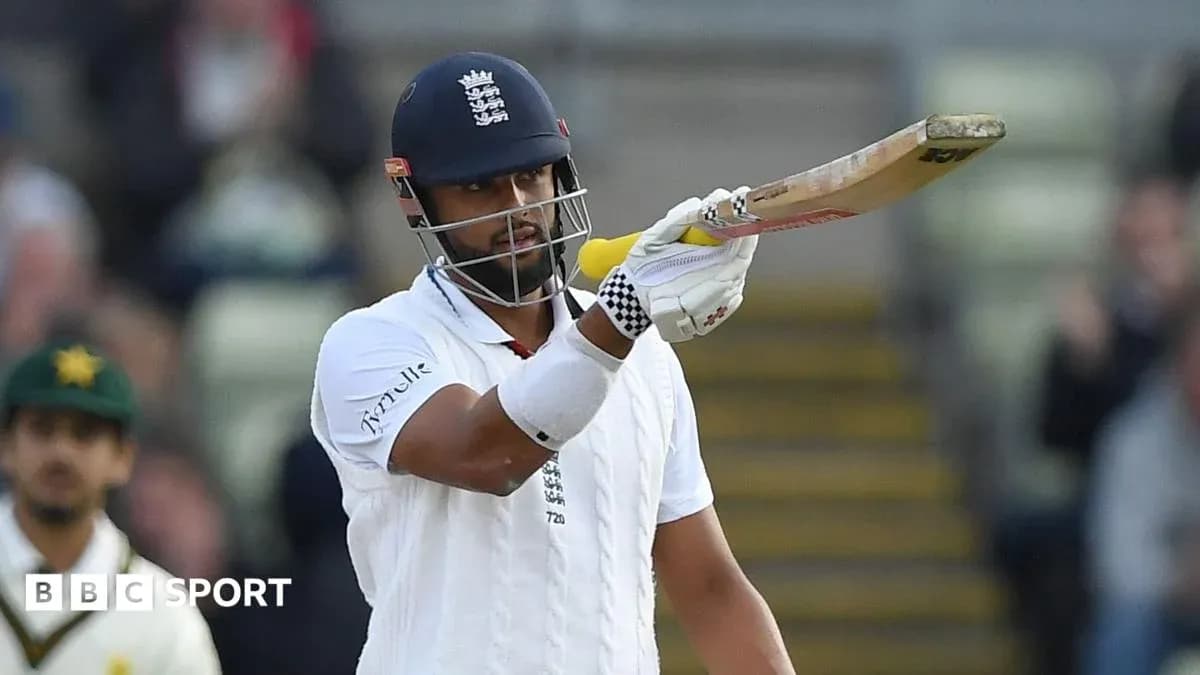
Emilio Gay walked off Edgbaston with only 60 to his name, but with something far more valuable in his pocket: trust from one of England’s greatest openers.
On a day when Pakistan’s attack snarled and the ball once again lorded it over the bat, Sir Alastair Cook watched the 26-year-old left-hander absorb pressure, leave well, defend late and slowly turn a difficult start into control. By stumps, Cook was in no doubt. For him, Gay should be on the plane to South Africa this winter – and opening the batting.
A hard-earned 60 that said plenty
The numbers on the scoreboard were modest. Sixty from 114 balls. Nine fours. A top score in Tests, but not the kind of innings that lights up a highlights reel.
The context changes everything.
In a home summer where batters have been chewed up, Gay’s 261 runs at 26.1 hardly leap off the page. Only Ben Duckett has managed a hundred for England in six home Tests. The rest have been fighting for survival. On a tricky Edgbaston surface, against a lively Pakistan attack, Gay did more than survive. He set the tone.
His start was almost stubborn. The first 12 runs of his half-century took 43 balls. A grind, not a gallop. Then, as the bowlers tired and his judgment sharpened, the tempo shifted: the next 38 came from 52 deliveries. Same patience, more punishment.
Cook liked what he saw.
“I think Emilio Gay’s played really nicely. I would say he’s confident and intense,” he told Test Match Special. “He is definitely a run-getter when he gets in. He seems to have that real stubborn and strong will to make it count if he can.”
That word again: stubborn. For an England top order that has too often felt fragile, it sounded almost luxurious.
Technique built for tough days
The data backs up the eye test. According to CricViz, Gay has left or defended 61% of the pace deliveries he has faced since his debut against New Zealand in June. Only Dom Sibley in 2020, at 68%, has been more circumspect among England openers in a home summer in recent years.
On Wednesday, the pattern held. Gay left or defended 65 balls, making Pakistan’s quicks earn every inch. Cook, a man who built nearly 12,000 Test runs on the art of saying “no” to the bowler, approved of the method as much as the mindset.
He “likes how late he defends the ball,” a small technical detail that says a lot. Late defence means time. Time means control. Control, at the top of the order in these conditions, is gold.
Gay isn’t just a blocker, though. Sixty-eight percent of his Test runs have come in boundaries – the joint-highest proportion for any England batter with at least 250 runs in the format. When he goes, he goes hard.
Cook sees a rounded game there, not a one-gear accumulator.
“If you take Gay’s innings, and what I’ve seen of him, he’s not hunting that drive too often. He waits for it to come into there,” Cook said. “He scores off the back foot through the off side as well. He scored through the leg side and timed them through mid-wicket so he does have an all-round game. He’s not limited to the off side.”
In other words, the shots are there. He just doesn’t go chasing them.
A chance missed, a point made
Not everyone left Edgbaston entirely satisfied on Gay’s behalf. Former captain Michael Vaughan admired the control but couldn’t escape the feeling that this should have been the day Gay went big.
“Emilio Gay found his balance early. He had it hard at the start and then he found his flow,” Vaughan said. “He’ll be really disappointed to get out for 60. He’ll be desperate to get his first Test match century and I thought it was on today.
“That extra little bit of pace from Razaullah and a little lack of concentration at the end of the day has cost him.”
Gay dragged on, chopping a ball he might, on another day, have left alone. The reaction told its own story: head back, shoulders slumped, the look of a batter who knew a statement hundred had slipped away.
Yet even in dismissal, the judgment from those around him was clear. This was an innings that belonged in a different category to a pretty 30 or a fleeting cameo. It had changed the match situation. It had changed opinions.
Work in the nets, reward in the middle
Inside the dressing room, there is little surprise that Gay is starting to look at home in Test cricket. Seamer Josh Tongue pointed straight to the work behind the scenes.
“The one thing I’ve seen in Emilio is he trains really hard in the nets. He’ll bat for ages, putting a lot of hard work in, and it’s shown on the pitch,” Tongue said.
He referenced last week at Lord’s, where Gay suffered “two quite horrible dismissals” – the sort that can gnaw at a player’s confidence. Instead of retreating, Gay doubled down on his routines.
“I felt today he batted unbelievable on a tricky pitch,” Tongue added. “He was obviously really disappointed with how he got out. It’s not a nice feeling, chopping on, but he’s put the team in a really good position for tomorrow.”
That, ultimately, is the point. Gay’s 60 did not come in a vacuum. It came after setbacks, under pressure, with the ball doing plenty, and it left England in control of a Test that could easily have tilted the other way.
South Africa calling
Cook’s verdict carried the weight of experience and the hint of a plan. He sees South Africa not as a reward, but as the next step in a carefully built career.
“He has done enough for me to take him to South Africa to continue the progress of a player where the pitches will be slightly easier to bat on and he should open the batting,” Cook said.
Easier pitches. A young opener who leaves well, defends late, and cashes in when set. An England side still searching for long-term stability at the top.
Gay didn’t reach three figures at Edgbaston. He might, though, have done something more important: he may have batted his way into England’s winter.