Emilio Gay: The Opener England Needs for South Africa
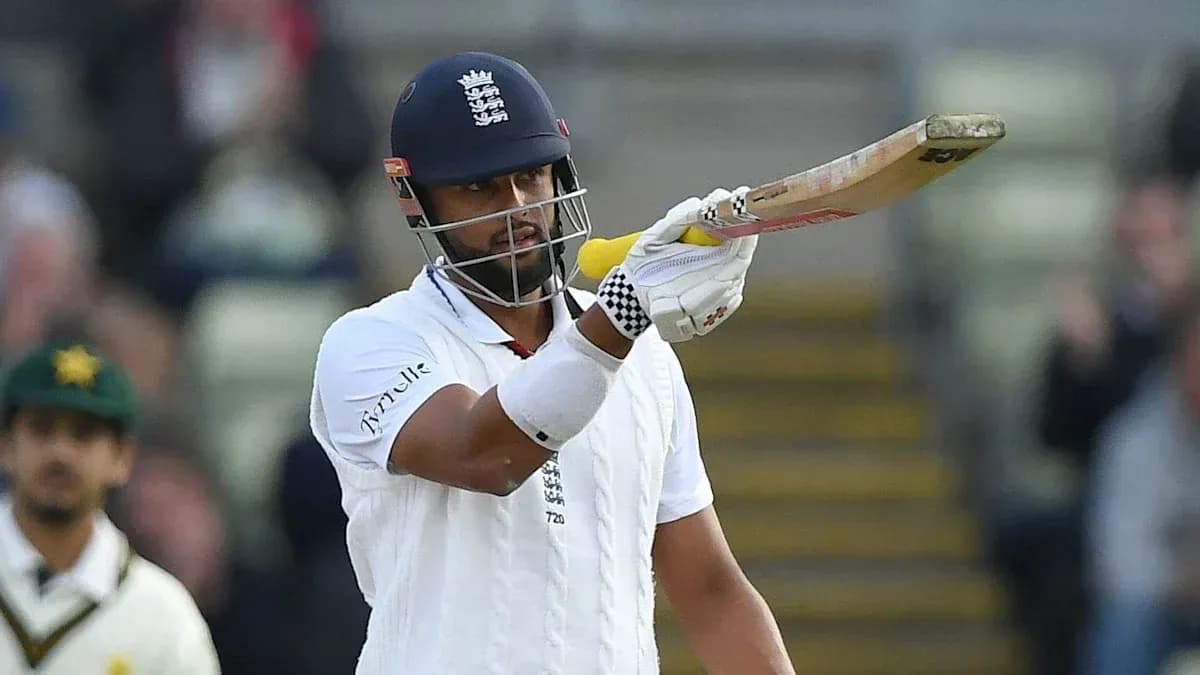
Sir Alastair Cook has seen enough. In a summer where opening the batting for England has felt like walking into a storm without an umbrella, he believes Emilio Gay should be on the plane to South Africa.
The numbers alone do not shout for attention: 261 runs at 26.1, a highest score of 60. On paper, modest. On grass, in this particular English summer, something else entirely.
An opener built for hard yards
At Edgbaston, against a Pakistan attack that has made better players look hurried, Gay’s 60 from 114 balls did more than decorate the scorecard. It changed the mood of the day. He blunted the new ball, soaked up pressure, then quietly took the game away.
Cook, who knows more than most about lonely mornings against the new ball, has liked what he has seen.
“I think Emilio Gay's played really nicely. I would say he's confident and intense,” he told Test Match Special, praising the left-hander’s stubborn streak and appetite for “tough runs” at the top of the order.
This has been a summer where batters have been hunted. Ben Duckett is the only England player to reach three figures in six home Tests. In that context, Gay’s willingness to grind, to leave, to defend, has stood out.
According to CricViz, since his debut against New Zealand in June, Gay has left or defended 61% of the pace deliveries he has faced. Only Dom Sibley, in 2020, has registered a higher percentage for an England opener in a home season, at 68%. That is not passive cricket. It is survival with a plan.
On Wednesday, Gay left or defended 65 balls. Cook particularly admired how late he brought the bat down, how he absorbed the ball rather than pushed at it. It was an innings built on patience, then expanded with authority.
He crawled to 12 from 43 balls, then shifted gear: the next 38 runs came from 52. He struck nine fours and, strikingly, 68% of his Test runs have come in boundaries – the joint-highest proportion for any England batter with at least 250 runs in the format. When he goes, he goes hard.
Cook’s verdict is clear: Gay has done enough to tour and should open in South Africa, where the pitches are likely to offer a kinder balance between bat and ball and give an emerging opener room to grow.
Not just an off-side merchant
What has impressed Cook is that Gay is not a one-trick, off-side stylist.
“If you take Gay's innings, and what I've seen of him, he's not hunting that drive too often. He waits for it to come into there,” Cook said, noting his discipline outside off stump.
Gay scores off the back foot through the off side, but he also works the leg side, timing the ball through mid-wicket. It is an all-round game, not a narrow, one-channel method.
The temperament is starting to show too. Only Harry Brook, with six scores above 30, has passed that mark more often than Gay, who has done it five times in a summer where many have barely survived the new ball.
There is, though, a flaw that bowlers have already spotted. Gay has struggled against back-of-a-length bowling, with seven dismissals in the 7–9 metre range. It is the kind of technical kink that gets circled on opposition laptops and replayed in slow motion. If he goes to South Africa, that length will follow him.
A missed hundred, and a growing case
Against Pakistan, on a surface that exposed their flimsy batting – they were bowled out for 133 – Gay had the stage to himself. It may yet prove to be his last Test innings of the summer. If so, it will linger as both a statement and a near-miss.
Michael Vaughan thought a hundred was there for him before he dragged on to Razaullah Khan.
“Emilio Gay found his balance early. He had it hard at the start and then he found his flow,” Vaughan said. “He'll be really disappointed to get out for 60. He'll be desperate to get his first Test match century and I thought it was on today.
“That extra little bit of pace from Razaullah and a little lack of concentration at the end of the day has cost him.”
That dismissal – chopping on late in the day – will sting. It should. Openers are judged by hundreds, not pretty 60s. But England’s dressing room has seen the work behind the scenes.
Seamer Josh Tongue highlighted Gay’s training habits as a key part of his growing resilience.
“The one thing I've seen in Emilio is he trains really hard in the nets. He'll bat for ages, putting a lot of hard work in, and it's shown on the pitch,” Tongue said.
Even after two “quite horrible” dismissals at Lord’s, Tongue felt Gay’s response at Edgbaston showed a player learning quickly, not sulking.
On a tricky pitch, he batted “unbelievable”, Tongue added, and though the manner of his dismissal hurt – “it's not a nice feeling, chopping on” – he had already done the hard work to put England in a commanding position.
The winter scrap
Selection for the South Africa tour will not be a free pass. With Jacob Bethell expected to return from injury, the top-order jigsaw tightens. Jordan Cox, Dan Lawrence and Gay look set to contest two spots.
Gay does not yet have the weight of runs that ends debates on its own. What he does have is a growing body of evidence that he can do the ugliest job in the game when conditions are at their worst.
He leaves well. He defends late. He scores quickly once set. He keeps coming back after setbacks.
In a summer where the new ball has ruled and openers have come and gone, that might be exactly the kind of stubbornness England cannot afford to leave behind.