Ed Cowan's Take on Big Bash League's Future Amid T20 Competition
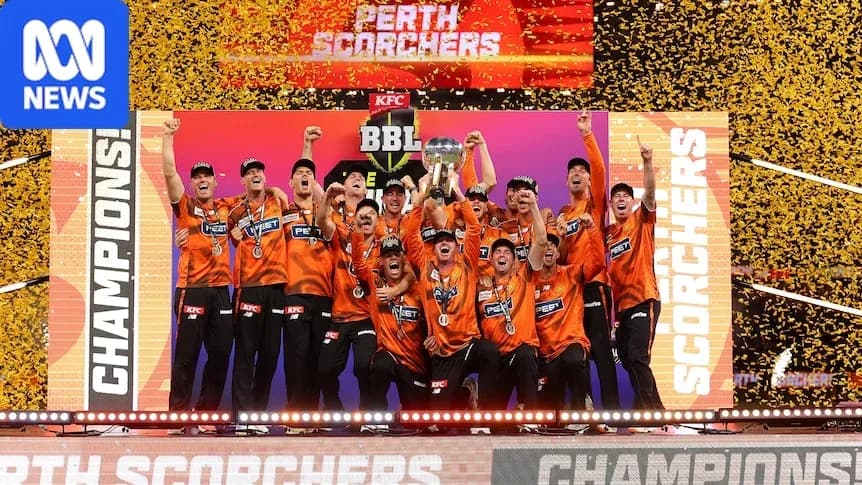
Ed Cowan has watched the global T20 arms race gather speed, but he’s not buying the idea that the Big Bash League needs to sell itself off to keep up.
The former Australian Test opener, now a Cricket NSW board member, believes the rush toward privatisation is not only unnecessary, but dangerous.
On the ABC Cricket Podcast, Cowan warned that fears of a mass player exodus to rival leagues are being overstated, and that putting BBL clubs on the market could quickly get away from administrators.
“There’s a view that the business could be run more effectively, which would enable some time to work out whether you actually do need to sell your star assets or not,” he said, before delivering the line that will resonate in boardrooms around the country.
“Because when you start burning the furniture to warm the house, it can spiral quickly out of control from there.”
A league that’s already fighting back
The timing of the debate is striking. The BBL has just come off seasons in which it trimmed the schedule, sharpened the product and, crucially, lured serious talent.
The shorter fixture has worked. Crowds and TV audiences have responded, and so have the players.
In 2025/26, fans watched Colin Munro, Chris Jordan, Muhammed Rizwan and Sam Billings light up the competition. When the Test summer eased, Steve Smith, Alex Carey and Mitchell Starc dropped in and lifted the standard again.
That’s not the profile of a league on its knees.
Set that against The Hundred in recent years. Mitchell Marsh, Adam Zampa, Jos Buttler and Trent Boult have been some of the biggest names in the English competition. Every one of them has either already played in the BBL or is locked in for the upcoming BBL16 season.
For Cowan, that’s the point: the Big Bash is still attracting elite talent without handing over the keys to private owners.
CA pushes the accelerator
Cricket Australia sees it differently. To them, this is about what happens next, not what has just happened.
Earlier this month, CA confirmed an opt-in model that allows states to take their BBL teams to market. They can sell stakes or even entire franchises to private investors if they choose.
For CA chief executive Todd Greenberg, the clock is ticking.
“There are opportunities now for our best Australian players to play in other leagues at the same time potentially with bigger salary caps. So when we talk about should we wait for two years or four years? No, we can’t wait,” Greenberg said.
“Those challenges are on our doorstep today. So we’ve got to make some decisions about how we compete.
“We’re a relatively small country in a big global sport. So it’s incumbent on us to make decisions that we can compete with elsewhere and that’s exactly what we’re doing.”
The message is blunt: if Australia doesn’t move, leagues like The Hundred and South Africa’s SA20 will.
States split on selling the family silver
The national body might be aligned, but the states are anything but.
Cricket NSW has been the most vocal critic of the privatisation model, with Cowan’s comments reflecting a deep unease about selling off what many see as core assets of the domestic game.
Queensland Cricket has also stepped carefully. For now, it intends to keep control of its team.
“We will closely monitor the sales process and at this stage, intend to retain 100 percent ownership of the Brisbane Heat, but of course remain open to private investment at the appropriate time,” Qld Cricket Chair Kirsten Pike and CEO Terry Svenson said in a statement.
Victoria has planted its flag on the other side of the debate.
Cricket Victoria is backing the move and will go first. The Melbourne Renegades are set to be put to market, with the licence to be sold in full.
“Private investment will unlock value for reinvestment across Victorian cricket, from the grassroots through to the elite game,” Cricket Victoria Director Shaun Richardson said.
That’s the fault line: one camp worries about “burning the furniture”, the other sees a chance to cash in and reinvest before the market moves on.
A defining stretch for the Big Bash
All of this plays out as the BBL and WBBL approach a turning point.
CA and the state associations will continue negotiations in the lead-up to BBL16 and WBBL12, seasons that are likely to be the last under the current eight-franchise model.
On the field, the Big Bash has already shown it can adapt – shorter seasons, better scheduling, and marquee names arriving once international duties ease.
Off the field, the next decision is far bigger.
Does Australian cricket trust that evolution and back its own competition, or does it sell a slice – or more – to keep pace with a rapidly commercialising T20 world?
The answer will shape what the Big Bash looks like long after the next crop of stars has come and gone.