Dinusha’s Defiance Secures Draw in Colombo Test
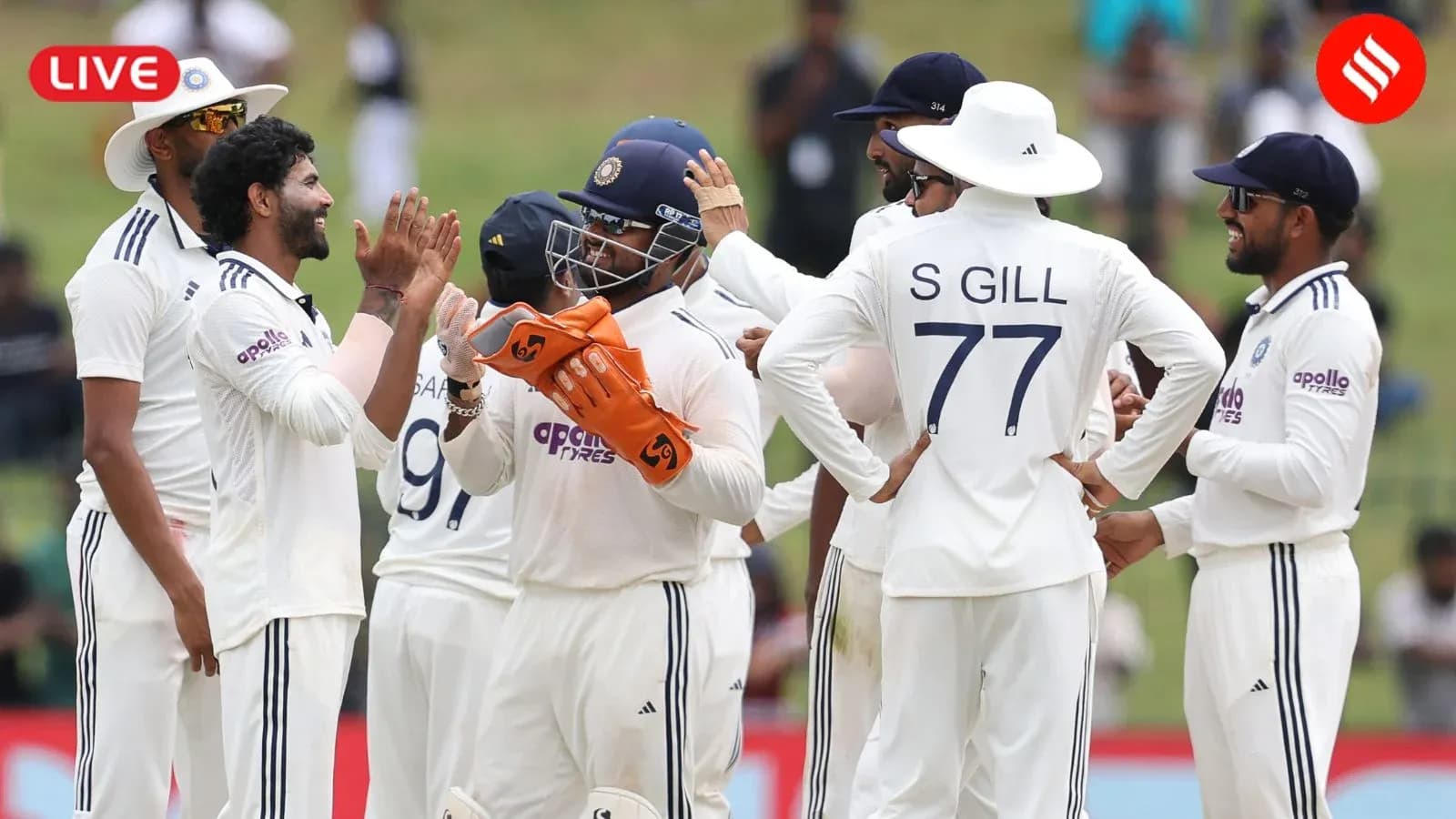
On a flat, fading fifth-day pitch in Colombo, India ran into something more stubborn than the surface: Sonal Dinusha’s will.
The left-hander, already the story of the series for Sri Lanka, dug in once again, turned a lost cause into a stonewall, and with a sore back and the tail for company, dragged his side to safety. By the time the captains shook hands, Sri Lanka were 395/8 following on, the lead 182, and any realistic hope of an Indian clean sweep had vanished into the humid afternoon.
The scoreboard said “draw.” The story said “escape.”
India Enforce, Dinusha Endures
This Test had looked like it would follow the script India wanted. On the fourth morning, Sri Lanka were still in their first innings, eight down and 13 short of avoiding the follow-on. Dinusha, already on a hundred – his second of the series – farmed the strike, nursed Lahiru Kumara and Asitha Fernando, and dragged them to 290.
Saransh Jain, on debut, finally broke the resistance, first removing Kumara and then Dinusha to claim his maiden Test wicket. The lead was still a hefty 213. Shubman Gill did not hesitate. Follow-on enforced.
It felt ruthless. It also felt right. The weather radar looked moody, the outfield had been wet, and India’s quicks had done heavy labour. But with a 213-run cushion and World Test Championship points on the line, Gill gambled on momentum.
Sri Lanka, though, refused to follow the script.
Sri Lanka’s Second Innings Fightback
The second innings began with intent. Kamil Mishara and Pasindu Sooriyabandara went hard at anything loose. The approach was risky, sometimes reckless, but it did what Sri Lanka needed: it pushed India back.
Mohammed Siraj struck first, bouncing out Lahiru Udara for 10. Ravindra Jadeja then trapped Mishara sweeping, his stump-to-stump discipline again too precise for a loose stroke. At 67/2, India were on top, the follow-on call looking inspired.
Then came the first real swing of the match.
Pasindu and Kamindu Mendis settled, then counter-attacked. They ran hard, used their feet to the spinners, and punished anything remotely short. Pasindu reached his half-century, even surviving a wild no‑look slog-sweep that Siraj misjudged in the deep. Kamindu raised his own fifty with a muscular pull for six, and the partnership surged into three figures.
By lunch on Day 4 Sri Lanka were 83/2. By the afternoon water break, they were 171/2, the deficit shrinking, the pitch asleep, and India’s bowlers starting to feel the weight of the follow-on.
Manav Suthar, so tidy earlier in the series, suddenly looked human. Sri Lanka’s left-right combinations forced constant field and line changes. The Indian spinners kept probing, but the surface refused to misbehave consistently. The odd ball gripped, yes, but rarely from the straight. Batters could trust their defence and play late.
India needed a crack. They got one.
Prasidh Krishna, used in short, aggressive bursts as Morne Morkel had promised, bounced out Kamindu for a well-made 50. Shubman Gill ran back to complete a fine catch, and the partnership was finally broken.
Dhananjaya de Silva walked in and looked class from ball one. He defended with soft hands, drove with elegance, and once again hinted at a big innings he rarely converts. Alongside Pasindu, he carried Sri Lanka to 199/3 at Tea. Just 14 behind now. The pressure, for the first time in the match, had shifted.
India Hit Back Before the Rain
The final session of Day 4 was always going to be decisive. If Sri Lanka batted through, India’s follow-on call would be under scrutiny. If India punched through, the series sweep was back on.
India chose aggression. Siraj and Jain opened the evening. The fields closed in. The chatter went up.
Suthar, who had looked uncertain, suddenly found his rhythm. He first removed Dhananjaya with a soft dismissal, an inside edge via the pad to Devdutt Padikkal at gully. Then he lured Pasindu down the track, tossed it wider, and watched Rishabh Pant complete a smart stumping. Two set batters gone. The door opened.
Saransh Jain, who had been searching all series for a defining spell, then nailed Niroshan Dickwella, the wicketkeeper misjudging a ball that straightened. The review showed three reds. Sri Lanka, 218/6, were unravelling.
Dinusha walked in again, the familiar fire-fighter. The runs dried up. The ball got older, softer, and yet Siraj kept pounding the middle of the pitch, testing Dinusha’s ribs, his resolve, his technique. The left-hander looked more vulnerable to the short ball than at any other point in the series, but he hung in.
Dark clouds rolled over Colombo. The light dipped. The groundsmen stood ready. At 228/6, with India on the charge and Sri Lanka still 15 behind, the umpires finally led the players off. Rain followed. That was that for Day 4.
India had their opening. But they needed time. And that, on this tour, has been the one thing the weather never guaranteed.
A Final Day of Slow Suffocation
Day 5 dawned bright, humid, and full of possibility. India needed four wickets. Sri Lanka needed time. Dinusha needed partners.
He found one in Keshara Nuwantha.
From 83/2 at lunch on Day 4, Sri Lanka had clawed their way to 330/6 by lunch on Day 5. The morning session was a grind. India bowled 29 wicketless overs. Jadeja, the pick of the attack, probed relentlessly without reward. The closest they came was an LBW against Nuwantha on the stroke of lunch, overturned on review when ball-tracking showed it missing.
The lead crept past 100. The follow-on call, once a masterstroke, now carried a hint of risk.
Dinusha, meanwhile, ticked off another milestone. He swept, nudged, and ran hard, bringing up yet another half-century and then, with growing authority, moving towards three figures. His sweep shot, especially against the spinners, echoed the template that has troubled India in recent years – the Ben Duckett and Tom Latham school of relentless, low-risk sweeping.
The partnership with Nuwantha crossed fifty, then stretched further. The lead moved beyond 50, then 100. Shubman Gill shuffled his bowlers, even spending periods without a slip for his quicks, preferring short-ball plans and leg-side traps over the traditional cordon. It was an admission of the surface: no demons, no spite, just patience required.
Manav Suthar finally broke the stand, drawing Nuwantha into an edge that Dhruv Jurel snapped up. Relief. But it was fleeting.
Prabath Jayasuriya arrived and did exactly what was needed: nothing extravagant, nothing outside the line. He played within the stumps, dead-batted everything, and turned the game into a time trial. Every maiden over was a small victory. Every leave, a message: Sri Lanka were in no mood to chase miracles. They wanted the draw.
The ball began to turn sharper in the afternoon, especially for the spinners. Jadeja and Suthar beat the bat often. The rough outside the left-handers’ off stump grew more pronounced. Yet the pitch never crossed that invisible line into treacherous. Batsmen could still trust the bounce.
Jayasuriya eventually fell trying to drive Jadeja, but by then the clock was as much India’s opponent as Sri Lanka’s tail.
Dinusha’s Century and India’s Fading Hopes
As the final session began, one outcome towered above the rest: a draw. India needed a burst of inspiration; Sri Lanka needed just a couple of stoic partnerships.
Dinusha provided the backbone. Kumara, improbably, provided the shield.
The fast bowler, who had already faced 52 balls in the first innings, repeated the act. He came in with Sri Lanka still vulnerable and simply refused to give his wicket away. He left well, blocked better, and soaked up over after over. Every ball he survived shaved time off India’s chase that would never come.
Dinusha, battling a visible back issue, started farming the strike smartly. Then, as the cramp and stiffness grew, he flipped the script: take a single early, trust Kumara to survive. It worked. Kumara’s defence held. India’s shoulders dropped.
At Tea, Dinusha was stranded on 98, Sri Lanka 383/8 and leading by 170. The game, once racing towards an Indian win, had slowed to a crawl.
When play resumed, Dinusha completed his third century of the series – a remarkable feat against an attack that had dominated most of the tour. Each of his hundreds has come with the match under stress, the scoreboard under pressure, and his team in trouble. This one might have been the most valuable of the lot.
The idea of a sporting declaration flickered briefly in the commentary box. With the lead approaching 180, Sri Lanka could, in theory, have dangled a target. But out in the middle, with Dinusha sore and the tail hanging on, reality ruled. After being outplayed for large parts of the series, a draw felt like gold.
India, too, seemed to accept the inevitable. The fields spread. The intensity dipped a fraction. Jadeja left the field with heel discomfort, another sign of just how much work India’s bowlers had done across back-to-back innings. Gill tried part-time options, looked for a late twist, but the pitch and the clock had conspired against him.
By the time the umpires checked with both captains about the light and the time remaining, there was nothing left to chase. Hands were shaken. The series win for India was secure, but the clean sweep had slipped away.
A Gem in the Making, Questions for the Future
Sri Lanka walk away from Colombo with more than a draw. They walk away with a middle-order rock in Sonal Dinusha, who has not only scored runs but shaped matches. Three centuries in a single series against India, on varied surfaces, under pressure – that is not a purple patch; that is a statement.
India leave with plenty of positives: Prasidh Krishna’s sustained hostility and bounce, Siraj’s tireless spells on a dead pitch, Jadeja’s enduring control, and Saransh Jain’s promising debut, marked by discipline and crucial wickets under stress. They also leave with a reminder of Test cricket’s oldest truth: enforcing the follow-on is a risk, and on benign pitches, time can erode even the strongest positions.
For now, the scoreboard will show a drawn Test and a series India still dominated. But as the Colombo humidity finally eased and the players walked off, one question hung in the air: when these two sides meet again, will India have an answer for the quiet, stubborn left-hander who has just turned their would-be sweep into a stalemate?