Cricket Australia Offers Billion-Dollar Opportunity to IPL Investors
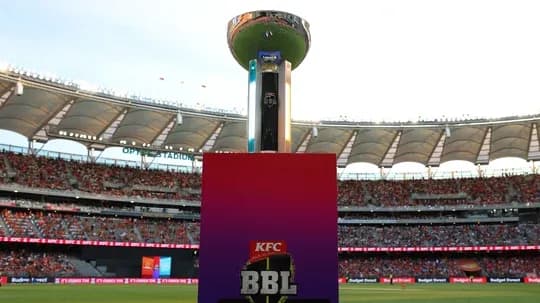
Cricket Australia dangles a billion‑dollar carrot in front of the global market. The Indian Premier League’s power brokers are certainly looking. They’re just not biting. Not yet.
CA has opened the door to private investment in selected Big Bash League franchises and confirmed to Cricbuzz that IPL owners and other Indian investors have lodged expressions of interest. Names are being kept under wraps, but it is the familiar heavyweights from the IPL ecosystem circling the opportunity.
None of them, though, is ready to go public. That silence says plenty.
A “billion‑dollar opportunity” with strings attached
To sell the project, CA has brought in the Raine Group, the US merchant bank that helped turn The Hundred’s franchise sale in England into a blockbuster commercial event. That track record underpins CEO Todd Greenberg’s bold branding of BBL privatisation as a “billion-dollar opportunity” for Australian cricket.
On paper, it sounds irresistible. In practice, IPL owners are staring at a term sheet laced with red flags.
Right now, only the Melbourne Renegades are on the table for a full, 100 per cent acquisition, with CA — not Cricket Victoria — running the process. The sale is expected to be wrapped up by Christmas. The catch? Any new owner inherits the logo and colours but not the soul. They must effectively build a team from scratch, without the guarantee of an entrenched, loyal fan base.
The next wave is expected to feature Hobart Hurricanes and Perth Scorchers. Those deals come with a hard ceiling: just 49 per cent of the equity. WACA still has to consult its members on divestment, but that debate is an internal one. The headline for IPL investors is simple: minority stakes only.
And that jars with how IPL conglomerates like to operate. They want control. CA is determined they won’t get it.
Chairman Mike Baird has been crystal clear: “CA and its members will maintain control over the most significant aspects of Australian Cricket operations, including international scheduling, player availability, the Big Bash Leagues salary caps, branding proposals as well as the reserve price for a licence to operate that must be achieved, and approval of investors.”
In other words, write the cheques, but don’t expect to run the show.
Used to calling the shots
The contrast with other leagues is stark. In SA20, ILT20, CPL and even MLC, IPL groups own their franchises outright. They design the blueprint, pick the people, shape the product.
The Hundred has its own quirks but still offers meaningful power. Sun Group’s SRH holds a 100 per cent stake in Sunrisers Leeds. RPSG Group, owners of LSG, controls 70 per cent of Manchester Super Giants. Even where the shareholding is capped, as with Reliance (MI) and GMR (DC) — both on 49 per cent stakes in MI London and Southern Brave — operational control rests with the IPL owners.
GMR’s reach goes even further. It owns Hampshire County and, as Cricbuzz first reported in January 2025, had explored a deeper play in Australian cricket, sounding out a possible investment involving Sydney and Cricket New South Wales. During the fifth and final BGT Test, GMR representatives were in Sydney, talking collaboration with Cricket NSW.
That door has closed. Cricket NSW is now understood to oppose private investment outright and may not even put Baird’s name forward to CA for the chairmanship next time. The two sides are split on how far private money should be allowed into the BBL.
For IPL owners, that political friction is background noise. Their eyes are on the fundamentals: media rights value, player availability, logistics, and the clout of the players’ union.
No guaranteed stars, no guaranteed shine
This is where CA’s model begins to lose its gloss.
The ECB carved out a clear window for The Hundred, ring‑fencing it from international cricket to ensure the biggest names were available. CA is not offering that luxury. The BBL and international cricket typically run side by side in Australia, which leaves franchise investors guessing who they can actually put on the park.
They don’t like guessing.
Pat Cummins is the most telling case study. Since 2016, he has appeared in just seven BBL matches. Over the same period, he has turned out 76 times in the IPL. The message to investors is brutal: pay for the badge, but don’t count on the captain.
India operates on the opposite principle. The BCCI protects the IPL window and ensures its contracted and marquee players show up. MS Dhoni (149 IPL games in that span), Virat Kohli (160), Rohit Sharma (153) and Jasprit Bumrah (141) have barely missed a match. When you buy an IPL franchise, you buy guaranteed access to the country’s biggest cricketing icons.
The BBL cannot promise the same with Australian stars. Nor is there clarity on overseas signings. IPL owners want certainty on international player availability; instead, they see a crowded global calendar and a tax regime working against them.
Australian taxation is understood to be significantly higher than in South Africa, the UAE and Bangladesh — all countries whose domestic leagues overlap with the BBL. Faced with similar pay packets, many overseas players will simply choose the friendlier tax jurisdiction and the shorter commute.
Distance, dollars and the players’ voice
Travel is another headache that won’t go away with glossy presentations.
A trip to Perth can mean five to six hours in the air for an east‑coast team. In South Africa, where IPL owners control all six SA20 franchises, the longest journey between host cities is just over two hours. England, the UAE and the Caribbean are all tighter, more compact circuits.
Those extra hours matter — for players, for broadcasters, for logistics budgets.
Then there is the media rights picture. CA is only three years into a seven‑year broadcast deal. Any new BBL investor is effectively buying into a cycle they did not negotiate, with limited scope to immediately leverage the franchise on the rights front.
Hovering over all of this is the Australian Cricketers Association. The ACA wields substantial influence in the domestic game. IPL owners, who are used to dealing with strong boards but not always such empowered unions, are poring over that dynamic carefully. Any clash between private capital and player power would be costly.
Profit on the board, but a hard sell
There is, however, one element working in CA’s favour: money already being made.
Feedback suggests most BBL clubs are turning a profit. That, insiders say, is one reason there is no unanimous push within CA to throw the doors open to private investors. When the house is not on fire, not everyone wants to invite in a new landlord.
For IPL conglomerates, that profitability is attractive. They already have footprints in almost every major franchise league on the planet — SA20, ILT20, CPL, MLC, The Hundred — with two notable absentees: the Pakistan Super League and, so far, the BBL.
Australia is the missing piece in their global jigsaw. But they are not in the habit of overpaying for minority stakes in competitions where they cannot dictate key levers.
One IPL insider captured the mood bluntly: “The ECB was difficult; CA is five times tougher to negotiate with.”
That line cuts to the heart of the stand‑off. CA wants private money without surrendering control. IPL owners want control or, at the very least, operational freedom tied to clear commercial upside.
Somewhere between those two positions lies the true value of the “billion‑dollar opportunity” CA keeps talking about. The question now is simple: how much is Cricket Australia really willing to give up to turn that slogan into reality?