The Craft of Fielding in Cricket: Insights from Dilip
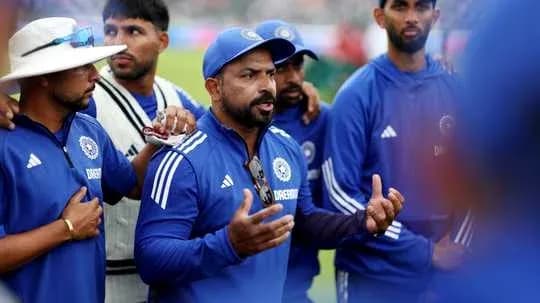
T Dilip has spent the last four years living in the part of cricket most people only notice when it goes wrong. While the spotlight chased centuries and five-fors, India’s former fielding coach obsessed over first steps, hand positions and tiny changes in body angle that decide whether a moment becomes a highlight reel catch or a costly miss.
Speak to him for a few minutes and one thing becomes clear: in his world, fielding is not an add-on. It is a craft, with layers.
The science behind a simple catch
On television, a catch lasts a second. In Dilip’s mind, it starts much earlier.
“With catching, we look at the player’s starting position,” he explains. How early he picks up the ball. Whether his head stays still. How his hands move in relation to his body. Every position has its own demands. A slip catch. A high outfield catch. A flat chance drilled inside the circle. Three completely different skills, three different sets of movements and decisions.
Ground fielding, he says, begins before the bat meets the ball. The fielder must anticipate, stay balanced, and make an efficient first movement. Just getting to the ball is not enough. He should arrive in control, ready for a clean pick-up and a prepared throw, not a desperate scoop and a hopeful heave.
Throwing, in his eyes, is often misunderstood. It is not a raw power contest. Speed of release, accuracy and decision-making sit on the same shelf as arm strength. A boundary rider, a slip fielder and a man in the ring cannot be trained on copy-paste drills. The fundamentals are linked, but the work has to mirror the situations they actually face.
Multi-sport kids and the chaos of the ball
Dilip lights up when he talks about children who grow up playing more than one sport. Football, hockey, basketball – anything that forces them to solve different movement problems.
Fielding, he reminds, is chaos. The ball never arrives at the same height, speed or angle. That unpredictability rewards adaptability. A kid used to adjusting on the fly in other sports often carries that into cricket.
Yet he is quick to draw a line. Playing other sports alone does not produce a complete fielder. Cricket keeps its own secrets: reading the bat, judging the trajectory of a cricket ball, understanding how different surfaces behave, picking up cleanly, throwing accurately. Those are learned on the grass, not on a futsal court.
How the IPL rewired India’s attitude to fielding
On one subject, there is no hesitation. The IPL, Dilip insists, has changed Indian fielding for the better.
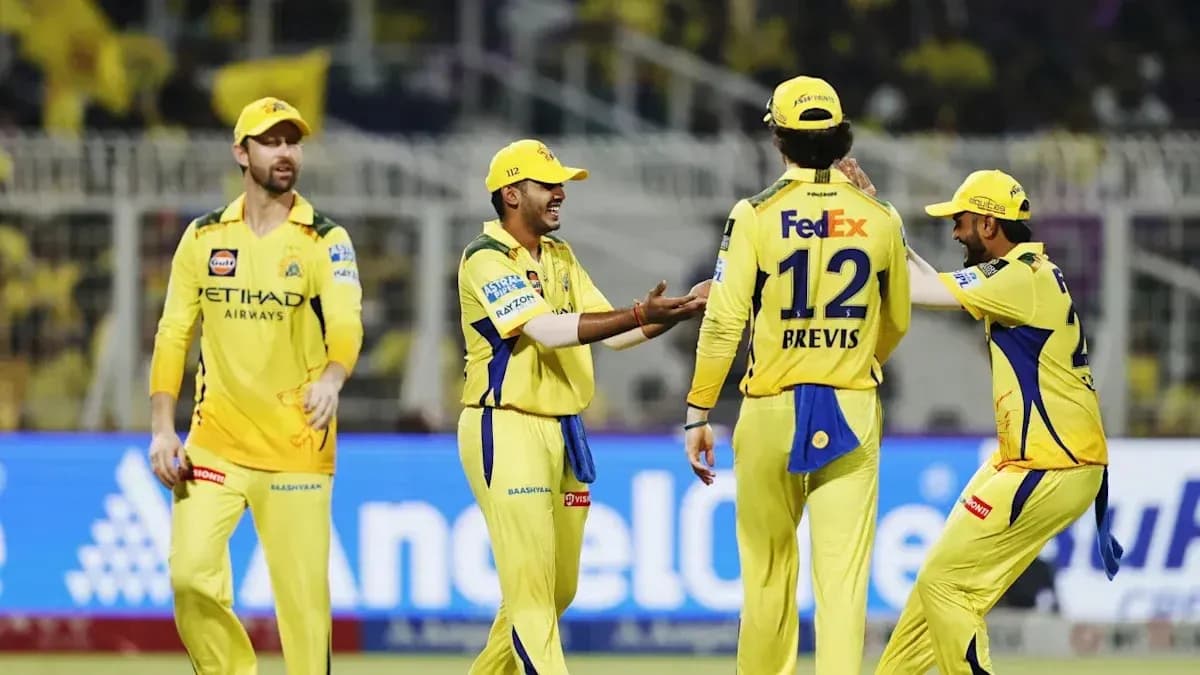
It has altered the importance attached to that part of the game and reset the standards young Indians see up close. A teenager can walk into an IPL dressing room and suddenly share drills with some of the best fielders in the world. He watches how they prepare, how seriously they treat every ball, how involved they stay even when they have neither batted nor bowled.
That proximity compresses time. What used to take years of international exposure can now happen in a single season.
Yes, recent numbers show some fluctuation in catching efficiency. Dilip agrees that deserves a deeper look. But he is clear on the bigger picture: the IPL has not damaged Indian fielding. It has transformed it. It has raised expectations, widened the pool of capable fielders and proved to a generation that fielding can swing a result as decisively as a blistering fifty or a four-wicket burst.
The missing numbers: why fielding data lags behind
Cricket has learned to measure almost everything a bowler does. Swing, seam, pace, release points. Fielding? Still largely stuck on catches and run-outs.
Fielding is harder to trap in neat columns, Dilip argues, because every play is a tangle of position, distance, angle, surface, anticipation and decision-making. A completed catch or a missed run-out tells only a fraction of that story.
He sketches out what proper fielding data should look like. Where the fielder stood when the ball was struck. His reaction time. The efficiency of his route. The time from pick-up to release. For throws, not just velocity and accuracy, but whether he chose the correct end.
Even catching percentage, a favourite broadcast graphic, needs context. A more athletic fielder might reach a ball most others would never get near, get a fingertip to it and see it logged as a drop. Another fielder does not get close, so no error goes against his name. The numbers flatter the less ambitious.
Ideally, every chance would be graded by difficulty: reaction time, distance covered, ball speed, direction of movement, proximity to the boundary. The same applies to runs saved. If a fielder turns a likely two into a single, that contribution should appear somewhere. Over a long tournament, those small wins pile up.
Bowlers who started to care
Ask Dilip who improved most under his watch and he steps aside. The credit, he insists, belongs to the players. They move between India, their state sides, IPL franchises, different coaches and support staff. A fielding coach is one voice in a crowd.
There is, however, one group that gives him obvious satisfaction: the bowlers.
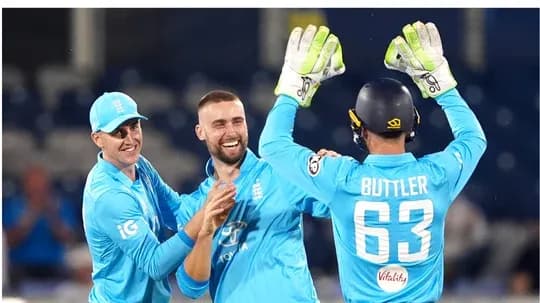
The pride is not only about cleaner technique. It is about a shift in mindset. He saw fast bowlers and spinners begin to take genuine ownership of their fielding. Saving a run. Backing up a throw. Clinging on to a tough catch after a draining spell. Those little acts started to matter to them.
Rather than single out one name, he spreads the praise across the entire bowling unit. Watching them embrace fielding with energy and selflessness, he says, was one of the most rewarding parts of his tenure.
The invisible skill before the ball is hit
At the top level, Dilip does not believe any fielding skill is truly underestimated. Players arrive with awareness and a bank of experience. Yet there is one area he keeps circling back to: what a fielder does before the ball is struck.
It is not neglected, but it rarely gets the same attention as the diving stop or the leaping catch that follows.
Anticipation, he stresses, is not guesswork. It grows from game awareness, understanding angles and staying mentally alive before every delivery. A sharp first step can turn a half-chance into something that looks routine. A poor first step can make a reachable ball look impossible.
For him, this is not a niche detail. It is a seam of improvement available at every level, from junior cricket to the international arena.
T20, packed calendars and the lost volume of catches
The easy narrative is to blame T20 cricket for every technical flaw. Dilip refuses that shortcut.
He sees the format as a driver of higher fielding standards. Players move quicker across the turf. Boundary catching has evolved dramatically. Pick-up and release times have improved.
The real challenge, he says, lies in the modern schedule. Matches, travel, recovery – they tumble into each other. Players naturally shift their main focus back to their primary skills: batting or bowling. In franchise cricket, fielding sessions might be optional on certain days, tailored to individual workloads and recovery needs.
The risk is subtle but real. The player loses volume. He loses the feel that underpins reliable catching. The first few chances in a match almost become his practice. That is a dangerous place to be.
Dilip does not advocate marathon fielding drills as the answer. The key, in his view, is to ring-fence a small, consistent block of high-quality catching work, even on so-called optional days. Players must take ownership of that preparation not only during tournaments but also before them and in the off-season. Consistent catching, he says, is built on consistent effort.
Feel, rhythm and the coach’s real job
Even with the best in the world, Dilip sees value in going back to basics at the start of a series or a tournament. Catching is touch. It is rhythm. The ball behaves differently at different venues. Wind and lights can distort its path. A player may find himself in a new position or standing to a different type of bowler.
A short, focused block of repetitions helps hands and body tune into those specifics. In those moments, the coach is not always a mechanic fixing faults. Sometimes he is a guide, helping players find the feel they need for that particular stage.
In an era obsessed with strike-rates and speeds, Dilip’s message is simple and quietly uncompromising: fielding still wins games. The teams that treat it as a science, a habit and a shared responsibility will be the ones smiling when the margins tighten.