Belfast Wolves: Building a Cricket Franchise Without a Home
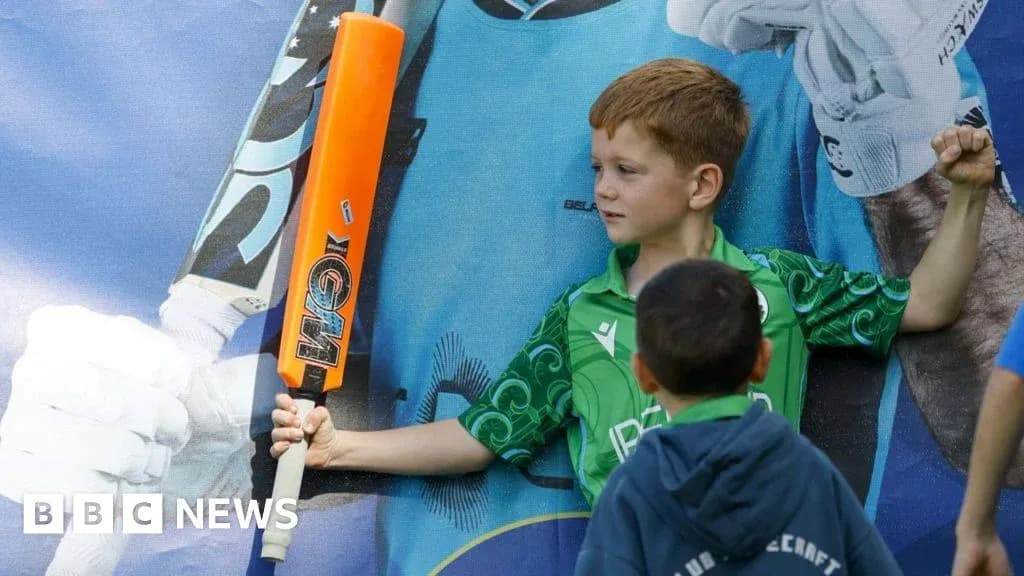
The new professional cricket team carrying Belfast’s name has never bowled a ball there. Not one over. Not yet.
And still, the Belfast Wolves are trying to build something that feels like a hometown club.
They are one of the founding members of the European T20 Premier League (ETPL), a shiny new franchise competition designed for the short-attention-span era: fast games, big hits, big screens, DJs. The sort of cricket that looks as much like a festival as it does a fixture list.
But while Stormont packed out this summer for Ireland’s Test against New Zealand, ODIs against India and T20s with Afghanistan, the Wolves have been living out of suitcases. Every game so far has been played in Dublin or the Netherlands. A Belfast team with a Belfast badge and no Belfast home.
The owners insist that changes next year. Until then, the work is off the field.
Selling a team that doesn’t exist at home – yet
The challenge is obvious. How do you make a city care about a team it can only see on TV or on a stream?
For Claire Hughes of fan engagement agency En2End, the answer starts with people, not pitches.
She believes it is “possible to create initial hype around a new sports franchise without it playing in its home city,” if the club leans into strong personalities, heavy broadcast exposure and proper storytelling. Characters, not just colours. Faces, not just logos.
But she also draws a hard line: the real test comes later.
“Building genuine, lasting fandom is much harder without a physical presence or shared experiences that allow local people to feel the team genuinely belongs to them,” she said.
That is where the Wolves’ off-field playbook comes in. Hughes points to community engagement, grassroots cricket, fan events, public screenings, local partnerships and crafting recognisable rituals and personalities around the team as key routes in. The badge may say Belfast, but the job now is to make it feel like Belfast.
“The challenge,” she said, “will be translating awareness of the Belfast name into an authentic connection with Belfast audiences.”
Young talent watching, and waiting
Down the pathway, the next generation is already paying attention.
Harry Dyer, 20, and 19-year-old Adam Leckey are part of the Northern Cricket Union (NCU) talent development programme. They are the sort of players who could one day walk out for the Wolves, if the franchise settles in the city it represents.
Harry feels the buzz. He also knows what’s missing.
He believes home games will be crucial if the Wolves want to turn curiosity into loyalty.
“Hopefully in future, if Belfast were to have home games with all the facilities that they are planning to get brought in, I think younger kids would definitely follow them and hopefully call the Belfast Wolves their team,” he said.
For him, the format is a big selling point. T20 cricket is short, loud and unforgiving. It fits a new audience.
He sees the ETPL as an “event” rather than just a match, comparing it to The Hundred with its music, live DJs and entertainment built around the cricket. That, he feels, could drag in people who have never picked up a bat.
Adam has already followed the Wolves on the road, watching them in the Netherlands. He wants the chance to do it at home.
He knows where cricket sits in the local sporting pecking order – behind football, rugby and hockey – but he believes a successful, visible Wolves franchise could start to change that.
“Compared to the amount of people that play rugby, play hockey, play football, barely anybody plays cricket and something like this could maybe interest people,” he said.
The Wolves are not just a team to him. They are a potential gateway.
‘Family, fearless and fun’
Inside the franchise, the message is simple and deliberately memorable.
Chief executive Neil Maxwell talks about the passion he sees for cricket in Northern Ireland and the Wolves’ determination to plug into it. The club has chosen a three-word catchcry to frame everything it does: “family, fearless and fun”.
If that sounds like a marketing line, Maxwell is clear about what he wants it to mean.
“If we can make that connection with our audience and with our fans, I think that'll be a real positive for us. I think a legacy there would be to help develop the game in this region,” he said.
Legacy is an ambitious word for a team that has not yet hosted a single over in its own city. But it signals intent. The Wolves do not just want to pass through; they want to leave something behind.
NCU sees ‘opportunities, not challenges’
The Northern Cricket Union, which governs the game across Antrim, Armagh, Down and part of Tyrone, has not stood back to watch. It has partnered with the Wolves, with both sides openly talking about the team becoming “a source of pride and inspiration for young cricketers”.
NCU chief executive Callum Atkinson is realistic about the starting point. No home games is not ideal.
He calls the Wolves “a significant opportunity” but accepts that any new franchise has “opportunities and considerations” as it tries to establish itself. Right now, he says, the focus is on getting people to understand what the ETPL is and why franchise cricket matters.
“For many people, the ETPL and franchise cricket is a relatively new concept, so there is an opportunity to introduce fresh audiences to the sport and create new connections with cricket,” he said.
The first season, in his view, has been about one thing: launching the competition properly. Laying foundations before anyone talks about full houses and title runs.
“We see these as opportunities rather than challenges,” Atkinson added. Northern Ireland’s strong sporting culture, combined with relatively few major events in the summer, creates what he calls “real potential for the Belfast Wolves to establish a unique place in the sporting landscape.”
That is the bet. A team without a home game, trying to claim a slice of a city that has only seen it on screens and scorecards.
If the Wolves do walk out at Stormont next year, we will find out quickly whether the groundwork – the branding, the buzz, the talk of family and fun – has been enough to turn a travelling franchise into Belfast’s own.