BCCI's New Stance on Player Fitness: No More Gambles
The Board of Control for Cricket in India has quietly redrawn one of the most sensitive battle lines in modern cricket: when is a player truly fit to play?
After a string of embarrassing late withdrawals and mid-tour exits, the BCCI, its selection committee and the Centre of Excellence (CoE) headed by VVS Laxman have moved to a far more conservative, almost hard-nosed, stance on player clearance for international duty. The message from the corridors of power is blunt — no more gambles.
Harshit Rana and the tipping point
The turning point came with Harshit Rana.
The fast bowler finally forced his way back into the national frame in June for the tours of Ireland and England after five months out. It was supposed to be a fresh start. Instead, it became a case study in what the system wants to avoid.
Within two weeks of that long-awaited return, Rana was ruled out again. He could not finish the England leg and had to be flown back, with Prince Yadav drafted in as a replacement. Plans were shredded, workloads re-juggled, and India’s backroom staff were left patching up a tour on the fly.
Rana’s story is not an outlier. It is simply the most vivid in a growing list.
Jasprit Bumrah and Sai Sudharsan were both picked for the Sri Lanka Tests, only to be replaced by Auqib Nabi and Sarfaraz Khan. Suryansh Shedge was rushed in late for Nitish Kumar Reddy for the Ireland and England tour. Varun Chakaravarthy dropped out of the Zimbabwe tour at the last minute, with Ravi Bishnoi stepping in.
One or two such changes can be brushed off as bad luck. This many forced a rethink.
‘Not 100 per cent, 200 per cent’
Inside the BCCI, CoE and selection meetings, the tone has shifted. Those involved in the process now want to be absolutely certain before declaring a player available.
“Not just 100 per cent, but they want to be 200 per cent confident about a player’s availability before releasing him,” said a source familiar with the policy.
That new caution is already visible in the way squads are being announced. Conditional selections have become part of the official language. Asterisks now matter.
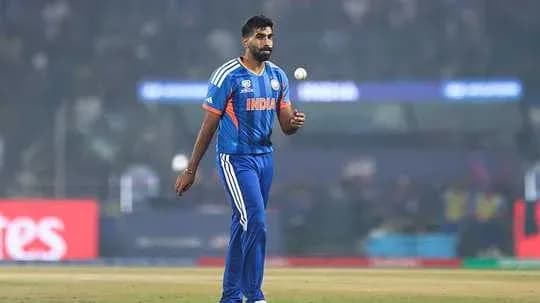
In Tuesday’s media release for the T20I series against Afghanistan, several big names were listed as picks “subject to fitness”. Bumrah, Washington Sundar, Nitish Reddy and Rana all carried that qualifier. It was not a throwaway line. It was policy, laid out in black and white.
Laxman’s line: clarity over confusion
VVS Laxman, as head of the CoE, has been the public face of this shift and insists the approach is both practical and player-friendly.
“They (players) understand that they're not yet ready to participate in the national series,” Laxman said recently. “It's always player-centric and team-centric. So that communication is happening seamlessly. I think what the BCCI has done is there's transparency in all the fitness reports and also in the selection.
“At the end of the selection, whether it's a release to the press, it's clearly mentioned that these players are picked subject to fitness. Means if they don't clear the fitness test, the selectors will know who are the other players who will go in their place if they don't clear the fitness test. I mean, it's basic common sense.”
The key change lies in timing and honesty. Players under rehabilitation are no longer pushed through on optimism. They are tagged, tracked and tested.
Inside the selection room
BCCI secretary Devajit Saikia lifted the lid on how this looks in practice.
Selection meetings, he explained, usually take place three to four weeks before the team flies out. That gap is crucial. It is also where the new policy lives.
“So if he gets picked within that period of 21 or 28 days, he will be taken into the team,” Saikia said, referring to players still in rehab at the time of selection. “So that is precisely why we do not outrightly reject him because on the date of selection, we are rejecting him because on that day he is not fit. But, by the time it will be effectively required for the travel or to play the match, by that time he may be totally fit.”
In other words, the asterisk is not a loophole. It is a holding pattern. The player is in the squad on paper, but the final green light comes only after he proves himself in fitness tests closer to departure.
Behind the scenes, contingency plans are already drawn up. If the player fails, the selectors know exactly who steps in. No scrambling, no last-minute panic.
Afghanistan series: the first real test
The new stance will be tested almost immediately.
India’s three-match T20I series against Afghanistan starts on September 13 in New Delhi, and the squad list is dotted with those fitness asterisks. Yet there is quiet confidence in some quarters.
It has been reliably learnt that Bumrah, despite the qualifier next to his name, is expected to be available. The selectors believe the spearhead will be ready to take the field in that series.
The same optimism surrounds Nitish Reddy. The all-rounder, recovering from a quadriceps injury, has ramped up his workload at the CoE and is now bowling six to seven overs a day at full tilt. Those monitoring his progress suggest he should be ready for the Delhi games.
Rana and Washington Sundar are different stories. Their situations remain unclear, their timelines less certain. The CoE is refusing to blink.
“The CoE will not take chances,” said the source.
That single line sums up the new mood. India have learned the cost of rushing players back, of gambling on half-fit bodies in the hope they hold up. Now, with a packed calendar and a growing injury ledger, caution has become policy — and the asterisk on a team sheet might just be the most important symbol in Indian cricket’s immediate future.