Banton’s 121 Leads England to Record ODI Total in Adelaide
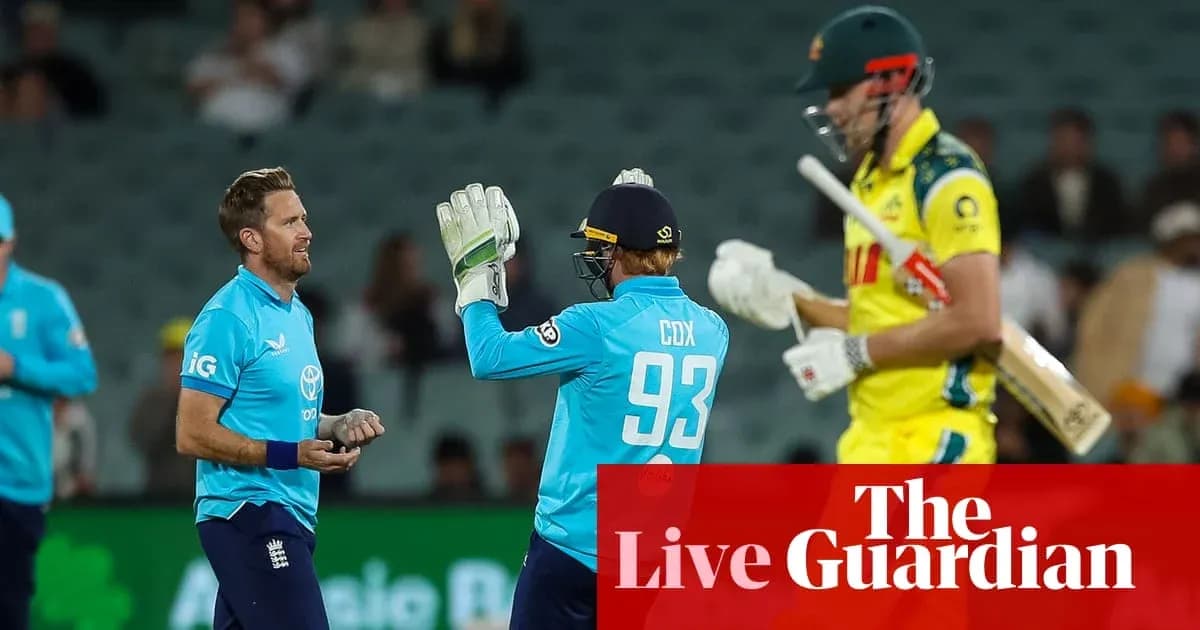
Twenty-four hours after licking their wounds from a Perth mauling, England walked into Adelaide Oval with something close to a snarl. By the time Will Jacks drilled the final ball straight back past the bowler, the scoreboard read 355 for 6 – England’s highest ODI total in Australia, and the first time the hosts had ever conceded 350 on home soil.
This was a statement, and Tom Banton wrote it in thick black ink.
Banton answers the question at the top
With places at the top of England’s ODI order still up for grabs, Banton produced the sort of innings that alters selection meetings. His 121 from 99 balls was not just handsome, it was confrontational.
He started quietly enough, flicking England’s first boundary off his pads in the second over. Then came the jolt. Spencer Johnson thudded a sharp bouncer into the helmet, dislodging Banton’s neck guard and leaving a bruise on his cheek. Australia thought they’d found a fault line.
They hadn’t. They’d lit a fuse.
On Adelaide’s compact square boundaries, the short ball became a gift. From his next three bouncers, Banton took two fours and a six, and he kept going back to that well. Ten of his 16 boundaries flew through the arc from fine leg to cow corner, including all four of his sixes. The short ball that was meant to expose him instead became the platform for a defining innings.
His tempo never felt frantic. England had lost Ben Duckett early – fenced in by Australia’s tight new-ball lines before he picked out point for 9, Bartlett’s first strike of what would become 3 for 72 – but Banton read the surface and the field with clarity. He picked his bowlers, picked his areas, and never let the innings drift.
The end came in a blur of bravado and frustration. Having already launched Xavier Bartlett for back-to-back sixes from consecutive bouncers, Banton went again and miscued, Cameron Green diving forward at deep midwicket to cling on. Australia had their man; the tactic had technically worked. It didn’t feel like a win.
Root’s serenity, then a rare rush of blood
Alongside Banton, Joe Root did what Joe Root does. In his 201st ODI, he slipped into the innings like a man putting on a familiar coat, his balance at the crease the picture of calm authority.
He moved to fifty from exactly 50 balls, ticking the score along, ironing out any early nerves and quietly strangling Australia’s hopes of quick inroads. The second-wicket stand was worth 137, and by the 27th over, with England 150 for 1, Root’s first ODI hundred against Australia looked almost inevitable.
Then he blinked.
On 62 from 68, with the platform set and England’s middle order waiting impatiently in the dressing room, Root went searching for acceleration. Cooper Connolly gave him a ball with extra bounce, Root tried to haul it over the leg side, and the top-edge looped tamely to short cover, where substitute Liam Scott did the rest.
It was a dismissal out of character, a rare moment where Root’s calculation deserted him. England still had control, but the door had been nudged open.
Brook’s frustration, Marsh’s juggling act
Harry Brook walked through that door and never quite settled. He bristled, he prodded, he looked for options that weren’t there. After 11 scratchy balls, he tried to reverse-ramp Riley Meredith, only to clip the top of his own middle stump for 5.
Two self-inflicted dismissals in two games for England’s captain, his bearding by Mahli Beardman in Perth now followed by another single-figure score. At 175 for 3, Australia had something to cling to.
Mitchell Marsh sensed it. He chopped and changed his attack, at one stage using six different bowlers in seven overs, disrupting rhythm, denying England the easy, linear build that so often leads to 380 and beyond. On a true Adelaide pitch, Australia’s bowlers rarely lost heart, even as the runs mounted.
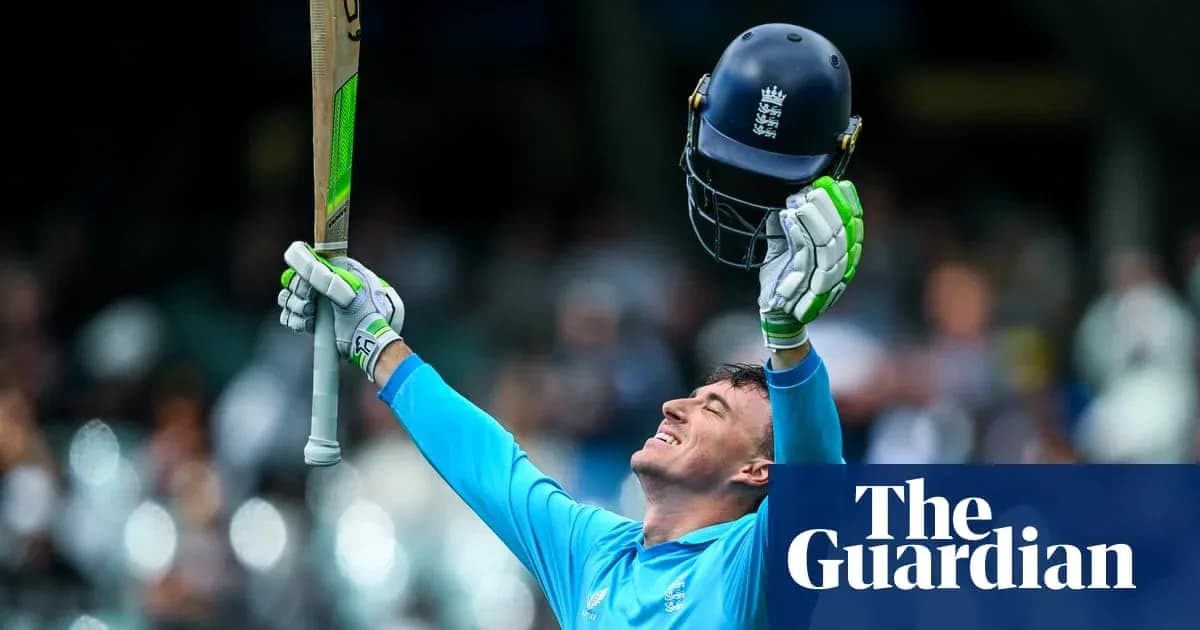
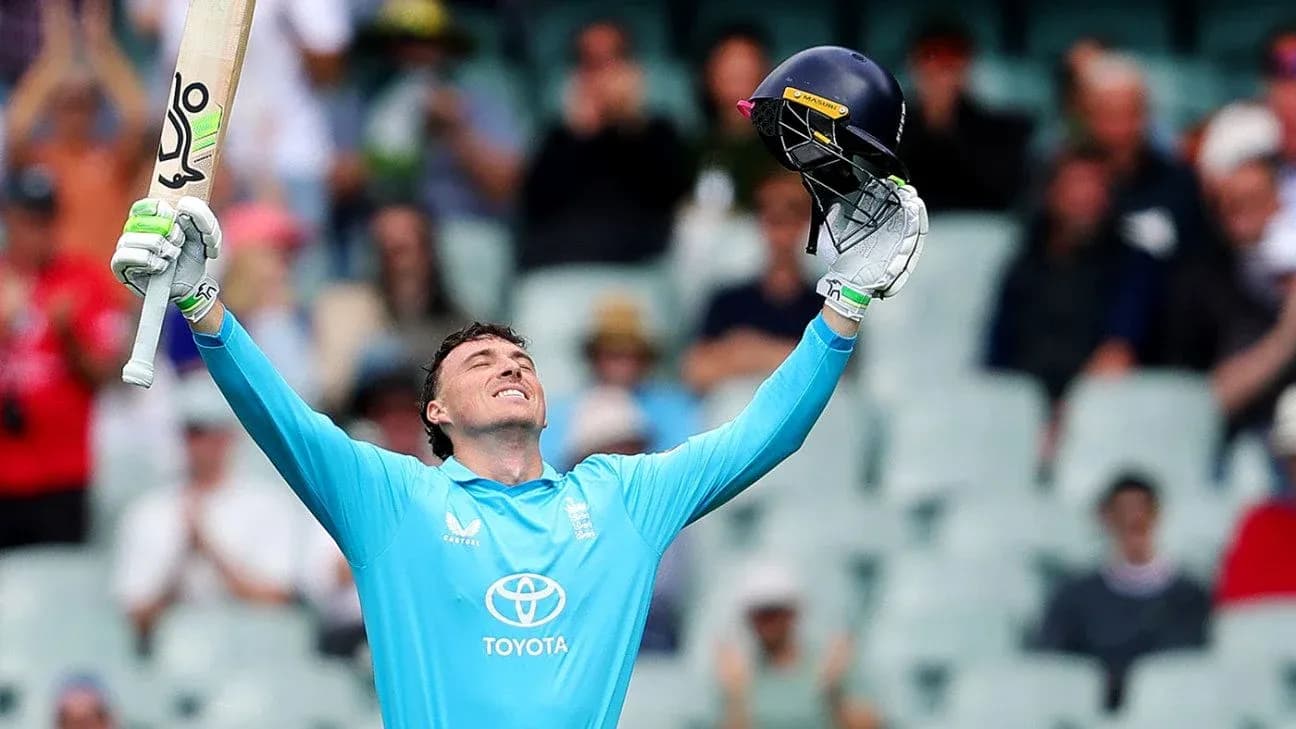
But Banton refused to be drawn into the stall. He advanced to his second ODI hundred from 86 balls, punching Adam Zampa off the back foot through wide long-off to reach three figures. The celebration was telling: a long exhale, a kiss on the badge of his helmet. Seven years on the fringes of England recognition, and now finally the stage, the score, the sense that this could be the turning point.
Cox cashes in, Jacks finishes the job
If Banton set the tone, Jordan Cox shifted the game’s late rhythm. With Jacob Bethell and Jos Buttler missing from this trip, Cox knows every opportunity matters. He batted like a man who understands that World Cup conversations are already being had in quiet rooms.
At the end of the 40th over, Cox sat on 28 from 28 – measured, tidy, nothing extravagant. Then Spencer Johnson came back, and the mood changed.
First came a brutal cover drive, hammered through the off side. Then a deft ramp for four. Soon after, a one-handed swat off Jack Edwards sailed for six and carried Cox to a 39-ball half-century. He finished with 67 from 49, his second ODI fifty, and left a mark that selectors will struggle to ignore.
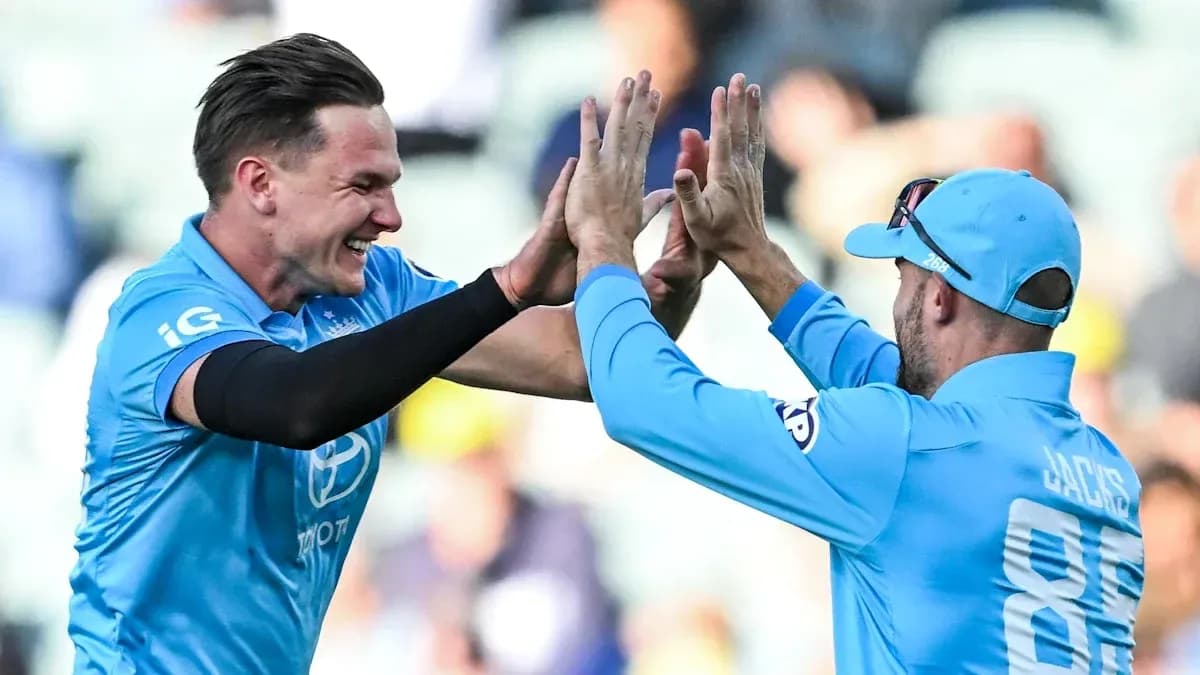
Jacks played the supporting role with intent. He was busy, inventive, and just occasionally fortunate – Zampa leapt at short third to get a hand to a cut shot when Jacks was on 40, saving four but not holding on. Jacks didn’t waste the reprieve. He closed unbeaten on 54 from 40 balls, the sort of proactive late-innings hand that turns a good total into something more daunting.
Sam Curran and Gus Atkinson chipped in with the kind of cameos that tilt a fielding side’s shoulders. Atkinson, in particular, went hard: consecutive sixes in Edwards’ final over dragged England beyond 350, the psychological line that Australia had never previously crossed against them at home. Jacks then drove the last ball of the innings straight and true for four, a final stamp on a performance bristling with intent.
Bartlett, for Australia, was both threat and target. His three wickets – Duckett, Banton and Cox, England’s three top-scorers – gave the innings its few moments of jeopardy, but his 10 overs cost 72 on a day when England refused to retreat.
From the wreckage of Perth to the authority of Adelaide, this was a different England. The runs are on the board. Now Australia must decide whether this series swings back with the bat, or whether a bruised home attack is about to feel the weight of English momentum again.