Bali International Oval: Indonesia's Cricket Future
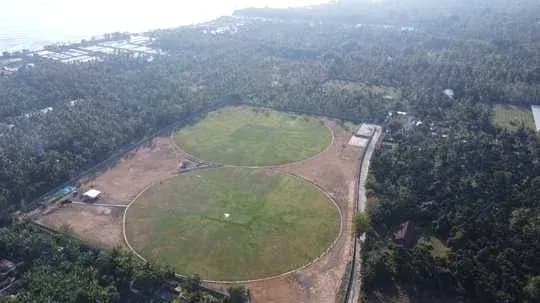
In the lush north of Bali, far from the island’s crowded beaches and tourist bars, Indonesia is quietly laying down the foundations of its most ambitious cricket project yet.
Cricket Indonesia is building the Bali International Oval (BIO), a two-oval complex designed not as a showpiece for the occasional tournament, but as the beating heart of the country’s cricket future – a year-round, high-performance hub with global ambitions.
A Flagship Built for Every Day, Not Just Finals Day
BIO will feature two full-sized turf ovals, both already taking shape. The footprints are in place, the centre-wicket blocks are emerging, and the ground is beginning to resemble what its planners imagined: a venue where elite training and international cricket can live side by side.
This is not a “pop-up” stadium for a single event cycle. It is being purpose-built to stay busy in January as well as July, in monsoon and in peak holiday season. The Garuda National Cricket Academy will sit at the core of the complex, operating as the high-performance engine room for Indonesia’s senior and age-group teams.
From that base, Indonesia’s best players will train, test themselves, and return. Visiting international teams, academies, specialist coaches and curators are expected to flow through the same gates, turning a once-quiet corner of North Bali into a cricket crossroads.
The next phase of work is technical and crucial. Wickets must mature. Surfaces need refining. Drainage and irrigation systems will be installed to cope with tropical weather. Specialist ground machinery will arrive. High-performance facilities, team areas and broadcast infrastructure will be layered on top, giving the complex the tools to host serious cricket, not just friendly fixtures.
A Regional Hub in the Making
Cricket Indonesia is thinking beyond its own borders. BIO is being positioned as a potential high-performance hub for the wider Asia-Pacific region, a place where training, sports science, coach education, athlete recovery and tournament operations can run under one roof.
The vision is clear: teams fly in, train hard, recover properly, and play in conditions that match the demands of the modern game. Coaches learn, curators share expertise, administrators plan tournaments on-site. One venue, many moving parts.
For a sport still emerging in the country, this is a bold statement. Indonesia is not just asking for a seat at the table; it is building a venue that might one day host the meeting.
A Spark Lit by the ACC
The idea for BIO did not appear in a vacuum. A key moment came in January 2024, when Bali hosted the Asian Cricket Council Annual General Meeting and Indonesia was formally welcomed into the ACC family. Jay Shah, then ACC President, played a central role in those proceedings, but the impact on the hosts went beyond protocol and photo opportunities.
“When the ACC came to Bali in 2024, the message I took away was bigger than membership. Inclusive leadership had opened a pathway for Indonesia. I felt our responsibility was to build the infrastructure that would allow our players to use that opportunity for generations,” says Abhiram Singh Yadav, chairman of Cricket Indonesia.
That sense of responsibility is now being poured into concrete, turf and training blocks. Membership brought recognition. BIO is meant to bring permanence.
Built for the Olympic Era
Timing matters. Cricket is returning to the Olympic Games, and Indonesia wants to be ready for that new landscape, not chasing it from behind.
BIO is being developed with that horizon in mind. Cricket Indonesia hopes the complex can help carve out an Olympic pathway for young Indonesian players, turning a distant dream into a structured target. At the same time, the venue is expected to attract international teams and programmes to Bali, feeding the local game with exposure and competition.
“The Olympic return changes the imagination of cricket. A young Indonesian should be able to dream not only of international cricket, but of an Olympic pathway. Our infrastructure must be ready for that era,” Yadav says.
The ovals are still growing, the wickets still settling. Yet the intent is unmistakable. On an island famous for its temples and waves, a different kind of stage is rising – one where Indonesia hopes its cricketers will one day walk out chasing not just caps and contracts, but Olympic history.