Babar Azam's Struggles Amid Pakistan's Test Collapse
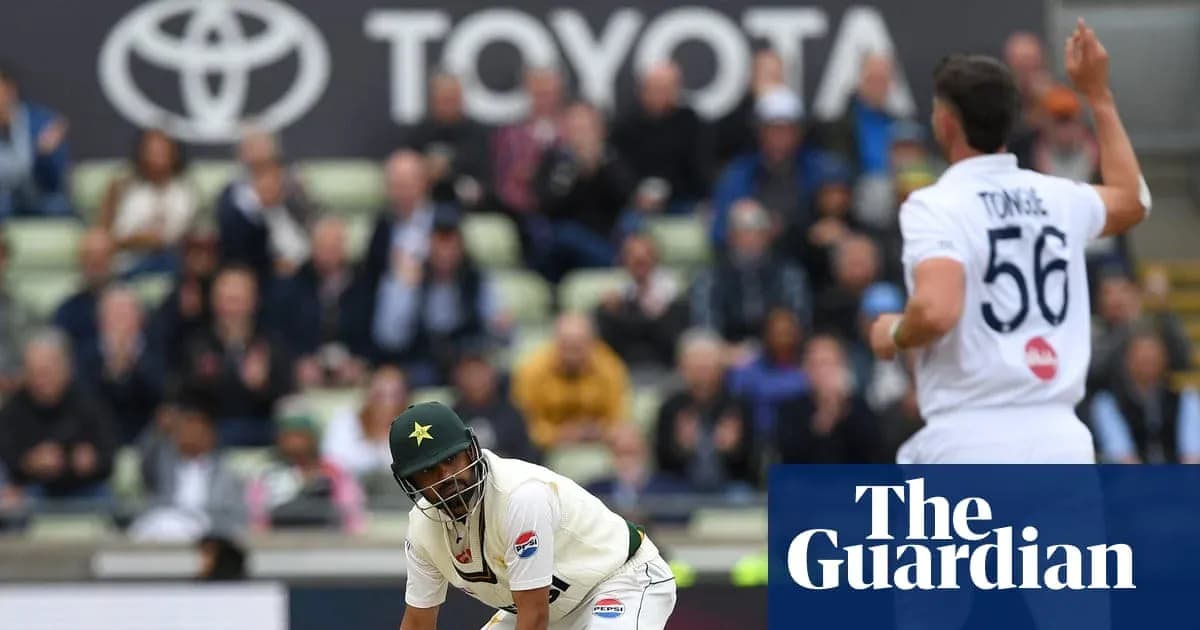
It was still morning when Babar Azam walked out at Edgbaston, but the day already felt old. The Test was 45 minutes in and Pakistan were three down, the game tilting hard in one direction. Floodlights glared against a slab of black cloud sliding over the ground. A few drops of rain drifted in the air. Ollie Robinson bustled in with the keeper standing up and five slips crouched in a jagged line. From the other end, Jofra Archer was loosening into his work, four overs deep and getting quicker.
It was a horrible time to bat.
Lately, it always seems to be.
Not long ago, Babar was one of the finest batters in the world across formats, and in Test cricket he looked set to sit alongside the era’s elite. In 2022 he stacked up an anthology of epic innings: 196 against Australia in Karachi, 119 in Galle, 136 on that lifeless Rawalpindi strip, 161 against New Zealand back in Karachi. He ended the year averaging 49 in Tests, ranked third in the world, crowned ICC Men’s Cricketer of the Year.
Since then, the runs have dried to a trickle. No Test hundred. In his last 20 matches, a highest of 88 and an average of 29. The numbers tell their own story, but the manner of his dismissals has started to sting more than the stats.
Close your eyes and you can still picture the old version: Babar soaking up pressure, soft hands, late cuts, those flowing drives, dragging his team out of the mess as he has done so often. Then you open them again.
He set himself for Robinson’s first ball. Half a stride, half a decision. Unsure whether to play or leave, he jerked the bat inside the line at the last instant. The next delivery zipped past his outside edge. The third he clipped neatly through square leg for two, a tiny reminder of the class that hasn’t gone anywhere, even if the confidence has.
Archer tested him with a short ball in the next over. Babar threw his hands at it, slashing, missing. Then came Gus Atkinson. Twice he beat him, the ball whispering past the bat, before Babar squirted an edge away for four. No control, just survival.
In the fourth over of his stay, Josh Tongue went straight through him. Seven runs. Eighteen balls. Middle stump flattened. A hush, then a weary murmur. It felt less like a shock than a confirmation.
That’s the bleak rhythm of this series. Pakistan have been rolled for 171, 135, 110, 194 and now 133. One more cheap collapse in the second innings and they will become the first team since the 19th century to be bowled out for under 200 in every innings of a three-Test series in England. This is not a blip. It is a full-scale breakdown.
They look a broken side, and leading them borders on impossible. Babar, nominally part of the selection panel, admitted he didn’t even know seven new players were being sent in for this match.
“It was news to me,” he said. “I found out after.”
From that chaos stepped one of those seven late arrivals, a name most in the ground had never heard until the scoreboard flashed it up. Razaullah. First change from the City End.
Who?
To recognise him you needed to be deeply invested in Pakistan’s domestic circuit. He is 21. His first-class debut came only last November for Peshawar in the Quaid-e-Azam Trophy. Since then: seven first-class games, nine List A matches, seven T20s. Barely a footprint, and now suddenly he was here, thrown into a Test at Edgbaston.
We learned three things about him very quickly.
- He can hit the ball hard.
- He is seriously fast.
- And he has something about him.
His first three deliveries hurried Joe Root, who rarely looks rushed in England. The fourth screamed in, Root tried to drop the bat late, and the ball thudded into his front pad, dead in front of middle. Root, disoriented, sent it upstairs, but the review only confirmed the obvious. Plumb. LBW again.
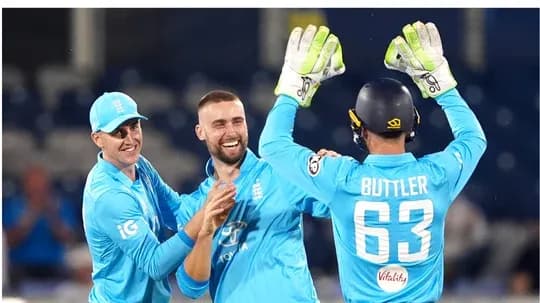
Razaullah had his first international wicket. The celebration was raw, unfiltered, the sort of moment that jolts even a subdued crowd. For a few overs, Edgbaston saw the best of what Pakistani cricket still offers: pace, nerve, flair, and yes, immaculate hair flying as he charged in.
Later he came back for Emilio Gay. Another ball around 90mph, another hurried shot, an inside edge cannoning into the stumps. Two wickets, both proper batters, both beaten for pace and timing.
Pakistan will never run out of talent like this. No matter how frayed the structure, another fast bowler always seems to appear, charging in from some distant corner of the domestic game. That conveyor belt has delivered plenty over the last decade: Naseem Shah, Shaheen Shah Afridi, and others who lit up their early tours with the same kind of electricity Razaullah brought here.
Which only sharpens the questions.
Why are Naseem and Shaheen not here now, back at the scene of their 2020 promise? What has the system done with all those gifts? How has a batter of Babar’s class gone from that 2022 peak to this extended struggle? How many times can a new quick emerge, thrill for a series or two, and then drift into the same fog of mismanagement, overuse, or confusion?
Razaullah walked off at the close with his cap in hand, a new name on the honours board of memory if not yet in ink. The talent is obvious. The future, on days like this, feels horribly familiar.
What road will he be made to walk over the next few years?
Deep down, most people watching already suspect the answer.