Australia Dominates England in ODI Opener as Beardman Shines
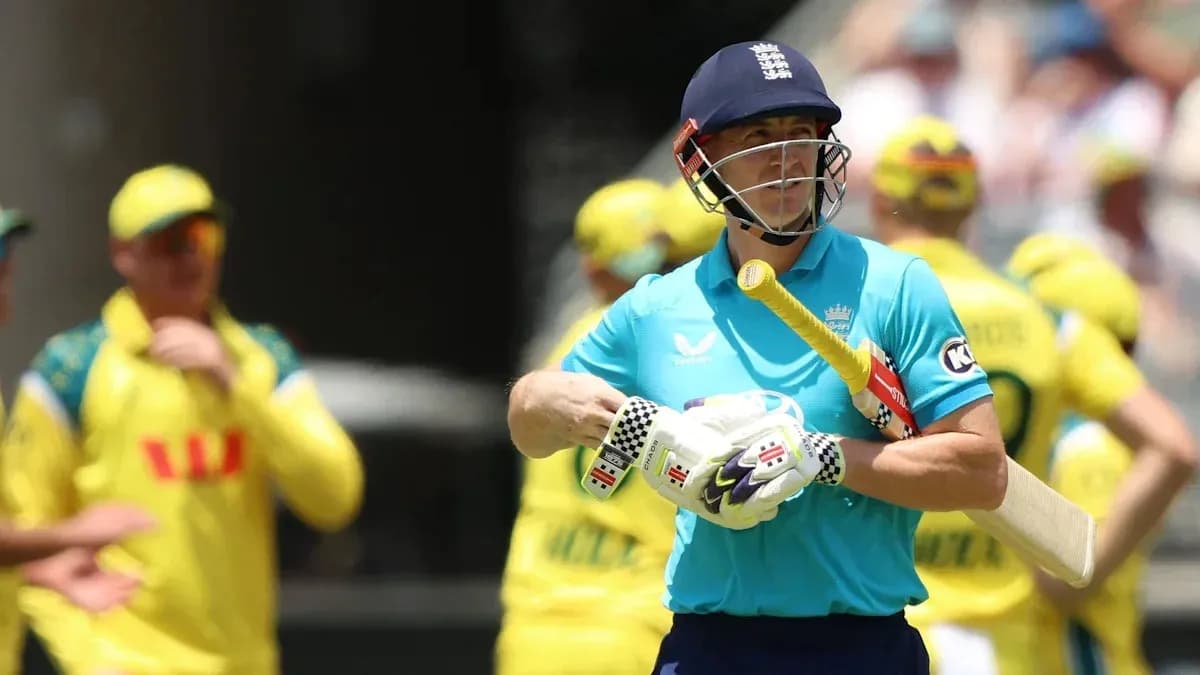
Scorecard: Australia beat England by seven wickets in the first ODI in Perth, chasing 132 with 26.3 overs to spare.
On a ground that still carries the scars of last winter’s Ashes, England walked into Perth and repeated the same mistakes, almost stroke for stroke.
Same venue. Same pace and bounce. Same loose drives. Same collapse.
This time it wasn’t Pat Cummins, Mitchell Starc or Josh Hazlewood exposing them. It was a 21-year-old on debut.
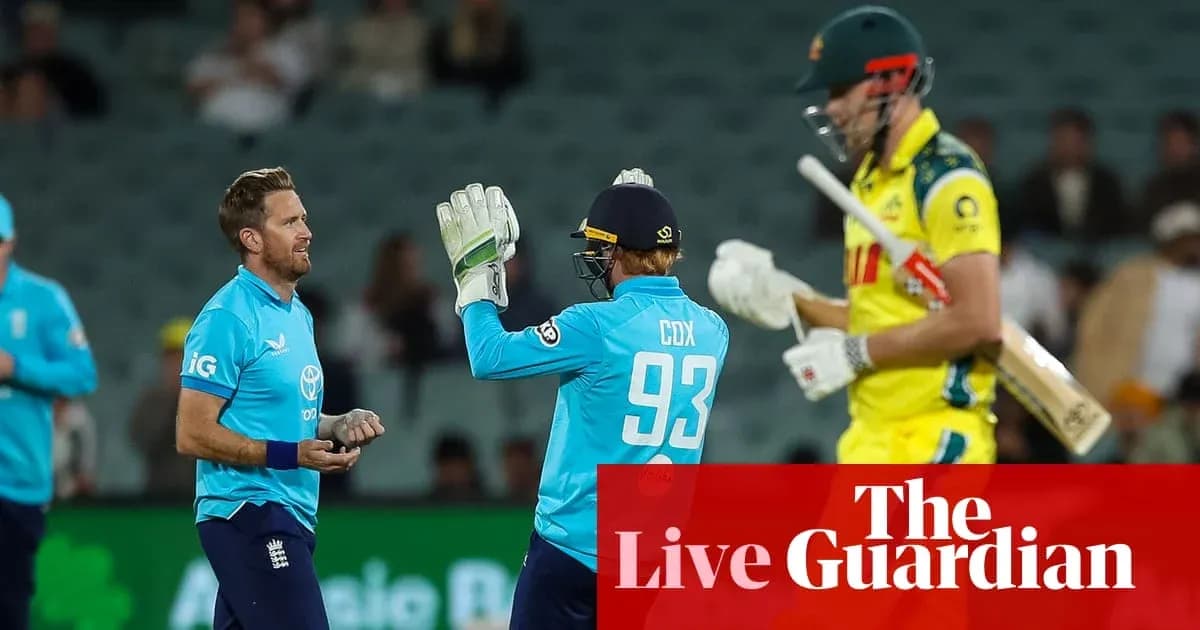
Mahli Beardman tore through England with 6-24 in 8.4 overs, the best figures by an Australian on ODI debut, as Harry Brook’s side folded for 131 in 33.4 overs. Australia needed only 23.3 overs to canter to 132-3, Mitchell Marsh smashing a 29-ball fifty to complete a seven-wicket thrashing.
On a day dominated by the lingering sandpaper scandal and fresh barbs on Australian television, England were handed the perfect opportunity to turn up the heat on a distracted opponent.
They handed it straight back.
Beardman’s arrival
Beardman’s first international wicket arrived early and emphatically. Brook, the captain, fiddled outside off in the quick’s second over and feathered behind. It was the sort of ball that follows you when you’re leading a side under scrutiny: just enough movement, just enough indecision.
From there, Beardman never let go of the game.
He bowled at proper pace, nudging above 90mph, and used the pitch like a seasoned Perth specialist. Full when it needed to be full, heavy and hostile when it needed to be short, always on a nagging line that forced England into the fatal push.
Joe Root, England’s anchor, became Beardman’s second ODI victim for 17, drawn into a drive of tempting length and thick-edging away. Tom Banton, one of only three England batters to pass 20, had already gone for 25, nicking off after planting his feet and driving on the up.
In an opening spell of five overs, Beardman’s figures read 5-18. By the time he was done, he had Root, Banton, Brook, Jordan Cox and Sam Curran, and later added Liam Dawson to complete his six-for. Jofra Archer also fell driving, another loose stroke in a catalogue of them.
It was brutal, but it was also predictable.
Old habits, same ground
England’s top order looked like it had stepped out of a time machine set to “Ashes 2025”.
Back then, with minimal preparation, they drove at length balls that bounced and moved, gifting edges to a cordon waiting in expectation rather than hope. Here, after a lengthy build-up and with a World Cup on the horizon, the same dismissals reappeared.
Banton’s thick edge on the drive with his feet rooted. Ben Duckett slicing left-armer Spencer Johnson to backward point. Root and Dawson pushing at balls that demanded respect, not flourish. Archer and others undone by the lure of the front-foot shot.
Cox lasted just two, prodding from the crease and edging. Curran, long known to struggle with the short ball, top-edged a hook to fine leg for a seven-ball duck as Beardman cranked up the speed and aggression.
At 65-8, England’s innings bordered on humiliation.
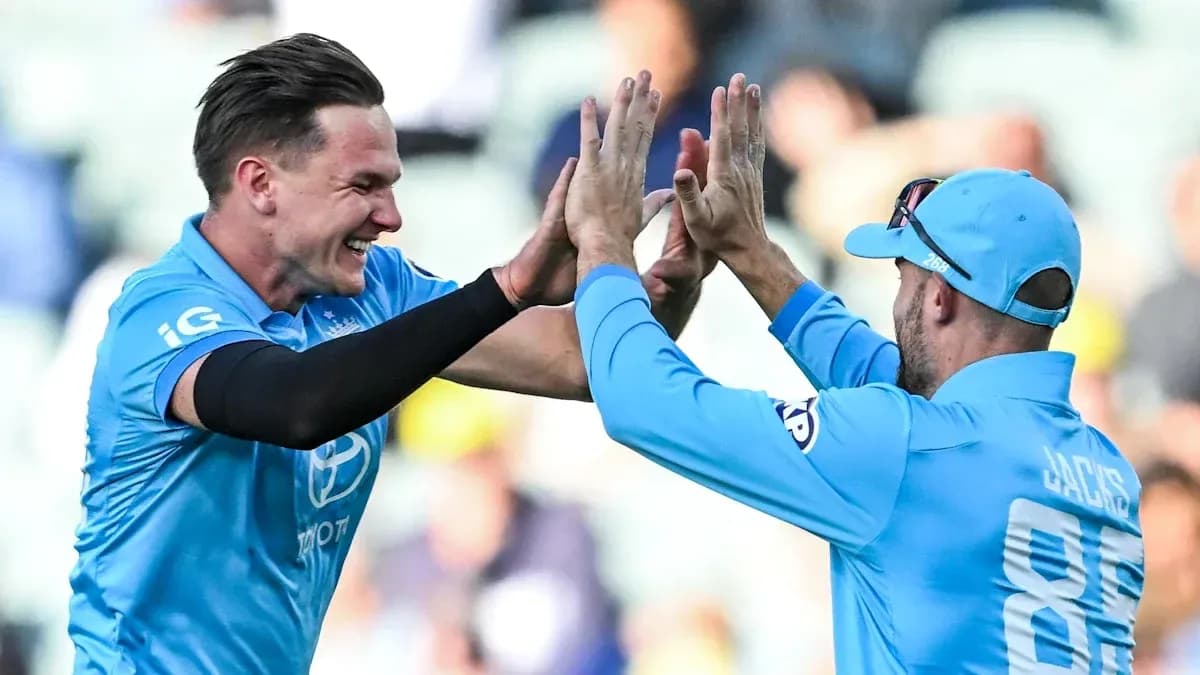
Will Jacks countered briefly with 25, showing some measure of adjustment to the conditions. Gus Atkinson, with 29 not out and the only six of the innings, at least dragged England beyond three figures. It still ended in the 34th over, another entry on an unflattering list: since Brendon McCullum took charge, England have been bowled out 15 times in 29 ODIs, 11 of those collapses coming when batting first.
The pitch had life, yes. It always does here. But it was no minefield. As former Australia all-rounder Tom Moody pointed out, a total between 230 and 250 should have been the baseline. England never got close to that sort of assessment, let alone execution.
A distraction from sandpaper – and a glimpse of the future
For Australia, this match was meant to be about noise off the field. David Warner accusing Cummins of throwing Usman Khawaja “under the bus” on television. Khawaja’s book dragging Cape Town back into the glare. Questions about ball tampering swirling around every press conference.
Mitchell Marsh, the stand-in captain, spent Thursday dodging queries about sandpaper and scandal. On Friday, he let his bat answer instead.
The irony was hard to miss. With Cummins, Starc and Hazlewood all rested – the very fast-bowling trio whose roles in Cape Town have been re-examined – a new quick stepped into the spotlight and stole the show.
Beardman, whose young career has already been punctured by back injuries, suddenly looked like the next name in a proud Australian fast-bowling lineage. Using the extra bounce as a weapon, he bowled the length England never quite found, and the line they never learned to leave.
He wasn’t alone. Xavier Bartlett, 27, impressed with the new ball, hitting the seam and keeping England honest. Johnson, the left-armer, backed up his early dismissal of Duckett by removing Jamie Overton and Jacks, ensuring there was no meaningful lower-order revival.
If Beardman is the future, this was one thunderous first statement.
Marsh finishes the job
Chasing 132, Australia stumbled only briefly.
Travis Head, who had hammered England in Perth a year ago, dragged on first ball. A rare misstep, and a fleeting moment of hope for England.
It vanished as quickly as it appeared.
Marsh walked in on his home ground and immediately looked like he was batting on a different strip. He absorbed the early overs, then dismantled anything remotely short or straight, particularly over the leg side. Four sixes flew into the stands, the ball arcing into the warm Perth sky as England’s earlier struggles looked more and more inexcusable.
He reached his 50 from 29 balls, a captain’s innings that doubled as a reminder of how to handle pace and bounce: invest early, cash in late.
Cooper Connolly supported with 27, and when both fell, Josh Inglis and Matthew Renshaw simply knocked off the rest. No panic, no hurry. There was so much time left that the chase felt more like a training drill than a contest.
Australia crossed the line with 26.3 overs unused. Only twice in their history have they beaten England in ODIs with more balls to spare.
England running out of excuses
This wasn’t a one-off bad day. It slotted too neatly into a pattern.
England arrived in Australia off the back of damaging defeats in a tri-series against Pakistan and Sri Lanka. Their white-ball identity, once so clear and so feared, now looks brittle when conditions bite back and the ball does a little more than expected.
Michael Vaughan, watching on, noted that the reckless “we’ll just go harder” mantra of a year ago has been toned down. The intent remains, but the blind bravado has softened. What hasn’t changed enough are the basics: reading conditions, leaving well, resisting the urge to drive on the up in Perth when the ball is bouncing and nipping away.
The World Cup is a year away. This series, starting with Sunday’s second ODI in Adelaide, is supposed to be part of the build.
Right now, it feels more like a warning.
Australia, still fielding questions about a scandal from six years ago, found a new fast bowler and a familiar ruthless streak. England, with a clean slate and a long runway, found themselves back in the same old mess.
How many more times can they walk into these conditions and make the same mistakes before something finally changes?