Alice Capsey: England's New Wicketkeeper for Ireland Series
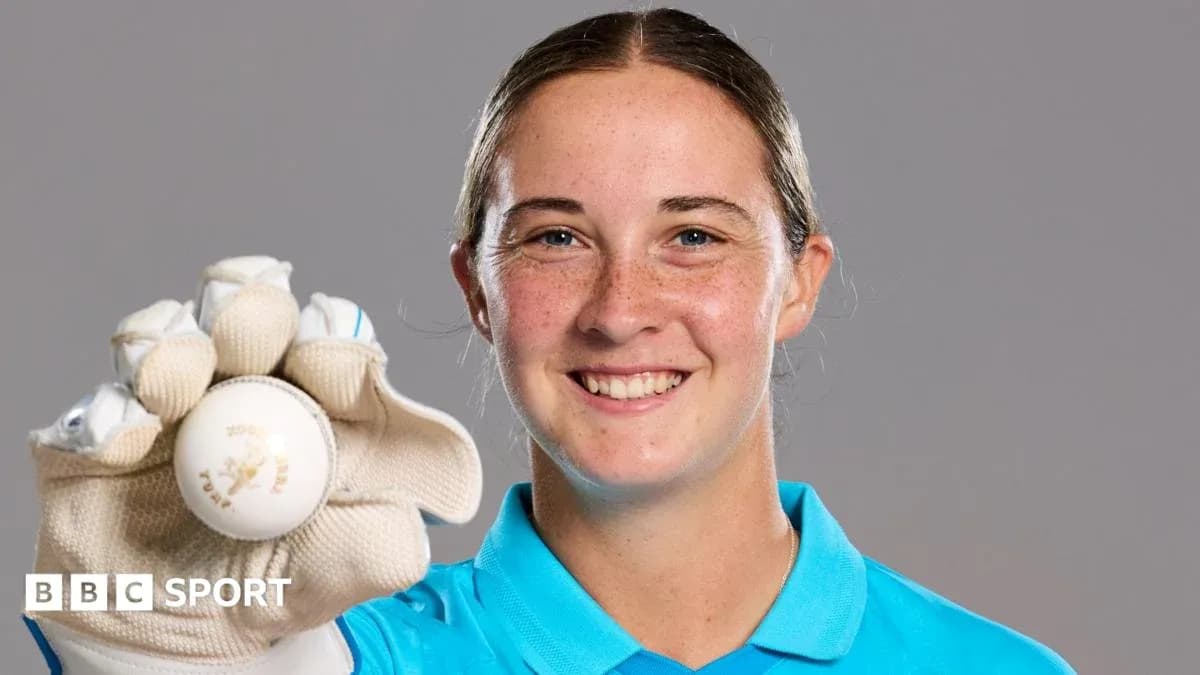
Alice Capsey lined up for England’s pre-series photo on Monday with one more item than usual in her kit bag. Bat. Ball. Helmet. And now, wicketkeeping gloves.
She has already ticked off most roles in this England side. Middle-order ballast. Handy off-spin. Livewire in the ring. Future captain in waiting at 22. This week against Ireland, she adds something different: England’s first-choice keeper, despite having done the job just once in professional cricket – a 50-over game for South East Stars back in 2020.
“Realistically, it is a bit of an unknown,” she told BBC Sport. She knows the scale of it. She also knows how hard she has worked. “The work I have done off the pitch… it gives me a lot of confidence.”
This is not some wild experiment. Charlotte Edwards does not deal in those.
Back to where it all began
Capsey kept wicket for much of her junior career at Surrey. The gloves only came off when she was promoted to a higher age group that needed an off-spinner more than another keeper. The pivot stuck, and the runs and wickets followed. The keeping, though, never really left her.
“Who knows if I hadn't played up whether I would have just kept on keeping,” she said. “But it is really cool going back to the roots and where I started.”
Those roots run through Bede’s School in Sussex, where a young Capsey watched, and then worked with, one of the greats. Sarah Taylor, England’s World Cup-winning keeper and a generational talent behind the stumps, spent time there as a sports coach before returning fully to the professional game and now working with England’s men.
Capsey was 12 when she sat in the stands at Lord’s and watched Taylor help England lift the 2017 World Cup. Years later, she found herself learning directly from her hero.
“The way she went about it, did it her way and brought an X-factor to it was really cool,” Capsey said. Taylor has been nudging her back towards the gloves ever since. “She has been on my shoulder for the last four or five years saying I need to get back to keeping.”
This summer, with the shift finally happening, Capsey could send the message she had been waiting to write: “I am back.”
From back-up plan to front-line role
The idea of Capsey as an international keeper properly surfaced during England’s pre-season camp in South Africa. The coaching staff looked at the depth chart, the lack of obvious alternatives, and the fact their 22-year-old all-rounder already had a keeper’s grounding. She was quietly pencilled in as back-up to Amy Jones for the T20 World Cup.
She never needed to take the field with the gloves in that tournament, but she came close. When Nat Sciver-Brunt returned from injury for the semi-final, one scenario on the table had Sophia Dunkley retaining her spot, Jones missing out, and Capsey taking the gloves to balance the side. In the end, England stuck with the established keeper. The conversation, though, had changed.
At the start of the summer, Capsey felt the weight of it.
“I was pretty nervous to do it,” she admitted. “I went into my shell a little bit and was quite internal.” The dressing room helped drag her out. Sophie Ecclestone and others kept things loose, noisy, normal. “Everyone has seen me train so much now over the course of the summer it is second nature.”
She has thrown herself into the craft again. Extra drills slotted around batting and bowling sessions. Hours spent squatting, shuffling, taking ball after ball. The gym work has shifted too, with a focus on leg strength and abductors to cope with the physical grind behind the stumps.
“I have pulled up, touch wood, after all of it so far,” she said. “Come back to me at the end of the week.”
Quiet auditions, loud implications
The public will see Capsey keep for England in an official ODI for the first time this week. Inside the camp, they already know she can handle it.
Behind closed doors, in a warm-up against India before the T20 World Cup, she kept a full game. She stood up to seamer Dani Gibson and plucked a rising chance cleanly. She whipped off a stumping to Linsey Smith’s spin. She did not concede a bye.
“It was awesome,” she said. “I loved the experience. Keeping up to Gibbo was a really nice challenge.” One catch stands out in her mind, but the satisfaction came from the rhythm of it all – the early takes standing back to Lauren Filer, the leg-side takes that test a keeper’s footwork and nerve.
This week she has gone a step further, standing up in training to Issy Wong, one of the quickest in England’s armoury. It is the kind of work that tells a dressing room a lot about a player’s appetite for risk and responsibility.
If it clicks in this Ireland series, the knock-on effect could be significant. At the very least, England gain a credible back-up to Jones, who at 33 has been rested for these matches. They also gain something else: leverage.
Jones has long been valued for her glovework, but five single-figure scores in seven World Cup innings this year have sharpened the debate about England’s batting order. If Capsey can keep to the required standard, England suddenly have the option of using the extra spot to unleash another explosive batter in the top order, while still fielding a player who has already nailed down her place with the bat alone.
Pressure, pain, and the pull of the gloves
Capsey talks about the position with the relish of someone who enjoys the bruises as much as the highlights reel.
“The amount of times you take blows on the fingers, or one goes down the leg side and you miss it…” she said, almost laughing at the memory. Those moments sting. They also hook you. “Those are the bits you enjoy, working to get better and better.”
The pressure is real. It is not just another series. Ireland, ICC points on the line, a new role under the lights for England.
“There is going to be nerves and pressure around, but more internal pressure than anything,” she said. “As a professional athlete you don't want to do it badly and you are representing England.”
To be handed the gloves for your country, though, carries its own reassurance. Someone has decided you can do this.
“To be trusted to have the gloves for England has got to give you confidence as well,” she said. She knows she is not yet the finished article. She also knows this is not a complete leap into the unknown. “I did it for a long time growing up. Regardless of the challenges presented this week I know I have a bit of experience to fall back on which is nice.”
England will walk out against Ireland with a batter-turned-bowler-turned-keeper at the heart of their plans. If Alice Capsey nails this latest reinvention, the conversation around England’s white-ball future will not just be about who wears the gloves. It might be about who dares to take them off her.