Ajit Agarkar’s Future as BCCI Chairman of Selectors Under Review
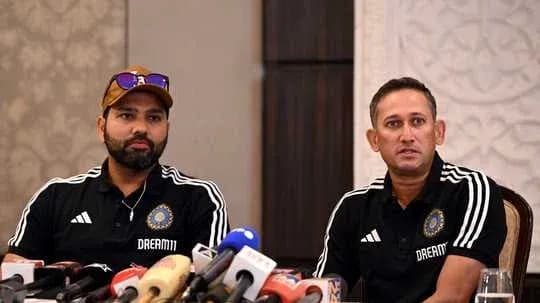
The BCCI’s Annual General Meeting in Mumbai ended with one of Indian cricket’s most influential jobs still shrouded in uncertainty. Ajit Agarkar remains chairman of selectors on paper, but his long-term hold on the role is anything but settled.
The AGM on Friday offered no formal clarity on his future. Instead, the board’s office-bearers were authorised to take a call on the senior men’s selection committee, effectively moving the decision behind closed doors and away from the glare of a full-house meeting.
For a position that shapes the direction of Indian cricket, the silence was telling.
Rohit flashpoint lingers
Agarkar’s absence from a recent review meeting on India’s UK tour had already raised eyebrows, even as the BCCI downplayed it. The questions, though, have been building for longer — particularly since the Rohit Sharma episode before the Lord’s ODI.
On the eve of that game, selectors reportedly informed the former captain he was no longer in the team’s plans. The board then stepped in. The intervention not only undercut the selection committee’s authority but also dragged Agarkar into the centre of a storm over who really runs Indian cricket’s biggest decisions.
Appointed in July 2023, Agarkar is understood to have a contract until October 2026. On paper, that suggests stability. In practice, the last few weeks have felt anything but.
Business as usual – for now
Despite the noise, selection work has not ground to a halt. Earlier this week, the meeting to pick squads for the West Indies ODIs, the Irani Cup and various India A teams went ahead without visible disruption.
Those close to the process described it as “business as usual”, with selectors operating as they normally would. No emergency pauses, no interim panels, no public signs of a committee in limbo.
Yet the backdrop is impossible to ignore. If Agarkar’s tenure does end, the BCCI cannot simply anoint a new chairman overnight. It must issue an advertisement, sift through applications, conduct interviews and then make an appointment. That process takes time — and time is not something India’s calendar often affords.
One name has already begun to circulate in board corridors: former India wicketkeeper-batter Parthiv Patel. He is understood to be a potential candidate should there be a change at the top, but for now it remains just that — a possibility, not a decision.
Junior selection puzzle drags on
The uncertainty is not confined to the senior setup. The junior selection committee remains incomplete as well.
The BCCI advertised for five positions on August 24, but interviews are still pending. There had been a quiet expectation that the new junior panel would be in place and announced around the AGM. That day has come and gone.
The latest word is that the process will stretch until the end of the month. Age-group and pathway cricket, crucial to India’s long-term talent pipeline, waits for its new gatekeepers while the board works through its timelines.
Ranchi holds its ground for Border-Gavaskar
Away from the politics of selection, one piece of speculation was firmly put to rest.
Reports had suggested Ranchi might lose its Test in next year’s Border Gavaskar Trophy. Saurabh Tiwary, secretary of the Jharkhand State Cricket Association (JSCA), moved quickly to knock that down.
“There is no change in the venue. If anybody has to write to the BCCI about it, it should be me and I have not written it,” he told the media, leaving little room for doubt.
The marquee five-Test series will open in Nagpur on January 21. Chennai, Guwahati, Ranchi and Ahmedabad will host the remaining four Tests, in that order. For Ranchi, still building its Test identity, keeping that fixture is no small win.
Governance cloud over the board
Inside the AGM hall, another subject loomed large: the National Sports Governance Act.
The Supreme Court has asked the BCCI to clarify its stance on the legislation, forcing the board to sharpen and formally state its position. That conversation has begun.
So far, the BCCI has maintained, including in the Odisha Cricket Association case, that cricket does not fall under the definition of a “designated sport” under the Act. It is a line that protects the board’s autonomy but also keeps it on a collision course with broader attempts to standardise sports governance in the country.
As the legal and administrative battles play out, the immediate cricketing question remains stark. Who will shape India’s squads in a packed cycle, with major tours and high-stakes series looming?
For now, Ajit Agarkar is still in the chair. The real power, though, sits with the office-bearers who must soon decide whether to back their chief selector through to 2026 — or turn the page and start another search in the middle of a crucial phase for Indian cricket.