Agarkar Era Nears End as BCCI Plans Change in Selection Panel
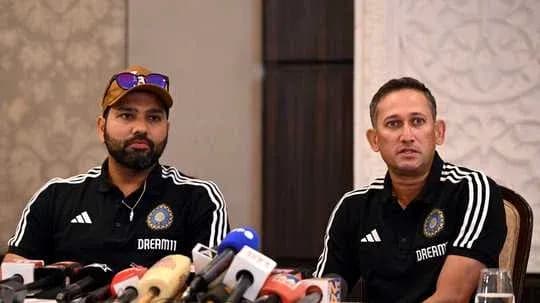
Ajit Agarkar’s time as chairman of selectors is drifting towards an almost inevitable conclusion, even if the Board of Control for Cricket in India refuses, for now, to put it in so many words.
No formal decision has been announced. No sacking, no statement, no drama. But the mood music from Friday’s BCCI Annual General Meeting left little room for doubt: the clock is ticking on Agarkar’s tenure, and it is ticking loudly.
Fifteen days and a fading tenure
The key development came not in a fiery debate, but in a quiet line of authority. The BCCI’s office-bearers have been empowered to take the final call on Agarkar’s future, with secretary Devajit Saikia confirming that the Board will move within a tight window.
“We still have 15 days to go. Fifteen days is a long time in the world of cricket. We have time. We will make a decision and, at the appropriate time, we will let you know,” Saikia said after the AGM, choosing his words carefully but leaving the timeline exposed.
He went further, underlining that this is not a mid-term chop but a tenure running its course.
“We know on which date he is retiring. His tenure is going to be over. There is still 15 days’ time left. So we will make a decision during this 15-day period.”
Agarkar’s current contract is understood to end on October 4. The Board, then, has effectively given itself a fortnight to decide whether the former India pacer gets a renewed mandate or a quiet exit.
Right now, the latter looks far more likely.
Shadows over the chairman
The speculation around Agarkar has been swirling for weeks. His absence from a review meeting earlier this month — a key discussion on India’s performances on the tour of the UK — was officially played down by the BCCI, but it did little to calm the noise.
The real tremors, though, can be traced back to the Rohit Sharma episode before the Lord’s ODI. In that contentious sequence, the selectors reportedly informed the former captain that he was not part of the team’s plans, only for the BCCI to step in and overturn the call.
For a chairman of selectors, that kind of public undercutting leaves a mark. Inside rooms, it raises questions. Outside, it fuels the sense that the equation between the Board and its selection chief has shifted.
Those questions grew louder during the recent selection meeting in Delhi, where squads were picked for the West Indies ODIs, the Irani Cup and the India A teams. By all accounts, the meeting itself went off smoothly. No walkouts, no visible flashpoints. But as the selections were signed off, a different kind of whisper emerged: this could be Agarkar’s last meeting in the chair.
Once that sort of talk seeps into the ecosystem, it rarely comes from nowhere.
Succession plan and a gap to fill
If Agarkar’s stint does end with his contract, the BCCI will not be able to simply plug in a new chairman overnight. The Board must follow its established process: issue an advertisement for the position, shortlist candidates, conduct interviews, and then finalise the appointment.
That takes time — at least a month, possibly longer. For a system that craves continuity, it means a period of managed limbo at the top of the selection table.
Names, inevitably, have already started doing the rounds. At this stage, former India wicketkeeper-batter Parthiv Patel has emerged as the frontrunner to succeed Agarkar. Young in administrative terms but seasoned by a long domestic and IPL career, Parthiv fits the modern template the BCCI has often leaned towards in recent years.
In the short term, though, the Board may need a stopgap. Among the existing panel, Pragyan Ojha stands out. The former left-arm spinner has played more Tests than any of the other four selectors, and that seniority could see him asked to step in as interim chairman until a permanent appointment is made.
Nothing on that front is official yet. No confirmations, no press release, just pointers and probabilities.
For now, the only certainty is the 15-day deadline Saikia underscored. Once that window closes, the Agarkar chapter — brief, scrutinised and often contentious — could give way to a new face, a new philosophy, and a fresh round of questions about who really shapes India’s cricketing future.