Aatif Nawaz Critiques PCB’s Panic Purge After Lord’s
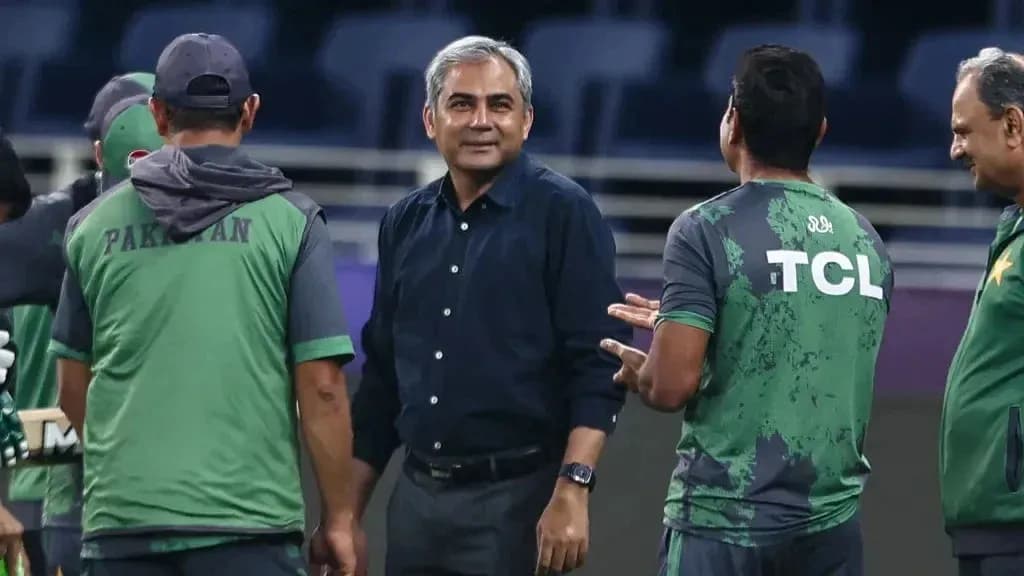
The dust had barely settled on Pakistan’s series defeat at Lord’s when the axe came down. Not on the obvious culprits, not in a measured review at tour’s end, but in a sweeping, mid-series cull that stunned even those used to chaos in Pakistan cricket.
Seven players sent home. Head coach Sarfaraz Ahmed removed. Bowling coach Umar Gul dismissed. Five uncapped players drafted in for a dead-rubber third Test at Edgbaston.
From the outside it looked drastic. From Aatif Nawaz’s vantage point, it looked absurd.
‘What’s the bowling coach done?’
Speaking on the For The Love Of Cricket podcast alongside Stuart Broad and Jos Buttler, the BBC commentator zeroed in on the one decision that simply didn’t add up: the sacking of the bowling coach.
“Get rid of your head coach, get rid of your bowling coach. What's the bowling coach done? His bowlers took enough. They took all the wickets,” Nawaz said. “At least the bowlers at Lord's got the wickets. It just seemed like the kind of move you do when you're trying to placate the angry voices in your country.”
That was the crux of his argument. Pakistan’s batting had imploded – they failed to reach 200 in any of their four innings across the two Tests – yet the clear-out hit the one department that had actually held up its end of the bargain.
The numbers underline his point. Mohammad Abbas took nine wickets at Lord’s and earned his place on the honours board. The attack repeatedly dragged Pakistan back into contests their batters had surrendered. Days later, the man overseeing that group, Umar Gul, was out of a job.
The pressure told. But on the wrong people.
Chaos as a constant
Nawaz framed the upheaval not as a shocking one-off, but as another chapter in a long-running story of instability in Pakistan cricket.
“It's very hard to keep track of who's the batting coach, who's the bowling coach, who's your chief selector, who's your captain, who's your vice captain,” he said. “He could be captain one game and then the 12th man the next, as Salman Agha found out in this test series.”
That line cut to the heart of the issue: roles change overnight, status evaporates in a week, and players live with the sense that nothing is secure. One bad Test, one bad series, and careers can be derailed.
The PCB could argue there was a thin justification. With the series already lost, the third Test at Edgbaston is a dead rubber. Nawaz acknowledged that defence.
“It's a dead rubber. You could say if you play the same 11, they would be bound to get dominated by England again. So you have to try something drastically different. That's the defence of the move, I suppose,” he said.
Try something different? Fair enough. Blow up half the touring party and sack the bowling coach whose unit actually functioned? That’s where, for Nawaz, logic gave way to theatre.
A dangerous message to red-ball hopefuls
Nawaz’s real worry lies beyond this series, beyond this tour. His concern is what such a brutal, public cull tells the next generation of Pakistan cricketers weighing up their options.
“What kind of message are you sending to the next generation of Pakistan cricket players who want to play red-ball cricket for Pakistan? Why would they want to do that?” he asked.
It’s not a rhetorical flourish. Pakistan already loses players to the global franchise circuit. T20 leagues offer security, money, and a clear path. Test cricket, by contrast, asks for sacrifice and patience. When a board can discard seven players and two coaches in a single announcement after one bad week in England, it confirms every fear a young player might harbour about red-ball cricket’s volatility.
In Nawaz’s view, the equation becomes brutally simple: if there is no security in Tests, players will naturally gravitate towards white-ball cricket and T20. Why risk being the next Salman Agha, shifting from central figure to afterthought in the space of a match?
Punishing the one thing that worked
The lingering irony is hard to ignore. Pakistan’s batters misfired throughout the series. The top order never imposed itself, the middle order never rescued them, and scores stayed stubbornly below 200. That is where the crisis lay.
Yet the response hit the bowling setup, the one area that had done its job. Abbas’s nine wickets at Lord’s were not an outlier; they were the product of a group that consistently created chances, even as the batting left them defending scraps.
By removing the bowling coach, the PCB sent a clear signal: this was less a targeted, evidence-based reset and more an attempt to satisfy public anger. Heads had to roll, and it almost didn’t matter whose.
For Nawaz, that is the real indictment. When decisions are driven by noise rather than nuance, when the most effective unit in the side gets punished alongside the failures, it stops being a rebuild and starts looking like a meltdown.
And if that’s the climate surrounding Pakistan’s Test team, how many of tomorrow’s talents will still see the red ball as a dream worth chasing?