Alexander Zverev Becomes World Number One After Decade of Struggle
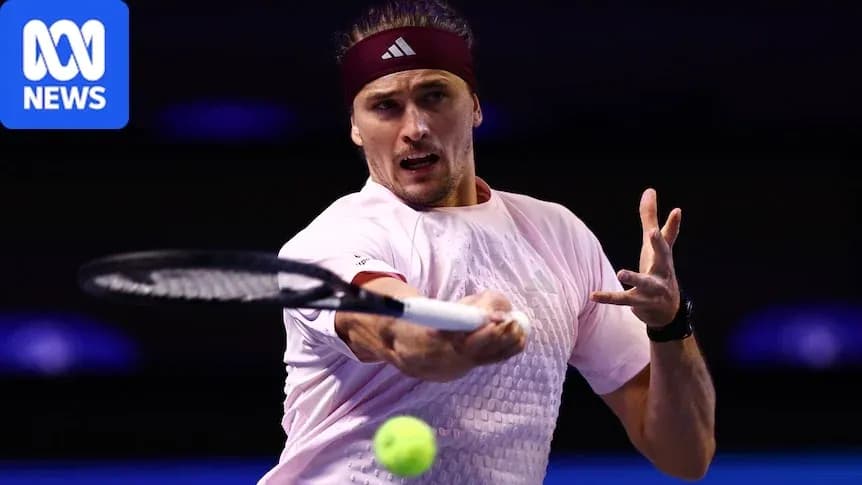
Alexander Zverev spent a decade staring up at a mountain that never seemed to shrink. First it was Roger Federer, Rafael Nadal, Novak Djokovic and Andy Murray blocking the view. Then, just as the “Big Four” began to loosen their grip, a new wave – Carlos Alcaraz and Jannik Sinner – swept in and raced past him.
Now, at 29, Zverev is finally standing on the summit.
On Monday, the German will be confirmed as world number one for the first time, the 30th man to top the ATP rankings since their creation in 1973. For a player long filed under “next big thing” and then quietly shifted into the “nearly man” category, it marks a hard‑earned rewrite of his story.
“It’s incredibly special,” Zverev said. “It’s something I’ve worked towards for years and you have to show great tennis the whole year to be in this position.”
For years, the talent was never in doubt. Zverev burst through in the 2010s, a 6ft 6in baseline bully with a first serve that could crush opponents and a backhand that belonged on a postcard. He won the ATP Finals twice and an Olympic gold medal in Tokyo in 2021. The numbers screamed future No 1.
The grand slams did not.
While he faltered in the majors – a painful five‑set loss in the 2020 US Open final, a string of near-misses and flat exits – the landscape around him shifted again. As Federer and Nadal faded and Djokovic finally showed signs of vulnerability, Sinner and Alcaraz stormed through the gap. Between them they racked up 12 majors, seizing the stage that Zverev had once been tipped to own.
His chance seemed to have gone. Then this season broke open.
With Alcaraz’s campaign disrupted by a wrist injury and Sinner sidelined by knee problems, Zverev stayed upright, stayed present and, crucially, stayed winning. He claimed the French Open at Roland Garros, then the US Open in New York, and pushed all the way to the Wimbledon final. Consistency and durability – the qualities that had so often deserted him when it mattered most – became his greatest weapons.
The journey has not been linear. It almost ended, or at least veered off course, on a single afternoon in Paris in 2022. Locked in battle with Nadal in a brutal French Open semi-final, Zverev tore ligaments in his right ankle. He left the court in a wheelchair, his ranking climb suddenly frozen.
“The lost grand slam finals, the injury in 2022,” he reflected. “But I always somehow kept believing, kept going. This year I also took the step of changing my game a little and rebuilding it, at 29. The way this season has gone is a dream.”
That rebuild has been as much mental as technical. Zverev, who has managed type 1 diabetes since childhood, has long had to treat his body as carefully as his backhand. Staying healthy has never been a given. In a tour era defined by attrition as much as artistry, just getting to the start line week after week has become a competitive edge.
“A player is not only performing on court, it’s also being healthy, managing your body,” said renowned coach Patrick Mouratoglou. “If someone is never injured and others are often injured, the one that’s not injured will probably end up having a higher ranking … staying healthy when you’re a professional athlete is a real skill.”
This season, that skill separated Zverev from the pack. Yet the numbers still invite argument. His 3–8 record against top‑10 opponents in 2024 will give ammunition to those who question whether the ranking automatically makes him the best player on the planet. The points say one thing; the eye test, for some, another.
The debate will follow him, as will other shadows.
Zverev’s ascent has been accompanied by turbulence away from the court. He has faced allegations of domestic abuse, which he has consistently denied. A German court closed a case involving his former partner Brenda Patea in 2024 after a settlement, with no finding of guilt. The ATP, after a separate investigation into allegations made by Olga Sharypova, announced in 2023 that it had found insufficient evidence to substantiate the claims.
Those episodes have shaped how parts of the public and the locker room view him. They do not disappear with a ranking.
What does change is the spotlight. Zverev becomes only the second man from his generation – those who emerged in the long shadow of the Big Four and are now largely in their late 20s and early 30s – to reach No 1, after Daniil Medvedev. He is also just the second German man to top the rankings, following Boris Becker back in 1991. That history brings weight.
“The number one position brings a lot with it,” Zverev said. “You have to be a good role model, do a lot of things right and on court that means more than returning and serving well.”
He knows the target on his back has just grown larger. Every locker room glance, every draw ceremony, every first-round opponent will treat him as the prize scalp. And looming in the background, ready to resume their charge when fully fit, are the two men who have defined the post-Big Four era.
“I still have Carlos and Jannik,” Zverev said. “Hopefully, I can keep competing with them over the next few years.”
For now, though, the player who spent years stuck between eras finally has one to call his own. The climb took longer than expected, the route was messier than anyone predicted, but the view from the top is his. The real question is how long he can hold it with Alcaraz and Sinner already plotting their next assault.